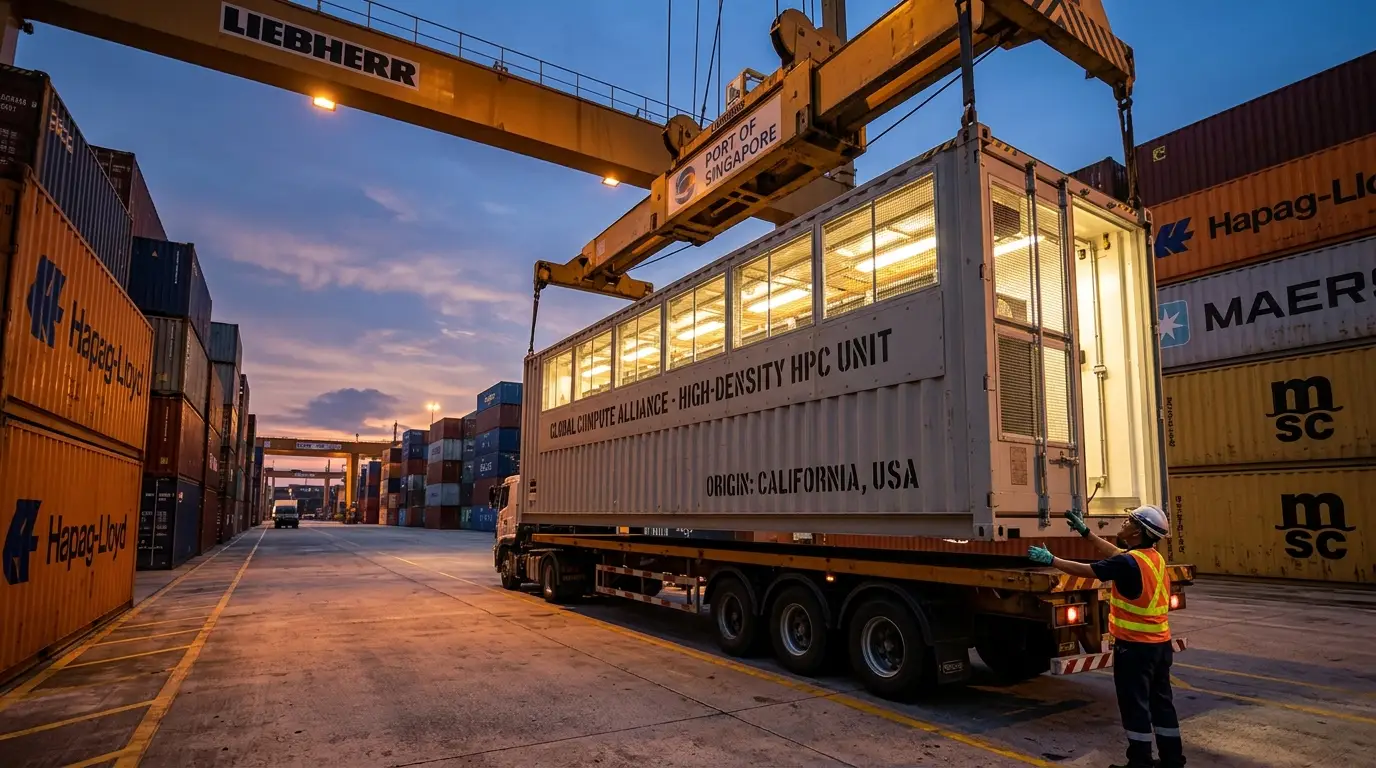
Chinese artificial intelligence developers are aggressively leasing offshore computing infrastructure to safeguard their training pipelines. The rush follows recent geopolitical controversies that industry insiders believe could accelerate legislative crackdowns on remote hardware access.
According to a detailed breakdown by Hindustan Times, major cloud providers and smaller machine learning laboratories are currently negotiating long-term reservations with data center operators across Southeast Asia. The strategic pivot aims to secure uninterrupted access to high-performance processing before regulatory environments shift.
Closing the Infrastructure Loophole
Current trade policies strictly limit the physical shipment of advanced semiconductor architectures to specific jurisdictions. However, overseas server farms have historically provided a reliable workaround, allowing developers to rent cloud capacity running restricted hardware. Washington lawmakers are now moving aggressively to seal this gap. The proposed Remote Access Security Act H.R.2683 explicitly grants regulatory bodies the authority to monitor and restrict cloud-based utilization of controlled technologies. If enacted, the legislation would force international hosting providers to implement strict end-user verification protocols, effectively neutralizing the remote compute workaround that has sustained offshore development efforts for years.
Shifts in Regional Hosting Economics
The sudden surge in demand is radically altering regional pricing models and infrastructure deployment strategies. Facility operators in neighboring countries are rapidly upgrading their power grids and cooling systems to accommodate the massive thermal output of modern machine learning clusters.
| Hosting Jurisdiction | Primary Hardware Cluster | Average Contract Length | Spot Price Premium |
| Singapore | Liquid-Cooled GPU Arrays | 36 Months | +28.4% |
| Malaysia | High-Bandwidth Memory Nodes | 24 Months | +19.1% |
| Indonesia | Distributed Edge Racks | 18 Months | +12.5% |
| Vietnam | Air-Cooled Legacy Clusters | 12 Months | +4.2% |
Grey Market Accumulation and Hardware Hoarding
Beyond cloud leasing, physical supply chains are experiencing severe bottlenecks as intermediaries hoard existing inventory. Regional traders are stockpiling advanced processors, anticipating broader enforcement actions and tighter border inspections. The Bureau of Industry and Security has steadily expanded its compliance net over the past few years, targeting not just direct shipments but also third-party transshipment hubs and secondary distributors. This heightened scrutiny has driven grey market premiums to historic highs, as domestic developers attempt to build localized training clusters before physical borders potentially tighten further.
Corporate Ties and Geopolitical Fallout
The urgency is heavily compounded by recent executive controversies linking prominent industry figures to foreign intelligence allegations. When high-profile corporate scandals intersect with national security debates, legislative momentum typically accelerates across party lines. Cloud providers with historical business ties to the implicated parties are particularly eager to insulate their operations from secondary sanctions. By locking in multi-year offshore infrastructure contracts now, these companies aim to secure their algorithmic training schedules before potential boycotts disrupt their access to global hardware markets. The window to secure unrestricted compute access is rapidly closing, forcing a massive reallocation of capital across the Pacific. Engineering teams are now prioritizing immediate hardware availability over long-term cost efficiency, fundamentally reshaping the global supply chain for advanced cognitive architectures.

Popular news

EU Leaders Meet in Dublin to Decide Who Pays for Europe’s AI Computing Power

Google DeepMind’s AlphaGenome 2 predicts what DNA variants do in specific cells

Anthropic Bankers Push IPO Pricing Above Initial Range to Reach 1.5 Trillion Valuation

Fans Mistake New GTA 6 Footage For AI Generation
US Data Brokers Supply Half Billion Dollars In AI Training Environments To Chinese Labs