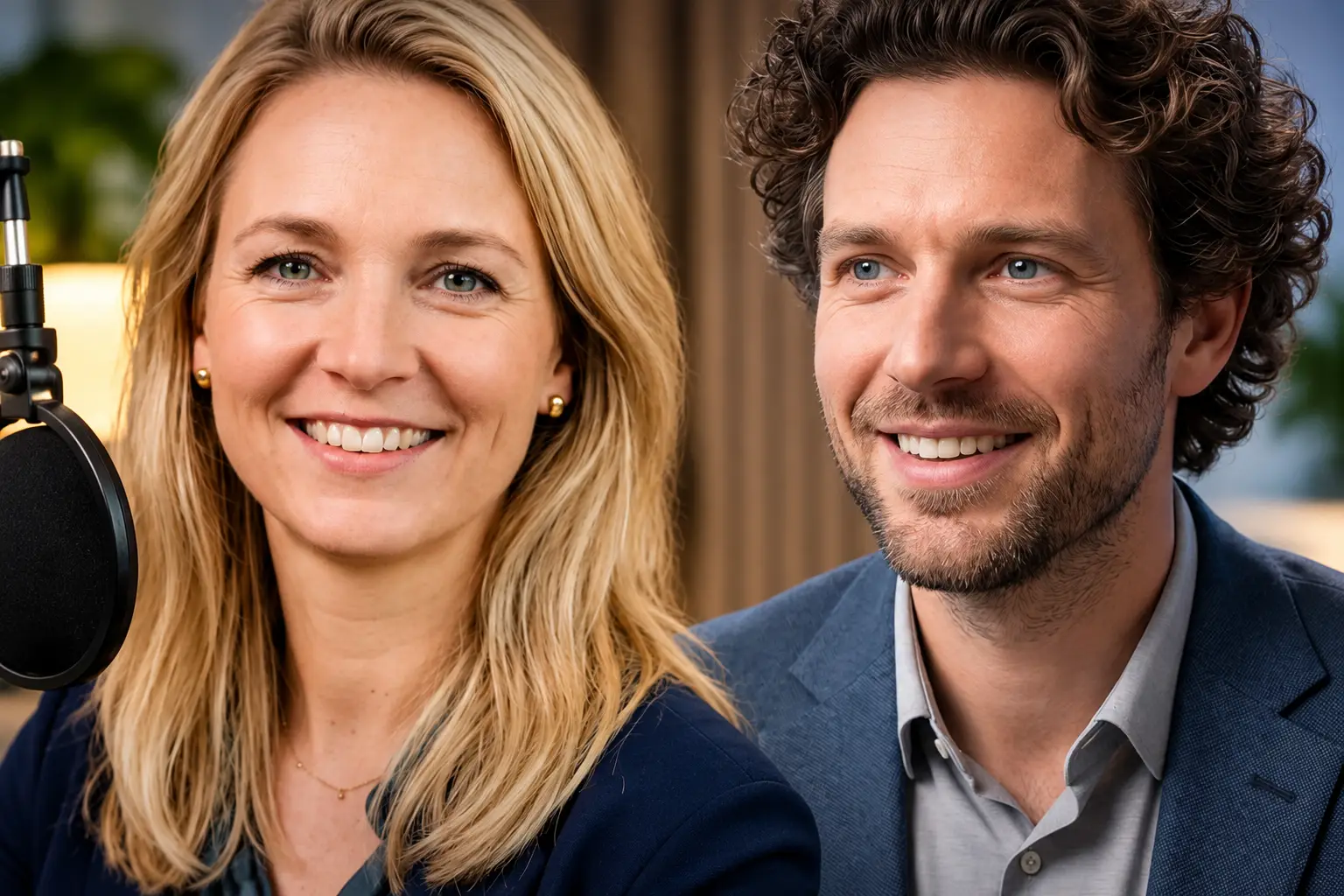
A Dutch podcast made entirely with artificial intelligence is in the running for a Dutch Podcast Award. The State of Tech was nominated in the Innovation category on October 7, 2026. The twist? Its two hosts, Linda Duursma and Erik van Doorn, don’t exist. AI created their voices and personalities.
The Dutch Podcast Awards organizers have confirmed the nomination. The podcast is competing against four other productions, making it one of five nominees in the Innovation category. The professional jury will announce the winner on Tuesday, November 3, at a ceremony at the Netherlands Institute for Sound and Vision in Hilversum.
The nomination stands out because AI doesn’t just work behind the scenes on this podcast. It also plays the hosts and, according to the creators, handles the entire production.
Linda and Erik don’t exist—but they deliver the tech news every day
Listen to The State of Tech and you’ll hear two hosts discussing the latest in technology. Linda Duursma and Erik van Doorn cover new AI models, tech companies, European regulations and other developments.
The podcast describes itself as a daily news show featuring six major technology stories in about 15 minutes. A new episode is published every morning at 7 a.m., the creators say.
On the website, each host has a profile, along with a distinctive voice and face. But neither is a real journalist or broadcaster. Both are synthetic characters.
Dutch production company Doorzetters B.V. is behind the project. The creators say they use several AI systems to produce each episode, eliminating much of the traditional recording process with human hosts.
More than 200 episodes made with AI
Ruud Hendriks, who is involved with Doorzetters, responded to the nomination on LinkedIn. He says The State of Tech was the first podcast in the Netherlands to be produced entirely with AI.
Hendriks says the team has now published 227 episodes. Its production tools include Claude, Gemini, ChatGPT and ElevenLabs. These services can help process information, write scripts and generate synthetic speech.
The creators say they are proud of both the journalism and the production quality. Hendriks sees the nomination as recognition for a podcast format whose value, he says, is still often questioned.
Ruud Hendriks
The AI systems each serve different purposes. Claude, ChatGPT and Gemini are language models that can analyze and generate text. ElevenLabs specializes, among other things, in creating artificial voices.
The exact division of work between the systems has not been made public. Nor is it possible to determine from the available information how much human editorial review each episode receives.
AI earns recognition in the Dutch podcast industry
The Dutch Podcast Awards have been running since 2018 and were launched by BNR Nieuwsradio. An independent professional jury judges the entries. The organizers say the criteria include a production’s concept, execution and overall quality.
In the Innovation category, The State of Tech is up against Alles Goed!?, Waar is Apie?, Het Moordmysterie: De Cruise and Watizzut?. The nomination does not mean the jury has already named the AI podcast the winner.
The Dutch Podcast Awards assess podcasts as audio productions. A nomination is therefore not a separate endorsement of the journalistic reliability of every episode published.
Still, the recognition shows that a production with synthetic hosts can now compete with traditional podcasts for a Dutch industry award.
What does this mean for journalists and podcast creators?
The development reflects a broader shift in the media industry. With language models and AI voice generators, publishers can select news, prepare scripts and produce audio without a host having to record every episode themselves.
That could be especially useful for small newsrooms. A daily podcast typically takes time to research, edit, record, produce and publish. AI can automate several parts of that process.
But the technology has its limits. A convincing voice does not make information reliable. Language models can misinterpret facts, mix up sources or present fabricated information as true.
That is a particular risk for a daily news podcast. Listeners need to trust that the stories are accurate, whether they are read aloud by a human journalist or an AI voice.
Synthetic voices also raise questions about transparency. The producers of The State of Tech make clear that Linda and Erik are AI hosts. That distinction matters: otherwise, listeners might assume they are hearing two real journalists.
AI speech technology continues to advance. In September, ElevenLabs released new speech models that support more than 90 languages. The technology makes it possible to produce longer conversations featuring multiple voices.
The State of Tech’s nomination poses a compelling question for the podcast industry: how much of a good audio production still needs to be done by people?
On November 3, we’ll find out whether the jury awards this fully AI-produced podcast the Innovation prize.

Popular news

EU Leaders Meet in Dublin to Decide Who Pays for Europe’s AI Computing Power
Google DeepMind’s AlphaGenome 2 predicts what DNA variants do in specific cells

Anthropic Bankers Push IPO Pricing Above Initial Range to Reach 1.5 Trillion Valuation
Anthropic Says Automated Coding Tools Are Dismantling Nvidia Software Moat

US Data Brokers Supply Half Billion Dollars In AI Training Environments To Chinese Labs