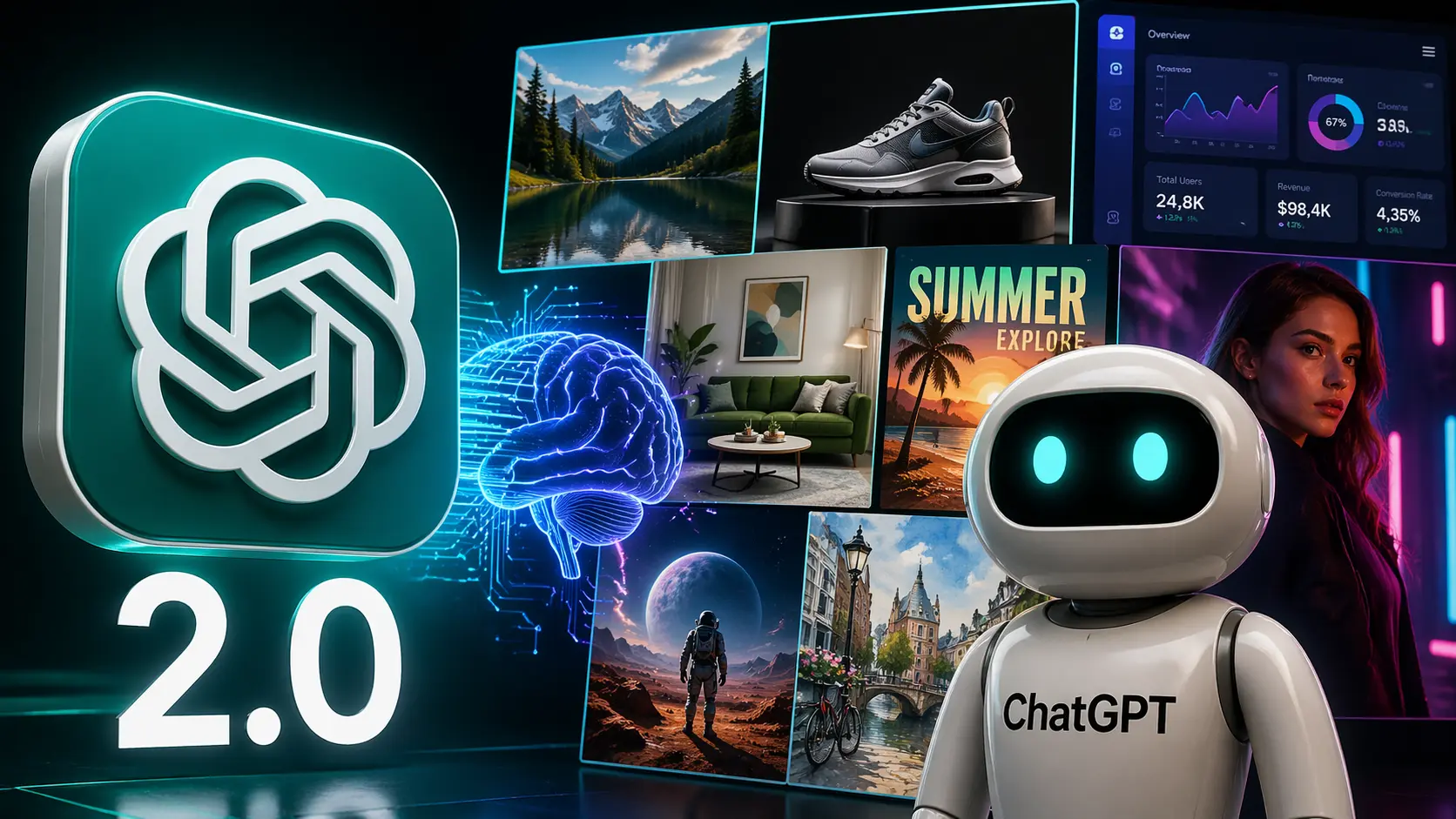
ChatGPT Images 2.0 marks a clear breakthrough in AI image generation in April 2026: the system now “thinks” before it creates an image. This new OpenAI approach shifts the tech from a simple image generator to a full-fledged design engine for professional use. The impact is immediate in quality, control, and applicability across marketing, product development, and the creative industries.
What is ChatGPT Images 2.0?
ChatGPT Images 2.0 is an advanced AI image model that fuses reasoning with visual generation. It first analyzes the prompt, sets composition and structure, and only then renders the image. That’s a fundamental break from earlier tools that produced visuals without real contextual understanding.
This “thinking mode” concretely means the system:
- Plans layouts upfront
- Understands object relationships
- Builds complex scenes consistently
This approach makes the model more reliable for professional work like interfaces, posters, and campaigns.
Why is the image quality so much better?
Quality leaps forward because the model is built on GPT Image 2, a new generation of visual AI. It explicitly targets realism and detail, pushing results closer to photography than classic AI art.
The biggest gains are in:
- True-to-life textures and lighting
- Better human and hand anatomy
- Fewer visual errors in objects
The result: images are no longer instantly recognizable as AI output and are ready for commercial use.
Does text in images finally work?
Yes—text in images is now reliable and readable. Where earlier models mangled letters or warped words, ChatGPT Images 2.0 produces correct typography.
This unlocks new use cases like:
- Ads with slogans
- UI designs with labels
- Social visuals with text
The improvement comes from tighter integration of language and image during generation.
How complex can images be now?
ChatGPT Images 2.0 handles far more complex compositions. It supports multi-object scenes, structured layouts, and consistent visual elements.
Concrete upgrades include:
- Up to ten times more complex scenes without errors
- Crisp grids and dashboards
- Consistent style across multiple images
That opens the door to use in design systems and branding.
Why does this matter for businesses and creatives?
ChatGPT Images 2.0 is ready for professional workflows. The tech shifts from experimental AI art to practical tools for business.
Key applications:
- Marketing campaigns and ads
- Product mockups and prototypes
- Social media content
- Storyboards and concept design
For Dutch businesses, that means faster content production and lower visual design costs.
What’s the downside of this new approach?
Higher quality comes with a clear trade-off: speed. Because the model analyzes and reasons first, generating complex images takes longer.
In practice, that means:
- Longer waits with extensive prompts
- More compute required
- Less ideal for rapid iteration
Still, for many use cases, the quality gain easily outweighs these downsides.
What does this mean for the future of AI design?
ChatGPT Images 2.0 moves AI from tool to creative partner. It understands intent, structure, and visual logic, actively thinking along with the design process.
The core shift is clear: AI doesn’t just generate images—it designs them.
This will affect:
- Creative professions
- Design workflows
- Digital marketing strategies
For the decision makers, this is an opportunity to integrate AI faster in creative sectors and accelerate innovation.
Conclusion
ChatGPT Images 2.0 elevates AI image generation from experimental tech to a professional design solution. By reasoning first, delivering higher quality, and understanding complex briefs, the tool is ready for real business processes.
It marks a turning point: AI isn’t just faster—it’s smarter and more usable.

Popular news
AI breathes new life into an old game: ask for your own Fallout 2 mods

Anthropic’s $80.7 Billion Loss Explained in Today’s AI News Podcast
Microsoft wants to keep AI agents in the workplace on a tighter leash

AI Cleans Up Your TV with CleanYourTV

Goldman Sachs Predicts AI IPOs Could Add 100 Billion Dollars to Indian Market Capitalization

Australian Federal Police Warns of AI Accelerated Youth Radicalization Risks
Latest comments
Loading
