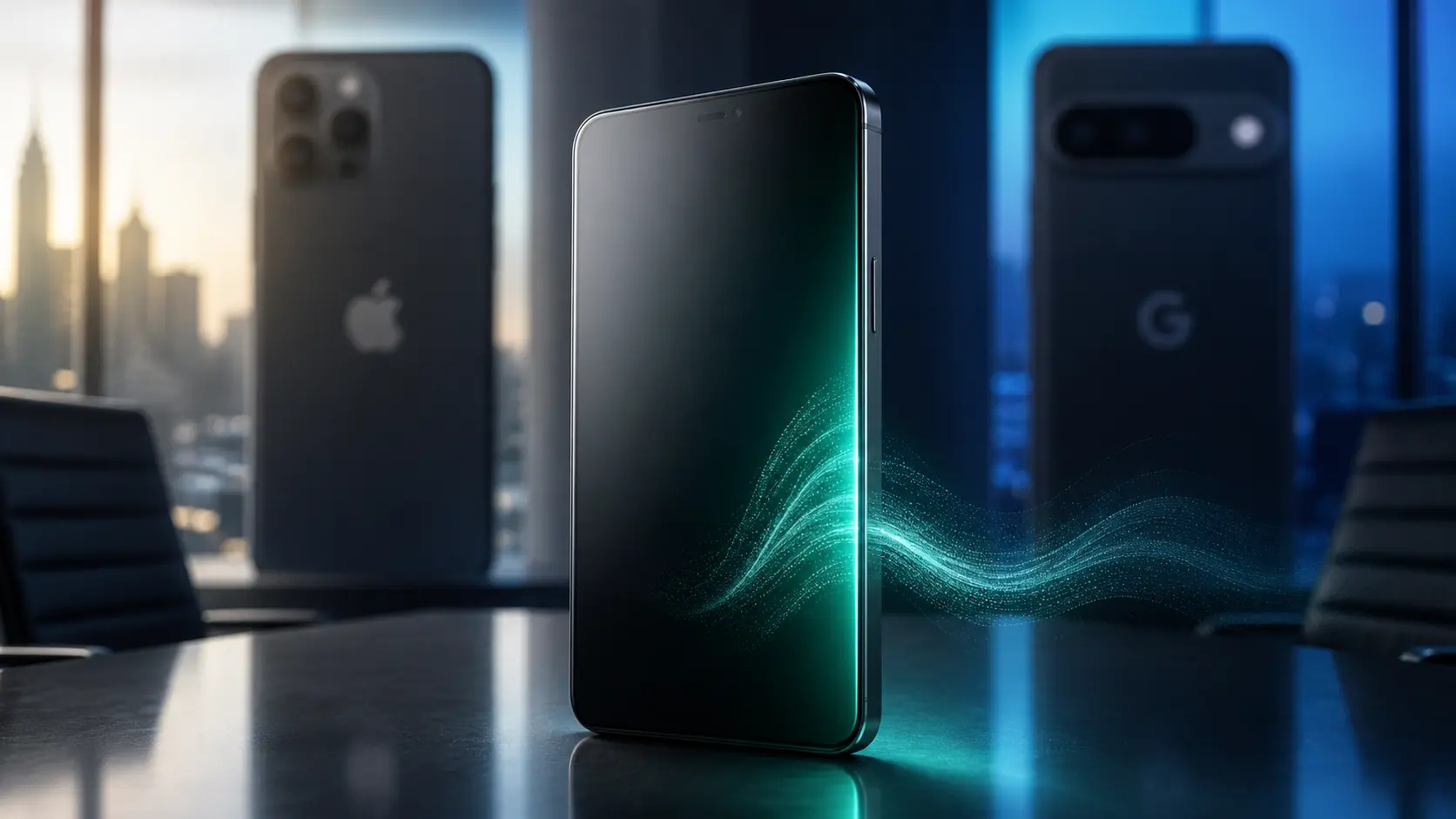
OpenAI is developing its own AI phone that could hit the market around 2027. It signals a strategic shift: artificial intelligence won’t just be software anymore—it will be baked directly into hardware.
An AI-first smartphone could upend the balance of power in mobile, impacting Apple and Google—and reshaping European and Dutch telecom and device ecosystems. That’s according to MacRumors.
Why would OpenAI build its own AI phone?
OpenAI wants end-to-end control of the user experience. The company behind ChatGPT is pushing for deeper AI integration in daily interactions, with hardware as a critical enabler. By building its own device, OpenAI can:
- Create AI-native interfaces without relying on iOS or Android
- Optimize data and interaction flows for its own models
- Experiment with new forms of human–machine interaction
An AI phone is fundamentally different from today’s smartphones. Instead of apps, a central AI assistant is always in the foreground. Users spend less time hopping between apps and more time communicating in natural language.
How is an AI phone different from a smartphone?
An AI phone replaces the app ecosystem with a contextual assistant. One AI system integrates multiple functions—messaging, navigation, shopping, search, and more.
The key differences:
- Interface: Voice and text instead of apps
- Operating system: AI-first architecture
- Personalization: Continuously learning from user behavior
- Hardware integration: Purpose-built for AI processing
The concept echoes earlier experiments like the Humane AI Pin, but OpenAI brings a far larger ecosystem and development muscle.
Why this threatens Apple and Google
An AI phone could undermine the dominant platform model. Apple and Google make billions from their app stores and operating systems. If AI displaces that layer, power shifts.
For Apple, that means:
- Less reliance on apps
- Pressure on the iOS ecosystem
- Tougher hardware innovation race
For Google:
- A threat to Android’s dominance
- Less search traffic via traditional interfaces
- A shift from Google Assistant to external AI
With this move, OpenAI positions itself not just as a software vendor, but as a platform player.
What does this mean for the Netherlands?
The impact in the Netherlands could be immediate and broad. An AI phone may reshape both telecom and the labor market.
Telecom and carriers
Dutch carriers like KPN and VodafoneZiggo will face new data patterns. AI-driven devices generate different kinds of traffic, with more real-time processing and less traditional app data.
Jobs and skills
AI-native devices accelerate demand for new skills:
- Prompt engineering
- AI integration across business processes
- Data governance and privacy
This will impact sectors like education, IT, and consulting.
Business and innovation
Dutch companies can tap into new interfaces. Think:
- Customer service via AI agents
- AI-driven sales channels
- More efficient workflows without apps
At the same time, reliance on foreign AI platforms raises questions about digital sovereignty.
The next big platform shift?
The AI phone could be the biggest leap since the iPhone. Where smartphones put apps at the center, the focus now shifts to intelligent systems that orchestrate everything.
The trend is clear:
- Software is shifting to AI
- AI is moving into hardware
- Hardware is becoming the new platform
If OpenAI pulls this off, a new ecosystem emerges with AI as the primary interface between humans and technology.
Conclusion
OpenAI’s potential AI phone signals a fundamental reset in tech. By embedding AI directly into hardware, the company challenges Apple and Google’s dominance and ushers in a paradigm where apps fade and AI takes the lead.
For the Netherlands, this brings both opportunity and risk. Innovation and productivity could accelerate, but dependence on foreign technology may grow. The next few years will decide whether AI phones remain niche—or become the new default.

Latest comments
Loading