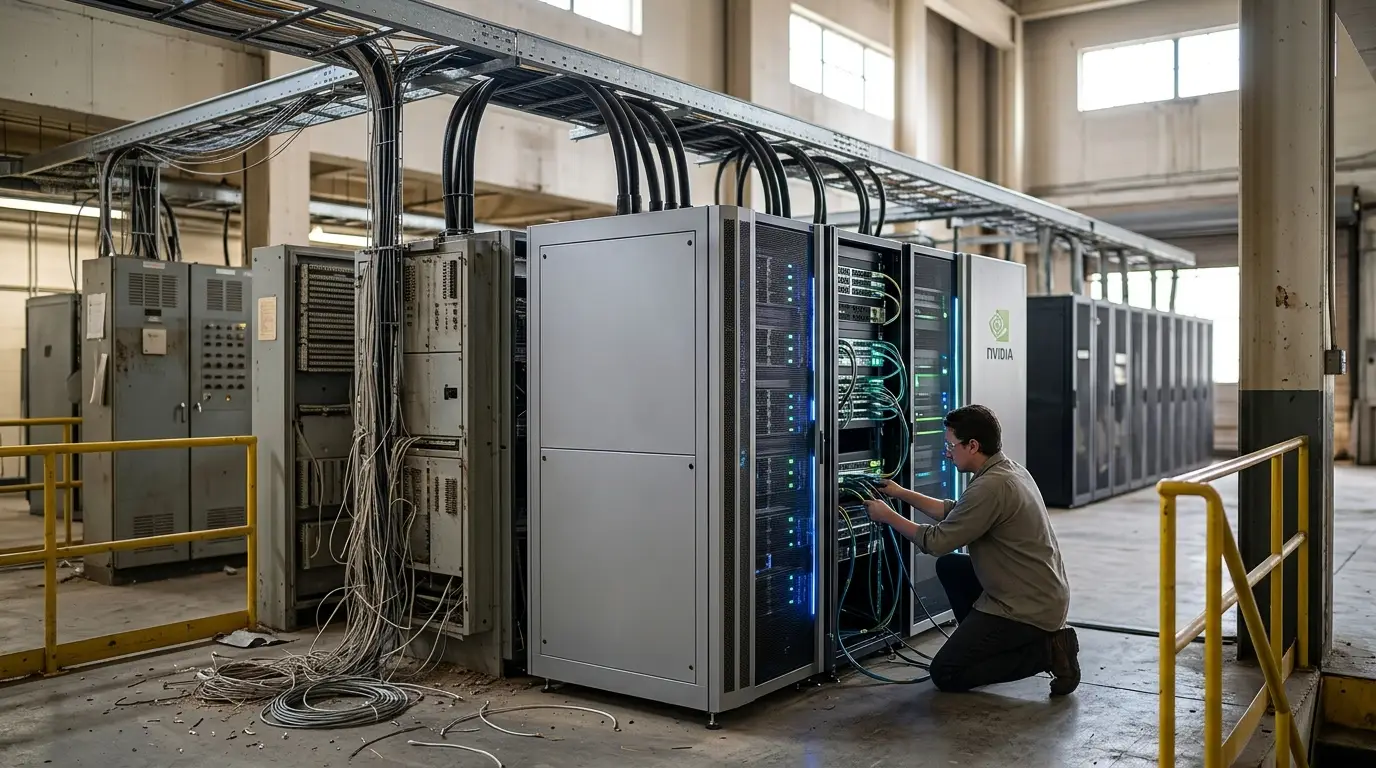
Nvidia is actively exploring a plan to convert more than 130 legacy telecommunications buildings into small artificial intelligence data centers. The technology giant recently pitched this initiative to Apollo Global Management. Apollo is the private equity firm that currently owns Brightspeed. This struggling broadband provider maintains an extensive network of physical facilities. This approach allows Nvidia to secure critical compute infrastructure without triggering the intense regulatory scrutiny that accompanies new construction projects.
Communities across the United States are increasingly pushing back against massive new data center developments due to energy and water consumption concerns. Local governments are enacting strict zoning laws and temporary pauses on new permits. Retrofitting existing structures offers a practical workaround to these local moratoriums while utilizing already established utility connections.
The Brightspeed Connection
The proposed partnership centers on the physical assets of Brightspeed. This telecommunications platform was acquired by Apollo funds from Lumen Technologies to expand internet access in rural and suburban areas. You can find official details regarding this acquisition on the Brightspeed corporate news portal. The existing Brightspeed locations are spread across approximately 20 U.S. states. Industry reports indicate these facilities collectively hold the potential to deliver up to 1 gigawatt of power capacity specifically for Nvidia server deployments. This distributed network model aligns perfectly with the growing industry shift toward edge computing architectures. Placing processing power closer to end users reduces network latency and dramatically improves overall system performance for real time applications.
Environmental and Operational Metrics
Deploying AI workloads in retrofitted buildings presents unique operational challenges and opportunities. Nvidia continues to emphasize efficiency in its hardware designs to mitigate the environmental impact of accelerated computing. The company outlines its commitment to reducing emissions intensity in its official Nvidia Corporate Sustainability resources. Repurposing dormant telecom sites inherently lowers the embodied carbon footprint associated with ground up construction. It also leverages existing power grids and fiber optic connections that are already routed to these specific locations. This strategy minimizes the environmental disruption typically caused by building massive new server farms from scratch.
| Metric Category | Projected Capacity or Impact | Strategic Advantage |
| Target Facility Count | Over 130 legacy telecom buildings | Immediate access to existing real estate |
| Geographic Reach | Approximately 20 U.S. states | Distributed edge computing network |
| Estimated Power Output | Up to 1 gigawatt total capacity | Bypasses new grid connection delays |
| Regulatory Friction | Significantly reduced | Avoids local construction moratoriums |
Future Industry Implications
This potential collaboration highlights a broader trend in technology infrastructure development. Companies are increasingly seeking creative solutions to meet the explosive demand for artificial intelligence compute power. Traditional hyperscale data center campuses face mounting opposition from local governments and residents. Repurposing underutilized commercial real estate provides a viable alternative that satisfies both corporate growth targets and community preservation goals. If finalized this agreement would set a new precedent for how technology firms acquire and deploy physical infrastructure across the nation. It clearly demonstrates that legacy telecommunications assets still hold substantial economic value in the modern artificial intelligence economy. The outcome of these ongoing negotiations will likely influence how other major tech giants approach their own infrastructure expansion strategies in the coming years.

Popular news

PSI Says AI System Solved an 18-Year-Old Quantum Computing Conjecture

Claude’s 'Dreaming' Explained: How AI Memory Works

Airbnb Challenges Traditional Chatbots With AI Travel Agent Planned for 2027
OpenAI Unveils GPT-6 Cyber for Advanced Vulnerability Research
AWS Launches Agentic AI Kiro Bots With Memory And Recurring Job Support