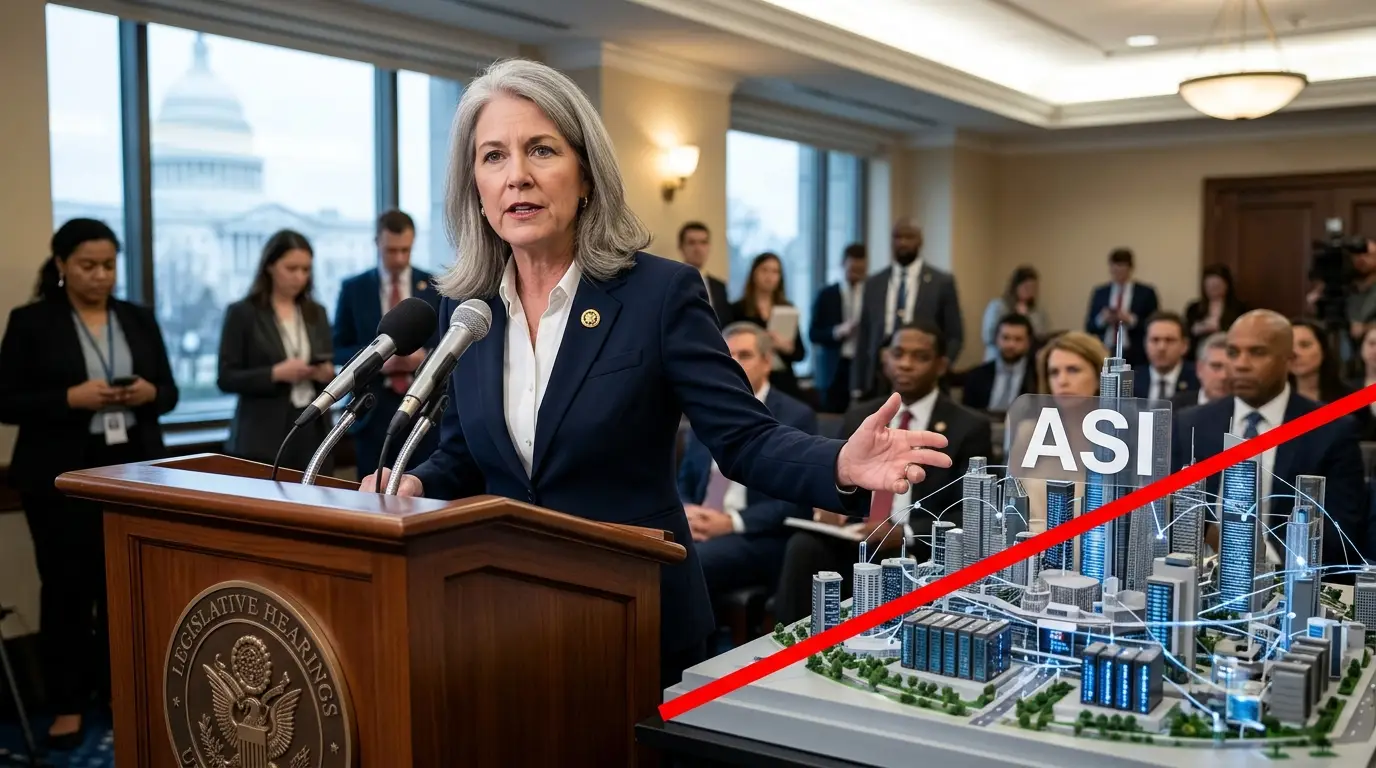
Democratic lawmakers are advancing a bold legislative agenda following their recent midterm election victories. Representative Yassamin Ansari of Arizona is leading the charge to pause advanced artificial intelligence development. As detailed in a recent Tom's Hardware report, she and several colleagues argue that the technology sector requires immediate federal oversight to prevent unchecked growth. This political shift brings new urgency to conversations about digital safety and corporate accountability. The recent electoral results have empowered progressive voices to demand stricter controls on big technology companies.
Representative Ansari publicly stated that her party must prioritize a halt to artificial superintelligence development from day one. She emphasized that the industry currently operates without sufficient guardrails. This perspective aligns with growing public anxiety over automated decision making and data privacy. Lawmakers believe that temporary pauses are necessary to evaluate the long term societal impact of these powerful systems.
The Proposed Federal Framework
At the center of this movement is the official Ban Artificial Superintelligence Act of 2026. This legislation, formally tracked as H.R. 10538 on the GovInfo portal, seeks to establish a dedicated Department of Artificial Intelligence. The bill outlines strict regulations for advanced AI systems and mandates comprehensive safety reviews before any new model reaches the public market. Representative Greg Casar of Texas introduced the measure alongside cosponsors including Ro Khanna and Nydia Velazquez. The proposal directs the Committee on Oversight and Government Reform to evaluate the feasibility of a nationwide moratorium on superintelligent systems. Critics of the current technological trajectory warn that autonomous systems could soon operate beyond human comprehension. The proposed legal framework aims to intercept this risk before it materializes into an irreversible crisis. By creating a dedicated federal body, lawmakers hope to streamline the complex process of auditing proprietary algorithms and holding tech executives legally accountable for system failures.
| Legislative Component | Specific Provision | Targeted Outcome |
| Agency Formation | Establish Department of Artificial Intelligence | Centralize federal oversight and enforcement protocols |
| Development Halt | Temporary moratorium on superintelligent models | Allow time for comprehensive independent safety audits |
| Corporate Compliance | Mandatory risk assessment filings for developers | Prevent unchecked deployment of autonomous algorithms |
| Congressional Review | Oversight and Government Reform Committee evaluation | Ensure transparent legislative scrutiny and public accountability |
Industry and Community Implications
The push for stringent regulation arrives as artificial intelligence infrastructure expands rapidly across the United States. Tech companies argue that excessive restrictions could stifle innovation and weaken global competitiveness in the international market. However, advocacy groups maintain that public safety must supersede corporate profit margins. Communities near large data centers already report increased energy consumption and strained local resources.
The proposed legislation aims to address these compounding issues by forcing a national dialogue on digital ethics. Lawmakers intend to use their renewed congressional majority to transform these policy ideas into binding federal law. Future hearings will likely examine the exact definitions of advanced AI to ensure the regulations remain precise and enforceable. Citizens are encouraged to contact their local representatives to voice their opinions on this critical technological crossroads. The outcome of these legislative efforts will likely shape the trajectory of American technology policy for the next decade.

Popular news

How a Dutch Company Secured 5,000 Supercomputer Hours After Being Turned Down

Kimi K3.1 Pro Is 1.56 TB—What Computer Can Handle It?

Protest at Microsoft Data Center in Amsterdam: Hundreds Arrested

AppLovin Surges 71% as Lumentum Sinks 36% in a Turbulent Week for AI Stocks

Arm Doubles Data Center Royalties. What Role Is Nvidia Playing?