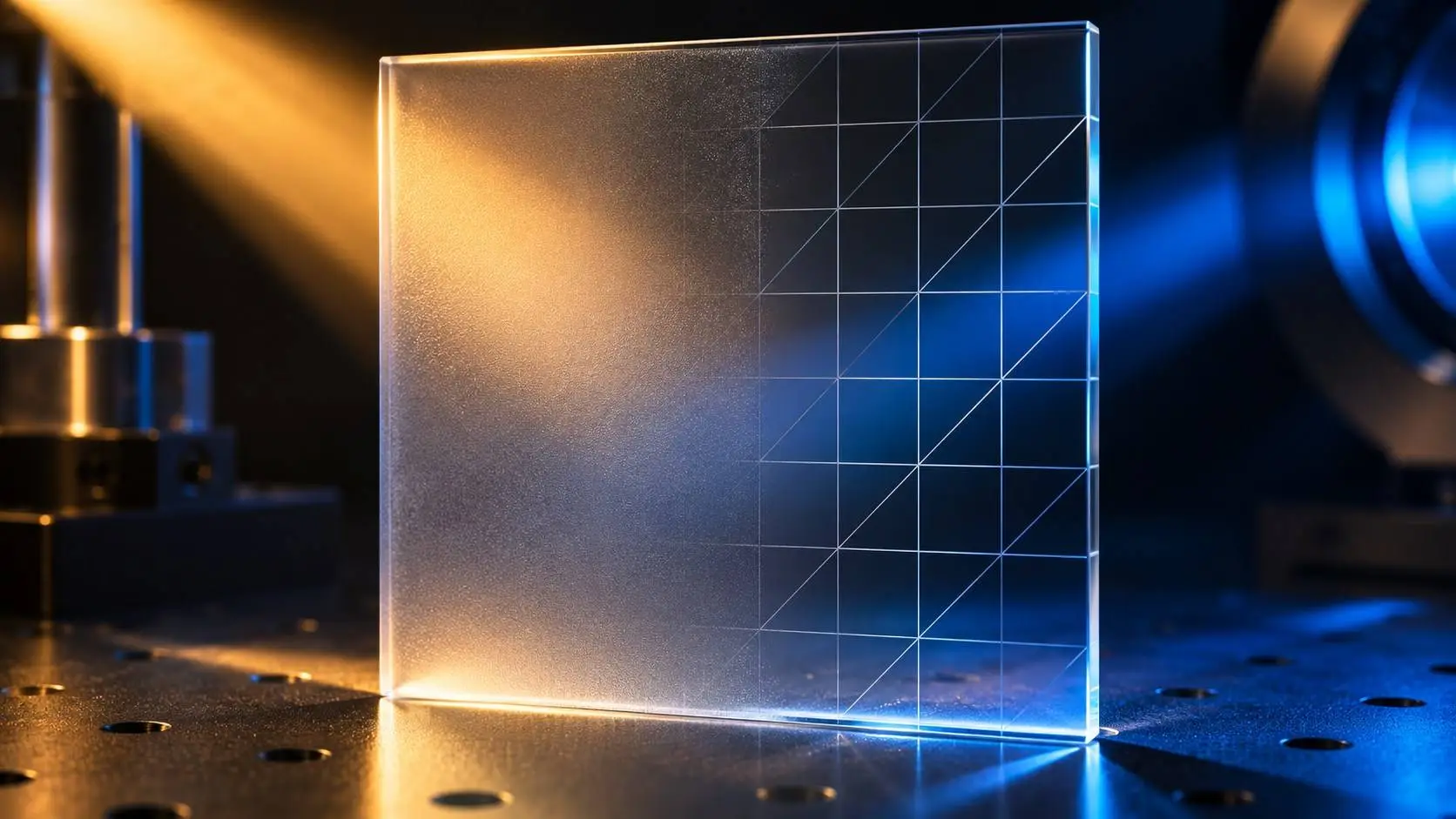
Sigma forms blocks of text by refining an internal representation. AI-generated editorial illustration.
Nvidia has posted two Sigma language models that can form text in blocks. The research models have 3 billion and 8 billion parameters. They give developers another way to test how fast a model can write code or solve a math problem when it works on several chunks of text at once.
The two models are part of Nvidia’s research on continuous diffusion for text. The group worked with researchers from Cornell and Georgia Tech. Nvidia has put the 3B model and the 8B model on Hugging Face. Both cards describe research models for work such as code and reasoning.
How Sigma shapes a block of text
Most chat models add one piece of text at a time. Each new piece can depend on what the model just wrote. Sigma also works from a prefix. It can then start a block with noise and refine several pieces in that block in the same step.
A piece of text is called a token. It might be a word, a part of a word or a mark such as a comma. Sigma works on a compact set of numbers that stand in for each token as the block takes shape. Once it has refined the block, it turns those numbers back into tokens a reader can see.
The team trained versions to do that in fewer steps. Nvidia reports up to eight tokens per pass in its math tests and four in code tests for the distilled models. The figures describe its own sets of tasks and settings.
What the Sigma speed result measures
Sigma can also use the block generator as a drafter for its own next-token mode. The drafter suggests several tokens. The next-token mode checks which ones it would have written on its own. Only the accepted part moves forward.
Nvidia measured an average 3.46 times as much text per unit of time for that setup on a GB200 with the 8B model. It compared the result with that model’s own next-token mode. It did not measure the same gain across all models, GPUs and uses. A long answer and a short fill in a code file can put very different loads on a model.
One place to look is the length of the draft the checker accepts. A correct run of several tokens can save a step. If the drafter keeps guessing wrong early in a block, the checker has less work it can keep.
How to read the research release
The release lets another team compare both ways of writing text on the same set of tasks. It can check how much time each takes and whether the answer still passes. Our coverage of Cline-Bench explains why repeat runs matter when a fast-looking code answer still needs tests.
The weights let teams look at the research on hardware they manage. The reported speed comes from a data center GPU and a specific decoding setup. Our guide to local versus cloud AI explains where memory and hardware change that choice.
The next test is how much of the gain carries over to the tools people use to serve models.


Popular news

Tencent releases Hy4 weights with new terms for large AI hosts

Claude computer use reaches Team and Enterprise in beta

Proposed Claude-assisted Riemann proof passes independent checks

ChatGPT Space reaches Plus with shared pages and slides

Cognition launches Devin Bots to manage multiple coding sessions