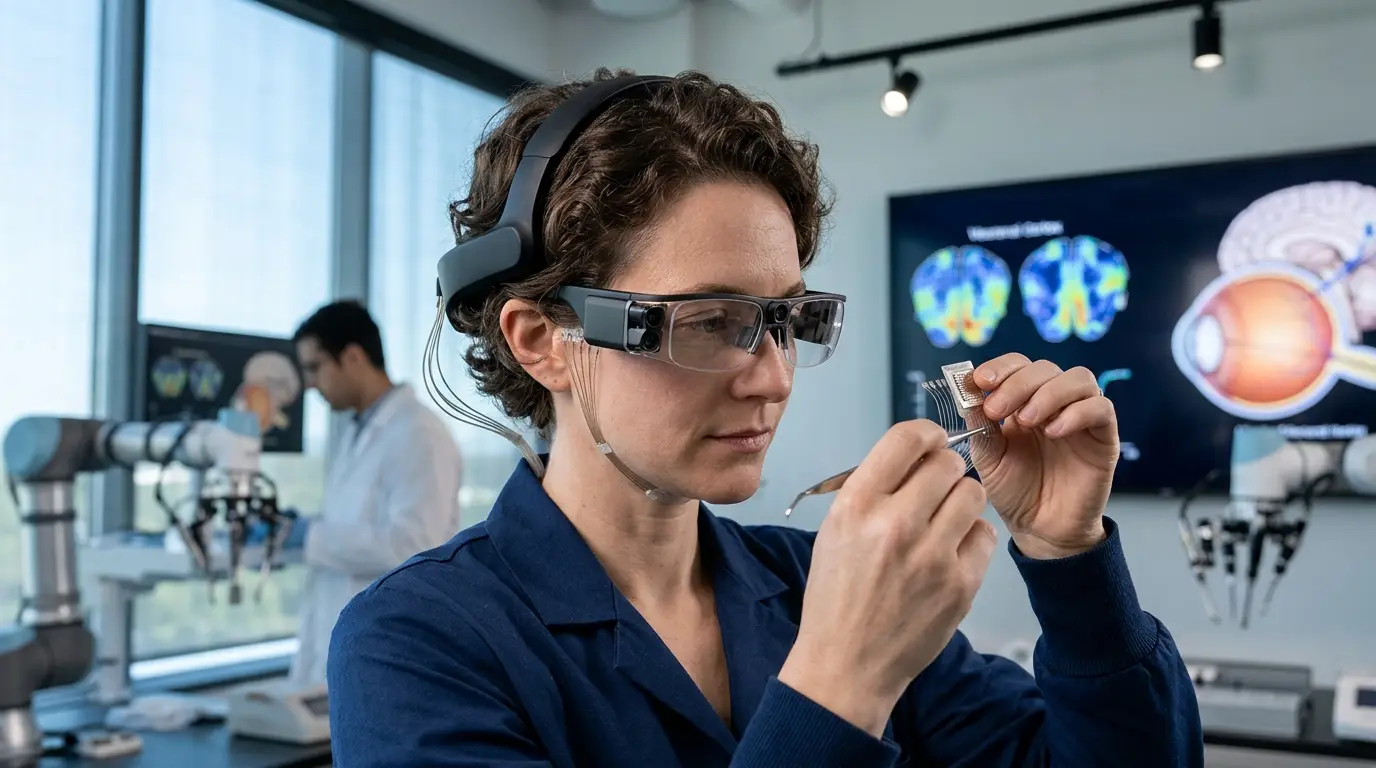
Elon Musk stated that Neuralink is moving forward with its Blindsight program to restore visual perception. The company plans to achieve this by stimulating the visual cortex directly, which bypasses damaged eyes and optic nerves entirely. As detailed in a recent Tom's Hardware report, this approach could enable functional vision even for individuals who have been completely blind from birth.
How the Visual Prosthesis Works
Neuralink outlined its core methodology on its official visual prosthesis page. The system generates visual perception by activating specific brain areas responsible for processing visual function. Instead of relying on the biological integrity of the eye, the implant translates external visual data into precise electrical signals. The brain interprets these signals directly, creating a new pathway for sight.
| Technical Parameter | Current Development Status | Primary Clinical Objective |
| Signal Transmission | Direct cortical electrical activation | Bypass biological optic nerve damage |
| Regulatory Classification | FDA Breakthrough Device Designation | Accelerated review for debilitating conditions |
| Target Patient Profile | Severe to total vision loss demographics | Establish baseline functional visual perception |
| Trial Infrastructure | Active global participant registry | Safe deployment of initial human implants |
Regulatory Milestones and Clinical Trials
Medical technology requires strict regulatory oversight. Neuralink secured Breakthrough Device Designation from the United States Food and Drug Administration for this specific program. You can verify this regulatory milestone on the official Neuralink updates page. This designation accelerates the review process for devices treating irreversibly debilitating conditions. Furthermore, industry outlets like MobiHealthNews note that the company is expanding its human clinical trial registry to prepare for initial implant procedures in the near future.
Long Term Medical Implications
Restoring sight through direct cortical stimulation redefines sensory restoration boundaries. IEEE Spectrum highlights that while early engineering claims suggest high potential, the immediate focus remains on achieving reliable and functional vision first. Successful deployment will open new avenues for treating various neurological deficits. This progress will fundamentally transform patient care standards and quality of life metrics in the coming decade.

Popular news

Thieves Use AI and Malware to Rank Stolen Data by Value

AI Helped Enable the Biggest Crypto Hack: Binance Explains What Happened

New Windows Malware Uses AI to Rank Victim Assets by Value

AI Engineer Compiles Working RISC-V CPU Directly Into Qwen Model Weights

Brazilian Lawyers Fined for Hidden AI Prompt Injection in Court Filings