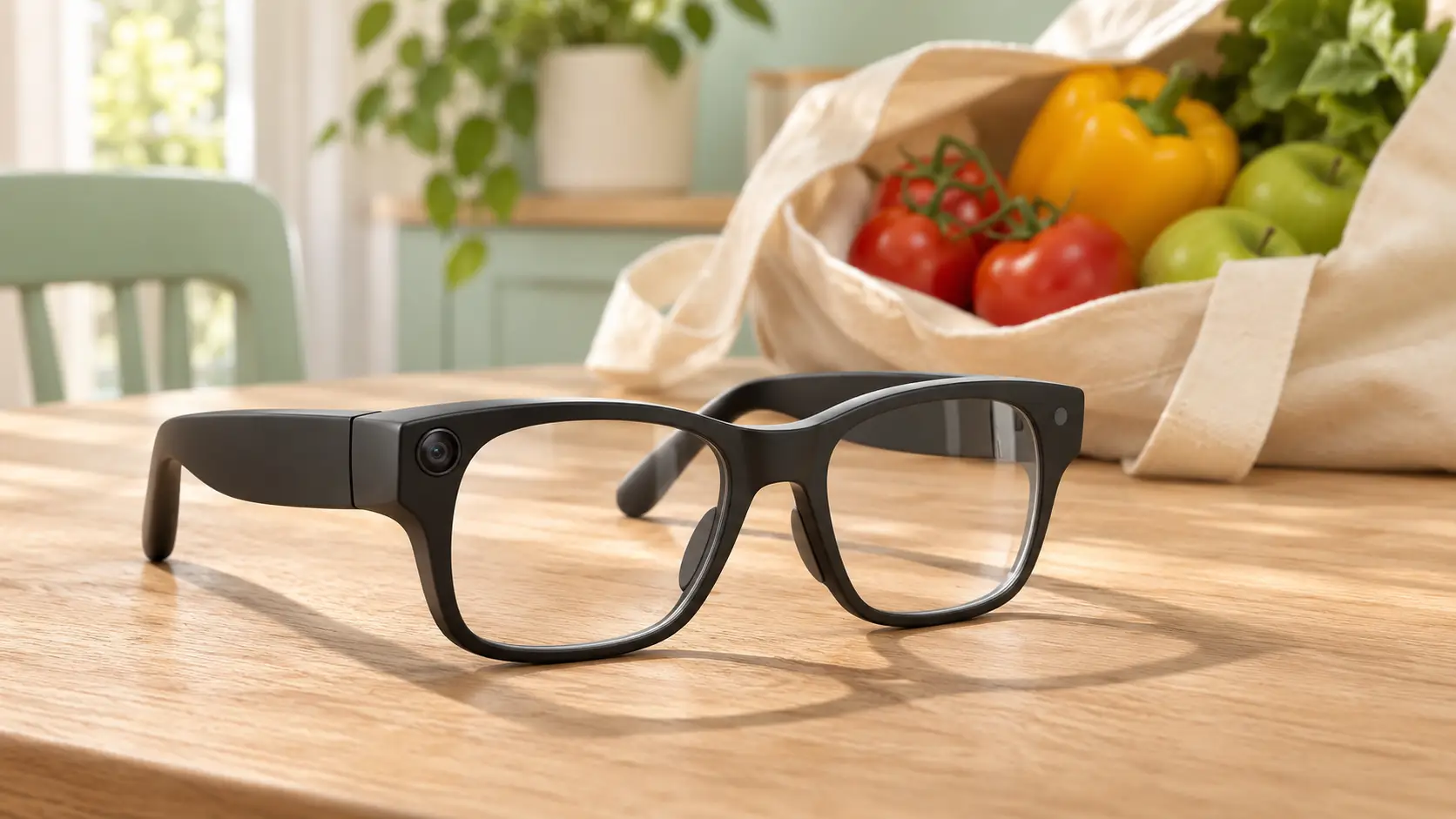
Jaap Wortel, from Haren, uses his Meta glasses to read letters aloud and tell him how much he owes at the supermarket checkout. The glasses help him, despite being almost completely blind, to do more on his own. His experience casts the debate over “creepy glasses” in a different light: restrictions can also affect people who rely on the camera to understand their surroundings.
In a report by RTV Noord, Wortel explains how he scans his groceries with a handheld scanner, then asks his glasses to read out the information. He hears both the product details and the price. “Without the glasses, I’d never have known what it said. That was so cool!”
Smart glasses aren’t all bad. They can offer significant benefits, too.
Reading a letter without asking for help
Wortel can now make out only light and dark. Since August, he has used the glasses for tasks including managing paperwork, shopping and cooking. He also sometimes asks what a person looks like. A voice gives him an impression of someone, and the glasses can add a description.
The technology combines a camera with microphones, speakers and an AI assistant. Users can ask what a letter says or what object is in front of them. The assistant analyzes the image and responds aloud through the glasses’ arms.
Mark Lanting, a manager at the expertise center Koninklijke Visio, sees potential for blind and partially sighted people. In the report, he stresses that this kind of assistance can determine whether someone can do something independently or needs another person’s help. Voice commands also make the technology easier to use.
One practical advantage over a phone is that users keep both hands free. In accounts collected by Visio, users explain how this lets them hold a white cane, a bag or a letter while using the glasses.
More information doesn’t always mean better help
Wortel had to learn what information he actually wanted. During a taxi ride, the glasses started describing cars, houses, trees and road markings. The flood of details was more overwhelming than useful. He began asking more specific questions about what he needed to know in the moment.
He still runs into limitations. The glasses don’t always read numbers correctly in Dutch, he says, so he uses another app for that. And when the glasses are talking, it can be harder for him to hear the person he’s speaking with.
In a field test of the Meta glasses, Visio flags another problem: responses sometimes assume the user can see. Being told that keys are beside a flower vase is only helpful if the user knows where the vase is.
A description of the surroundings also can’t guarantee that it’s safe to cross the street. Visio warns that obstacle detection through a connected app can be delayed by the internet connection. One user featured in its series therefore continues to use a white cane. Whether the glasses help depends on the person and the situation.
The camera helps its wearer—but captures others, too
The benefits don’t erase privacy concerns about Meta’s smart glasses. Bystanders can’t easily tell whether they’re being recorded or what will happen to the footage. Even an innocent question about a product could bring someone else into the frame.
Wortel takes that into account. He leaves the glasses at home or puts them in his bag when visiting the doctor or dentist. He doesn’t want to film people there. His approach shows that people who benefit greatly from the technology can also set limits on how they use it.
The feature being used matters, too. According to Meta’s privacy information, regular photos and videos remain in the glasses’ gallery until users import them to their phone. When users ask Meta AI a visual question, the camera image is used to generate an answer; the company says those images don’t appear in the photo gallery.
That alone doesn’t mean the images aren’t processed or stored elsewhere. For anyone asking the glasses to read personal mail, how that data is handled matters just as much as preventing unwanted recordings of bystanders.
Privacy rules must account for accessibility
The Dutch Consumers’ Association recognizes the accessibility benefits. In its lawsuit against Meta over the camera glasses, the organization is demanding changes to the glasses and their default settings. If Meta can’t make them comply with privacy law, the association wants sales banned. It also explicitly calls for an exception when the glasses are medically necessary, with protections for both users and bystanders.
Lanting takes a different view in the report. He sees real value in an everyday consumer product that also helps people with visual impairments. He calls for shared guidelines on how the glasses should be used, rather than treating them solely as a medical device.
Removing the camera altogether would come at a clear cost. AI glasses without a camera can still answer spoken questions, but can’t read a letter or price tag themselves. For users like Wortel, that means losing a crucial feature.
A workable solution must therefore address the design, too: make it clear when the camera is active, limit what images are processed, and give users control over what is stored and shared. Blind and partially sighted people need a seat at the table. They can explain which safeguards work—and which would make an essential everyday aid unusable.

Popular news

EU Leaders Meet in Dublin to Decide Who Pays for Europe’s AI Computing Power

Google DeepMind’s AlphaGenome 2 predicts what DNA variants do in specific cells

Anthropic Says Automated Coding Tools Are Dismantling Nvidia Software Moat

US Data Brokers Supply Half Billion Dollars In AI Training Environments To Chinese Labs

Google DeepMind Ships Next Generation Robotics and Genomic AI Models