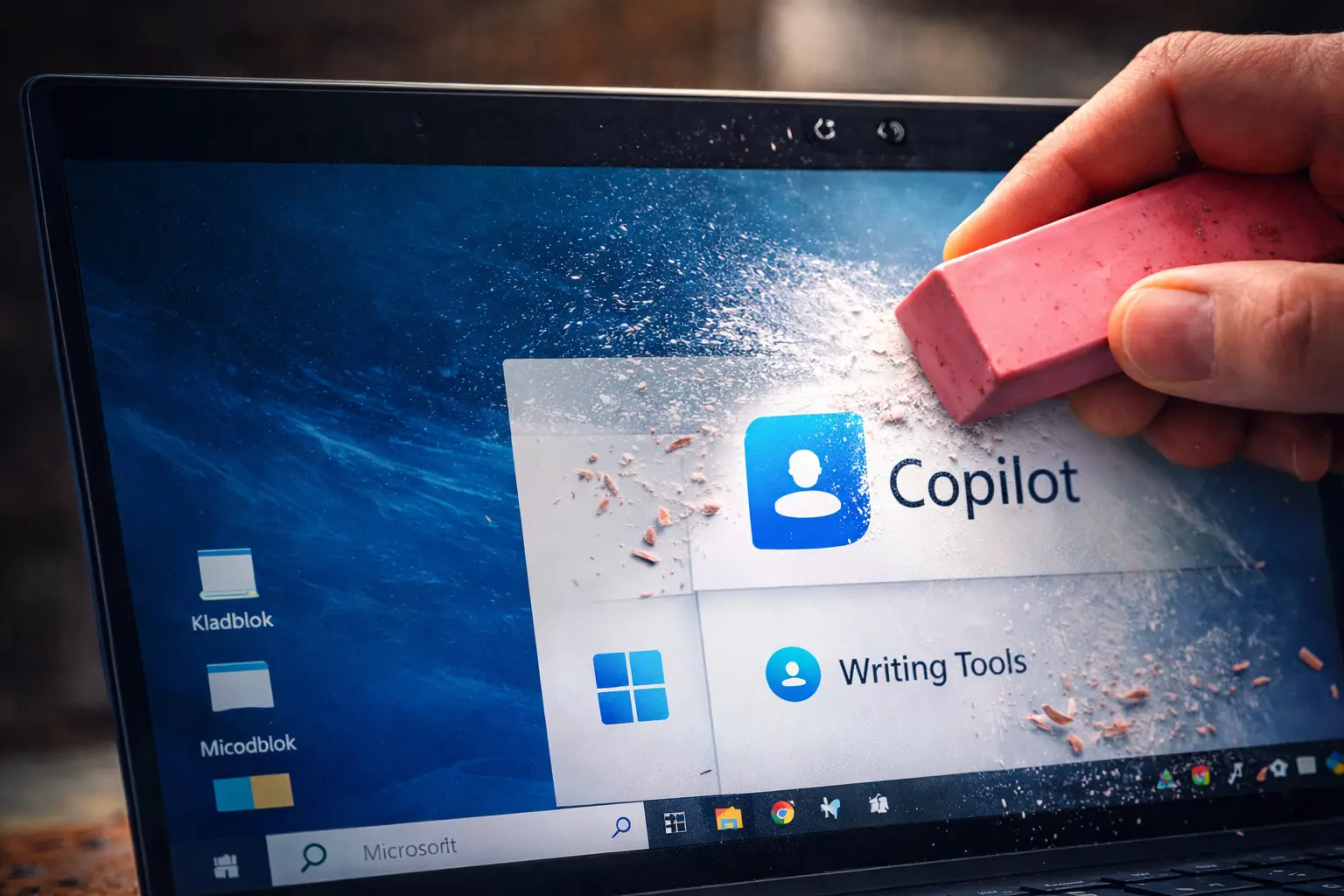
Microsoft is removing the Copilot name from Windows 11 apps, while keeping all AI features intact. The change hits Notepad first, where Copilot is rebranded as “Writing Tools.”
It’s a shift from loud AI branding to quietly integrated features. The search term “Microsoft Copilot is disappearing” sits at the heart of this move, according to multiple sources.
The tweak appears in a new Windows 11 preview and signals a broader strategy. Microsoft wants AI less in-your-face and more baked into the system. That raises fresh questions about transparency and user control.
Why is the Copilot name disappearing from Windows?
Microsoft is dropping the Copilot label to make AI feel less conspicuous. The goal: integrate functionality seamlessly without overwhelming users with AI buzzwords. The features remain, but under different names.
In Notepad, the Copilot icon is replaced with a pen symbol and the menu relabeled “Writing Tools.” Users keep the same options, like generating or rewriting text. Only the AI branding moves into the background.
Microsoft says this aligns with a broader repositioning of AI in Windows—presenting it as a default part of software, like spellcheck or autosave.
What actually changes for users?
Features stay the same; the interface changes. You’ll no longer see Copilot buttons, but more generic tools powered by AI.
Key changes:
- The Copilot name disappears from apps like Notepad
- AI features live under “Writing Tools”
- Settings move to “Advanced features”
- AI remains optional and can be turned off
In short: users keep control over AI, but it’s less obvious where AI is at work.
Is this a strategic move by Microsoft?
Yes. The rebrand aims to reduce resistance to AI. By making it less visible, Microsoft lowers the barrier to use—while sidestepping negative baggage around the Copilot brand.
Microsoft has already hinted that more Windows components will follow. Apps like Paint and File Explorer are likely next. The result: an OS where AI is everywhere, but rarely called out by name.
It mirrors a broader tech trend: AI moving from headline feature to invisible infrastructure.
What does this mean for the Netherlands?
For Dutch users and organizations, AI will be harder to distinguish from regular software. That impacts:
- Transparency: users know less clearly when AI is active
- Compliance: companies must stay explicit about AI use
- Education: digital skills need stronger AI awareness
- Labor market: AI integration changes workflows without fanfare
For Dutch policymakers, this is a new challenge. Regulation often targets explicit AI systems, while this shift leans into hidden integration.
Criticism: hiding or simplifying?
Critics argue Microsoft is “hiding” AI rather than making it clearer. Removing the Copilot name can make it seem like AI is fading away—even as it’s more deeply embedded.
Supporters call it better design. Technology succeeds when it works invisibly, they say.
The truth likely sits in the middle. Microsoft is simplifying the experience while raising valid questions about visibility and control.
What should we expect next?
Expect AI to fully blend into the Windows interface. The Copilot brand may mostly vanish, even as the tech expands.
What’s likely coming:
- AI built in by default across Windows apps
- Fewer explicit AI buttons or branding
- More automation without user prompts
- Bigger role for settings and opt-out choices
The message is clear: AI isn’t going away—it’s becoming more foundational.
Conclusion
Microsoft is removing the Copilot name, not the technology. It marks a shift to invisible AI integration across Windows. For users, that means more convenience—potentially at the cost of transparency.
The question isn’t whether AI will stay, but how visible it will be.

Popular news

Anthropic’s $80.7 Billion Loss Explained in Today’s AI News Podcast

AI breathes new life into an old game: ask for your own Fallout 2 mods

Microsoft wants to keep AI agents in the workplace on a tighter leash

AI Cleans Up Your TV with CleanYourTV

Goldman Sachs Predicts AI IPOs Could Add 100 Billion Dollars to Indian Market Capitalization

Global Memory Shortage Threatens Corporate AI Adoption
Latest comments
Loading