Meta unveils an AI model that runs locally on a single computer
NewsWednesday, 12 August 2026 at 06:09
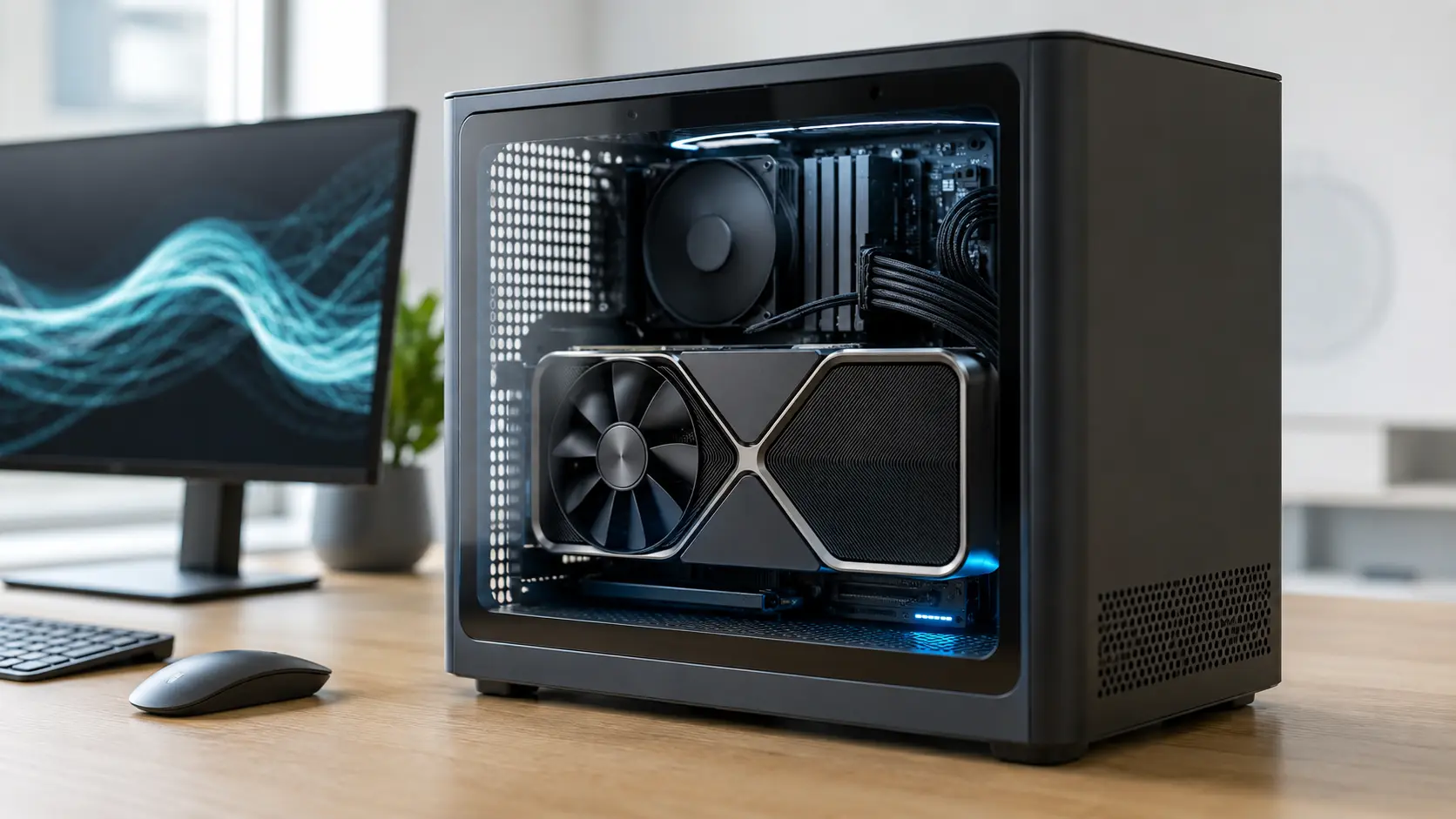
Meta has released Muse Glimmer, an AI model that runs locally on a powerful Mac or Windows machine. It’s built for autonomous AI agents that can carry out multi-step tasks on their own, like processing files, writing code, and operating software.
With 30 billion parameters, Muse Glimmer can run on a computer with a single compatible GPU, according to Meta. Developers can download and modify the model weights under the relatively permissive Apache 2.0 license.
The launch is notable because Meta has recently become less open about its most powerful AI models. Alongside Glimmer, the company says an open-weights version of the larger Muse Spark 1.2 is also coming.
What can Muse Glimmer do?
Muse Glimmer is a multimodal model. That means it can handle not just text, but also images, screenshots, and visual elements from software interfaces.
It’s built for so-called agentic tasks. Instead of requiring a new prompt for each step, you give the AI a goal and it figures out the sequence of actions to get there.
An agent could, for example:
- Search a folder of documents and organize the key insights
- Write, run, and debug code
- Extract information from screenshots
- Chain together different tools
- Open, compare, and edit files
- Execute longer administrative workflows
Meta isn’t pitching Muse Glimmer as a direct replacement for the biggest models from OpenAI, Google, or Anthropic. It’s smaller and optimized for tasks that run locally and continuously.
That’s appealing for users who don’t want to send sensitive files to an external provider.
AI without a constant cloud tether
Most well-known AI services run in large data centers. When you use ChatGPT, Claude, or Gemini, your prompt goes to the provider’s servers, where the model generates a response that’s sent back to you.
A local model works differently. Computation happens on your own machine or on a server your organization controls.
That brings benefits. Business documents, source code, and other sensitive data don’t have to be sent to a third-party AI provider by default. The model can also keep working when you’re offline or when a commercial API is temporarily unavailable.
There are trade-offs. You need enough memory and compute. The user or organization is also responsible for installation, updates, access controls, and security.
“Local” doesn’t automatically mean “safe.” An AI agent with access to files and apps can still make mistakes or take unwanted actions locally.
One GPU doesn’t mean your average laptop
Meta says Muse Glimmer can run on a Mac or PC with a single GPU. That doesn’t mean every consumer machine can handle it smoothly.
A 30-billion-parameter model typically needs a lot of memory. Meta uses compression techniques to shrink storage and RAM requirements. In a version quantized to roughly four bits, the language model reportedly fits in under 20 GB.
That puts Muse Glimmer within reach of powerful workstations, recent Macs with plenty of unified memory, and desktops with a modern GPU. Many cheaper laptops and office PCs, however, won’t have enough capacity.
Meta is working with AMD, Arm, Dell, Intel, and Nvidia, among others, to optimize the model for different hardware. Support for popular local AI apps and frameworks should make setup easier.
The model is trained on more than a hundred languages. Independent testing will need to show how well Muse Glimmer performs in Dutch.
Open weights isn’t full open source
Meta describes Muse Glimmer as an open-weights model. Developers can download the trained weights and run them on their own hardware.
The Apache 2.0 license offers considerable freedom. Developers can modify the model and use it in commercial products, as long as they follow the license terms.
Still, open weights aren’t the same as fully open source. Meta doesn’t necessarily release all training data, selection methods, and internal processes used to build the model.
Without that information, external researchers can’t fully reproduce the model from scratch. Even so, there’s far more transparency and control than with a model locked behind a commercial API.
That difference matters for businesses. An organization can deploy Muse Glimmer inside its own infrastructure, continue training it with proprietary data, and tune it for a specific task.
Meta teases a bigger open model
Meta also announced plans to release an open-weights version of Muse Spark 1.2. The timing and the license for the larger model are still unclear.
Muse Spark is more powerful than Glimmer, but will likely demand far more hardware. That makes it more appealing to enterprises, cloud platforms, and research labs than to individual PC users.
The move signals a partial return to the playbook that made Llama huge. By releasing model weights, the company fostered a large ecosystem of developers, custom models, and apps.
With later models, Meta often opted for tighter access. Muse Glimmer is meant to show the company once again sees open distribution as a strategic edge.
Zuckerberg: spread AI power, don’t hoard it
CEO Mark Zuckerberg paired the launch with a long essay on his AI vision. He argues it’s dangerous when a small group of companies or experts decides who gets access to the most powerful models.
Zuckerberg wants people to eventually have a personal AI aligned with their goals and preferences. Open models, he says, should prevent control from concentrating in a few central providers.
That message aligns with Meta’s business interests. The company’s main revenue doesn’t come from selling AI models, but from ads, social platforms, smart glasses, and other consumer products.
By making models widely available, Meta can shape the AI ecosystem without charging per request.
Open models also carry risks. Once downloaded, a provider can hardly police how a model is used. That makes local models attractive to privacy-conscious companies, but also to bad actors.
What Muse Glimmer means for users
For most consumers, Muse Glimmer won’t instantly replace ChatGPT or Gemini. It’s primarily interesting for developers and power users who install local AI software.
Still, the launch points to where personal AI is heading. Instead of sending every task to a giant data center, smaller agents can handle more work directly on your computer.
That can cut costs, boost privacy, and keep AI usable without a constant internet connection. It also gives an agent direct access to local files and apps—making strong security even more critical.
Meta is positioning itself against rivals who lock their top tech behind closed cloud platforms. Whether Muse Glimmer is strong enough to reliably run complex agents will have to be proven in independent real-world tests.
For now, the key shift is this: a modern agentic model no longer has to live in a big AI provider’s data center by default.

Popular news

Latest comments
Loading