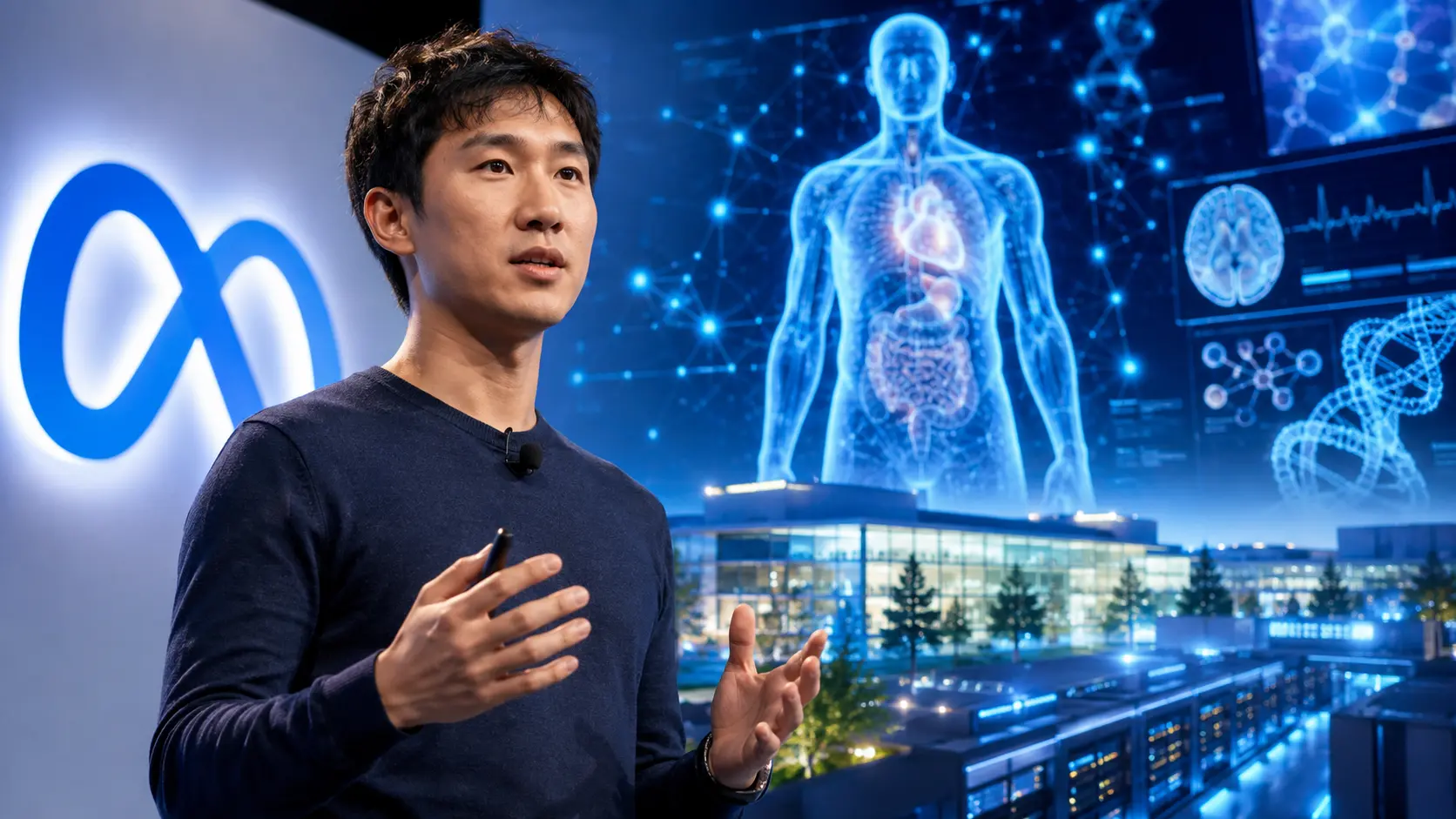
Meta wants to set its next-generation AI models apart with advanced health features. That’s what Meta’s AI chief Alexandr Wang told the Bloomberg Tech Conference in San Francisco.
Health, Wang said, will become one of the core pillars of Meta’s AI strategy as the company scales its models to billions of users.
The remarks offer a rare glimpse into the direction of Meta Superintelligence Labs (MSL), the new AI division Wang has led since 2025. It signals a different path from rivals like OpenAI, Anthropic, and Google, which are leaning into general AI assistants and productivity tools.
Health as Meta’s strategic wedge
According to Wang, health-related tasks are now among the strongest areas of Meta’s newest AI model, Muse Spark. Launched in April, it’s the first major AI release since CEO Mark Zuckerberg began restructuring Meta’s AI efforts.
“Health is an area that we view as really critical as we scale these models out to billions,” Wang said at the event.
Wang conceded that Muse Spark isn’t yet on par with the most advanced models from OpenAI and Anthropic, but said its performance exceeded internal expectations.
That stance is notable. Over the past two years, Meta faced criticism for falling behind ChatGPT, Claude, and Gemini. With Wang’s arrival, Zuckerberg is pushing to close the gap fast.
Why health is becoming AI’s next big battleground
Health is widely seen as one of the biggest commercial opportunities for generative AI. Every day, millions ask chatbots medical questions—from symptom checks to lifestyle advice.
At the same time, researchers and regulators warn that AI in this domain carries extra risk. Bad medical advice can have immediate consequences.
That’s why health models are both attractive and perilous for AI companies. A system that consistently delivers reliable health information could tap a massive market. But the bar for safety and accuracy is far higher than for general-purpose AI.
Meta kept parts of the model closed over biosecurity risks
Wang also revealed that developing Muse Spark surfaced biological safety concerns.
He didn’t share specifics, but confirmed Meta put additional safeguards in place before launch.
Those findings, Wang said, factored into the decision not to release Muse Spark fully open source.
It’s a striking shift. For years, Meta championed open AI models with the Llama family. Keeping some technology behind closed doors underscores how seriously the industry now treats safety risks around increasingly powerful AI.
Building into Facebook, Instagram, and WhatsApp
Meta doesn’t see health AI as a standalone product. Wang said the company is exploring how to weave future health features into platforms like Facebook, Instagram, and WhatsApp.
That would give Meta immediate reach to billions of users worldwide.
Blending social data, communications, and AI assistants could give Meta a unique edge in health. But privacy and regulatory experts will likely scrutinize how such systems handle sensitive medical information.
What this means for the AI arms race
Wang’s comments suggest competition among top AI firms is shifting from generic chatbot performance to specialized use cases.
While OpenAI pushes a universal assistant, Google doubles down on ecosystem integration, and Anthropic leans into safety, Meta is staking out territory in health and wellness.
Whether that bet pays off will hinge on model reliability—and on whether users trust AI with their health questions.
One thing is clear: Meta no longer treats health as a niche. It’s betting it will be one of the defining fronts in the global AI race.

Popular news

AI Phone Agents Still Get Names Wrong | AI World Daily News

AI Phone Agents Still Make a Surprising Number of Mistakes with Names and Addresses

Chinese AI Maker Moonshot Limits Hacking Capabilities in New Kimi Model

AI Bot Accessed Public Voter Data Through Georgia Data Hub

Elon Musk SpaceX Secures 40 Billion Dollars for AI GPU Infrastructure

AI Financial Payoff Zero for Most Companies Outside Tech Sector
Latest comments
Loading