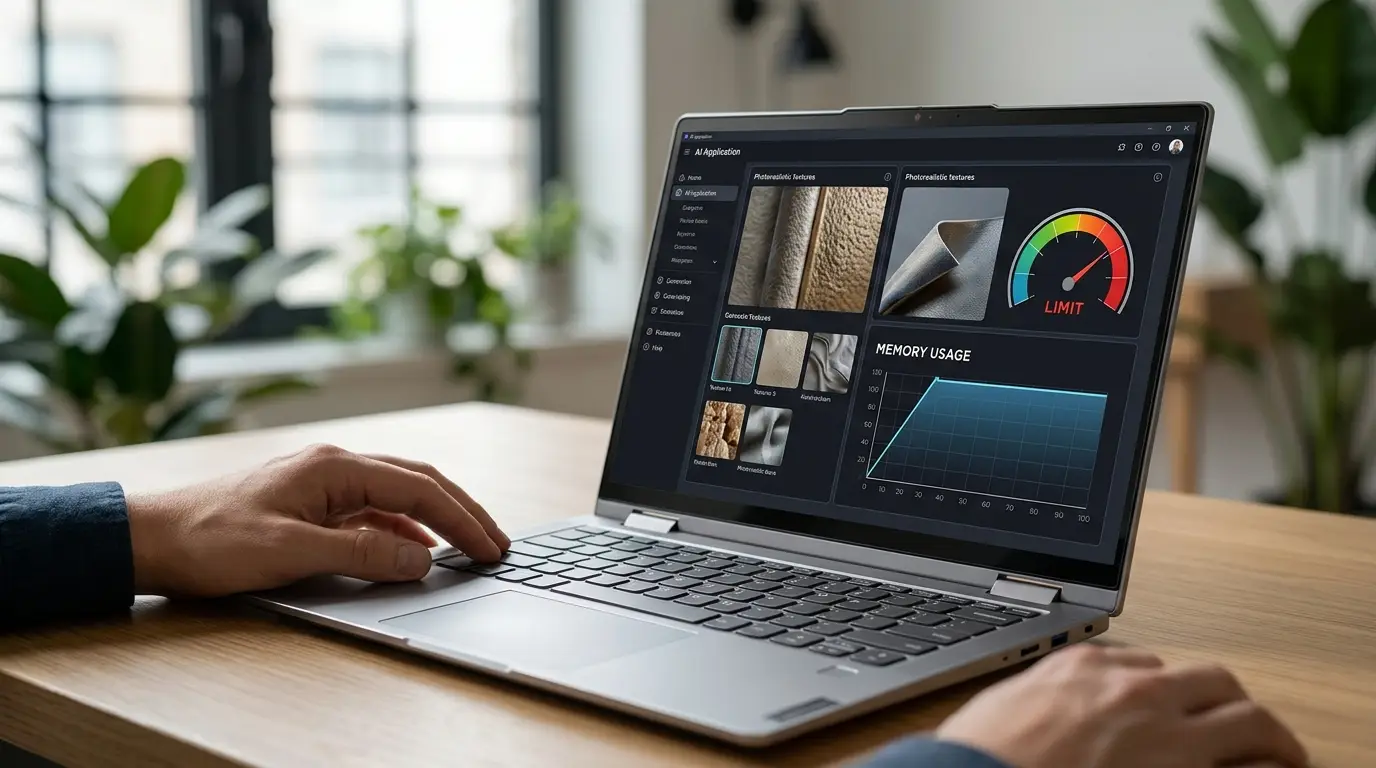
The Lenovo Yoga 9n 16 inch 2 in 1 laptop brings localized artificial intelligence to premium Windows hardware. This machine features the new NVIDIA RTX Spark platform with a 20 core processor and a 6144 core Blackwell GPU. Reviewers recently tested its ability to run an 80 billion parameter coding model entirely offline.
The device successfully ported a Mac application to Windows without requiring cloud connectivity or manual code edits. This result confirms that powerful local AI workflows are viable on modern convertible laptops. You can read more about this specific testing process in the detailed ZDNet Lenovo Yoga 9n RTX Spark review.
The system handles complex inference tasks smoothly when the workload fits within its available resources. Thermal management remains stable during short bursts of activity, though sustained loads trigger noticeable fan noise.
The Unified Memory Bottleneck
The device encounters a hard ceiling due to its memory configuration. The Yoga 9n 2 in 1 model maxes out at 64 GB of unified memory. This shared pool serves both the central processor and the graphics unit simultaneously. Running a full local AI stack alongside the Windows operating system consumes a massive portion of this capacity.
Reviewers noted that context windows had to be restricted to 32768 tokens to prevent system crashes. Larger models simply cannot fit into the available memory space. This limitation forces the AI agent to save its state and reload context frequently during extended coding sessions. The resulting workflow feels tedious and significantly slows down overall productivity. Users attempting to run multiple heavy applications will quickly hit this hardware limit.
| Hardware Component | Specification Detail | Impact On Local AI Workloads |
| Processor | 20 core RTX Spark chip | Handles complex local inference tasks smoothly |
| Graphics | 6144 core Blackwell GPU | Accelerates CUDA based model execution efficiently |
| Memory | 64 GB unified RAM | Creates a strict ceiling for maximum model size |
| Storage | 1 TB solid state drive | Provides fast model loading and state saving |
| Form Factor | 16 inch convertible chassis | Offers portability but limits internal cooling capacity |
Practical Implications For Developers
Software engineers must weigh the benefits of offline privacy against these hardware constraints. Processing sensitive code locally provides a major advantage for enterprise security and data protection. The memory cap means developers cannot run the largest available models at full capacity without experiencing severe slowdowns.
Users seeking maximum performance for heavy artificial intelligence tasks should look for alternative configurations offering 128 GB of memory. Lenovo currently reserves that higher capacity for the non convertible Yoga Pro 9n sibling model which targets stationary creative professionals. The Yoga 9n remains an excellent choice for moderate local AI tasks and general daily productivity. Buyers should carefully evaluate their specific model size requirements and workflow demands before purchasing this premium device.
Future Outlook For Local AI Hardware
The industry will likely address these memory limitations in upcoming hardware generations. NVIDIA already supports 128 GB configurations on its desktop and workstation platforms. Integrating that level of unified memory into thin convertible laptops remains an engineering challenge.
Manufacturers must balance thermal dissipation with power delivery to sustain heavy artificial intelligence workloads. Until then, users must optimize their software stacks to fit within existing constraints. The Lenovo Yoga 9n proves the concept works, even if current hardware requires careful resource management.

Popular news
Grand Theft GPU - How Thieves Steal Data Center Hardware in Transit

Akamai launches Agent Sandbox to limit what AI code can do

More FPS with AI and DLSS Doesn’t Automatically Mean a More Responsive Game

Anthropic Is Going Public: What Claude’s Numbers Reveal
AI Reverse Engineering Movement Revives Old Gadgets and Strips Smart TV Ads

OpenAI Launches GPT 6.1 Terra for Faster AI Agents at Half the Price
Latest comments
Loading