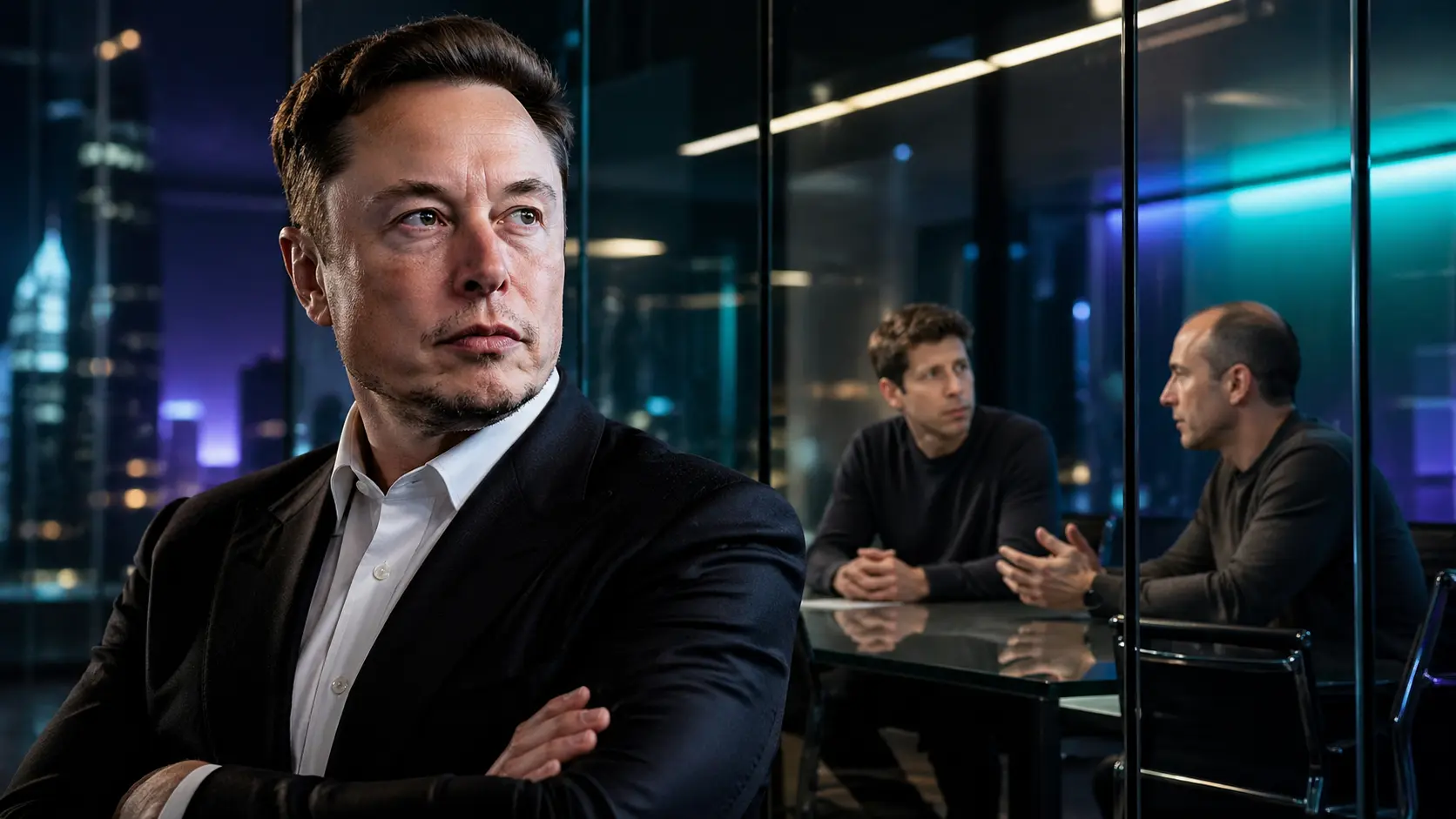
Elon Musk has again leveled sharp accusations at OpenAI’s leadership this week. In a series of posts, he claims Sam Altman and Greg Brockman turned an originally nonprofit effort into a profit engine, abandoning its founding mission. The comments come amid an ongoing lawsuit in which Musk seeks to legally challenge OpenAI’s trajectory.
In OpenAI’s early days, Musk was one of its key backers. He put in his own money at launch in 2015 and actively helped recruit top talent and resources to build a nonprofit AI lab focused on the public good.
Today, Musk stands opposite OpenAI as a rival. Through SpaceX and especially xAI, he is building advanced AI systems that directly compete with OpenAI’s models and infrastructure.
What exactly is Musk accusing OpenAI of?
Musk frames the core issue as legal and moral: can a nonprofit be “raided” and converted into a structure that enables private gain? He argues such a precedent would permanently erode trust in U.S. philanthropy. He dubs Sam Altman “Scam Altman” and Greg Brockman “Greg Stockman,” alleging they pulled off the switch unfairly.
He accuses the current leadership of:
- Securing billions in equity and financial interests
- Cutting personal deals around OpenAI technology
- Drifting from the original nonprofit mission
Musk says the lawsuit is not about personal enrichment. Any financial proceeds, he claims, would flow back into the original nonprofit structure.
How did OpenAI start?
Founded in 2015 as a nonprofit, OpenAI’s mission was clear: build AI for the public interest, without a direct profit motive. Musk played a major role early on as funder and connector.
The original pillars were:
- Open research and transparency
- Safety and social impact first
- No shareholder structure
Musk says he was hands-on in attracting talent and resources to get the organization off the ground.
When did OpenAI change course?
In 2019, OpenAI introduced a “capped-profit” model—pairing a nonprofit parent with a commercial arm where investors can earn returns, capped at a limit.
This enabled major funding, including billions from Microsoft. It also sparked criticism that the founding mission was being diluted.
Musk had already left OpenAI and has since repeatedly raised concerns about:
- Lack of transparency
- Rising commercial pressures
- AI safety risks
What’s at stake legally?
The case centers on governance and fiduciary duty: are leaders still acting in line with the organization’s original goals?
The implications are significant:
- A ruling could set precedent for U.S. nonprofits
- It could reshape hybrid structures like OpenAI’s
- It may alter AI investment models
According to Musk, a loss would leave nonprofits vulnerable to commercial takeovers by design.
How is OpenAI responding?
OpenAI has argued its current structure is necessary to shoulder the massive costs of AI development. Training cutting-edge models demands billions in hardware, data, and research.
The organization stresses that:
- The nonprofit still provides oversight
- Safety and societal impact remain central
- Commercial activity is needed for scale and innovation
Why this matters for the Netherlands and Europe
The case is directly relevant for the Netherlands and the EU. European policymakers are advancing AI rules like the AI Act, with transparency and public accountability at their core.
Key takeaways:
- European firms are closely watching hybrid AI models
- Debate over public vs. private AI is intensifying
- Trust in AI institutions is becoming critical
Dutch research institutes and startups are specifically assessing how governance structures can drive innovation without compromising public values.
Analysis: ideals versus the price of scale
At its core, this clash pits idealism against scalability. A nonprofit AI lab sounds noble; reality demands staggering capital.
That tension raises three blunt questions:
- Can AI ever remain purely nonprofit?
- How do you safeguard the public interest under commercial pressure?
- Who keeps AI organizations in check?
Musk plants his flag with the original ideals, while OpenAI leans into a pragmatic hybrid path.
Read also

Bottom line
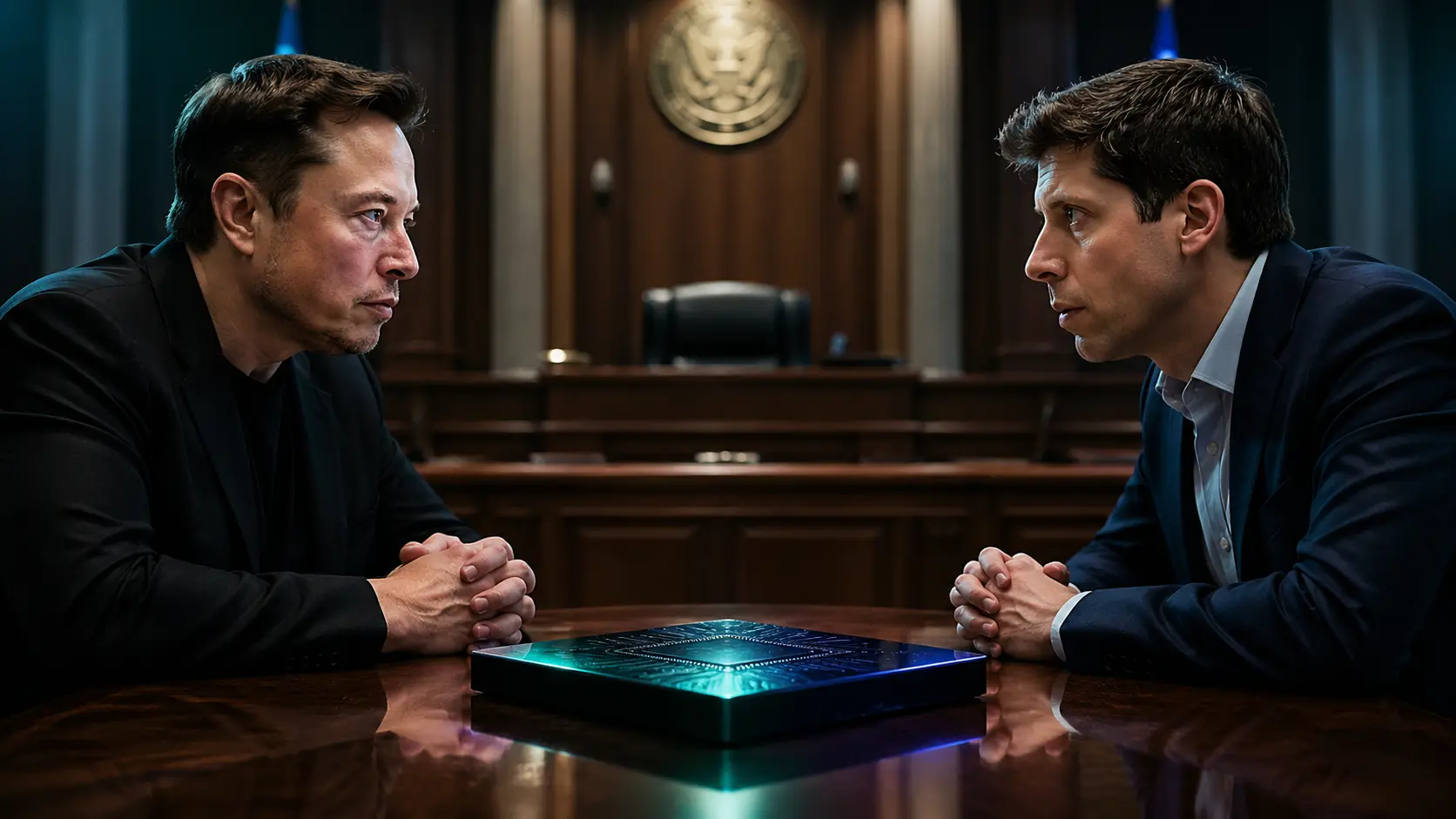
The Musk–OpenAI showdown is bigger than personalities. It’s a defining fight over AI’s future, ownership, and public responsibility. The court’s decision could set the template for how AI organizations are built worldwide.

Popular news

Anthropic Secures Thirty Two Billion Dollar Queensland Data Centre Deal for Claude

Zuckerberg Rejects AI Slowdown Calls Amid Industry Safety Debate

Crusoe Secures Nearly Four Billion Dollars to Scale Factory Built AI Data Centers

Amazon Secures Generac Stake in Massive Eight Billion Dollar Generator Pact

Spain Registers First End-to-End Autonomous AI Data Breach

MIT and Suffolk Unveil How AI is Reshaping Construction Productivity
Latest comments
Loading