BRICS Leaders Addresses Global Conflicts and Unilateral Sanctions at New Delhi Summit
NewsSunday, 13 September 2026 at 23:00
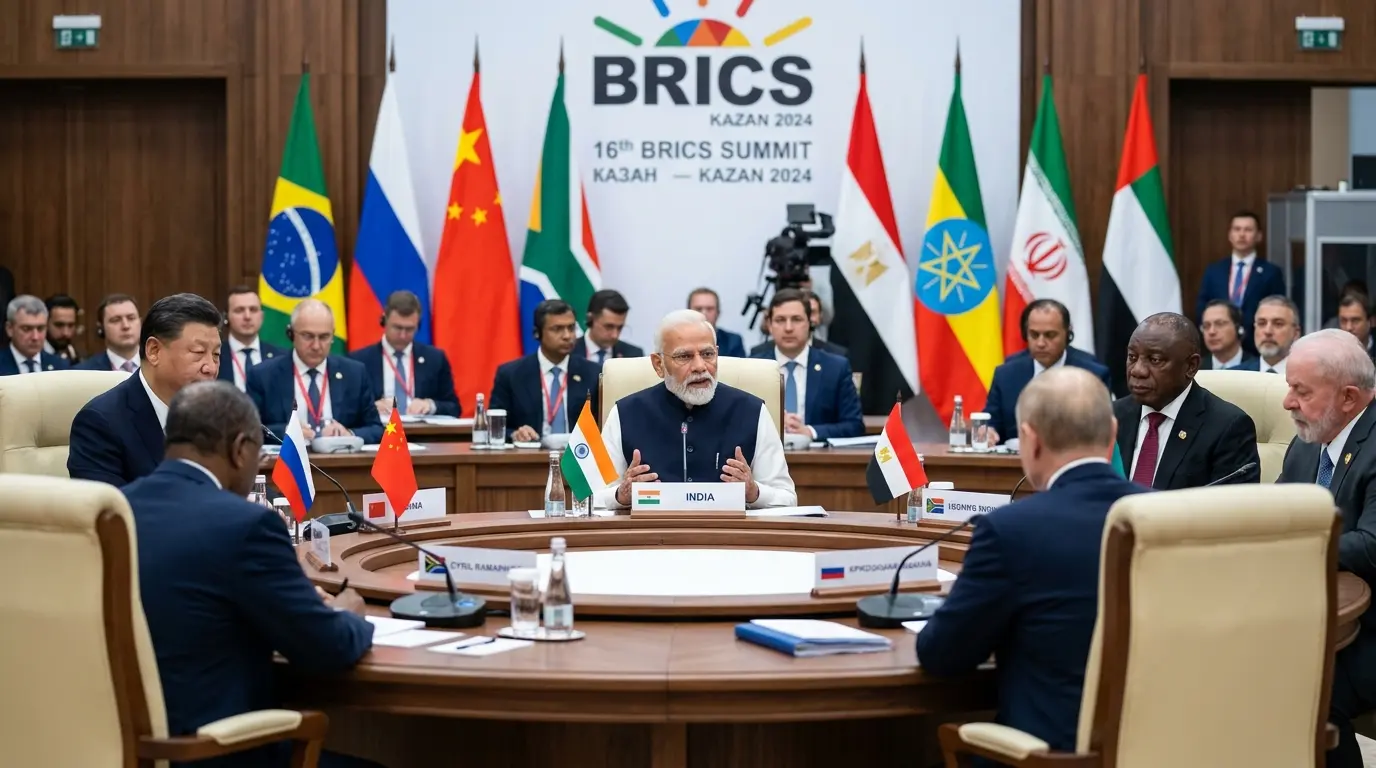
The global geopolitical landscape is shifting, and the BRICS coalition is stepping up to shape the new rules. During a recent summit in New Delhi, leaders from the 11-nation bloc addressed escalating international conflicts, supply chain vulnerabilities, and the growing friction caused by unilateral economic measures. Indian Prime Minister Narendra Modi set the tone, emphasizing that the Global South must evolve from a passive participant into an active rule-shaper in global governance.
A Unified Front Against Economic Coercion
A central theme of the gathering was the firm rejection of unilateral sanctions not authorized by the United Nations. While the joint declaration did not explicitly name specific countries, the message was widely interpreted as a pushback against Western economic restrictions, particularly those targeting Russia and Iran. Leaders argued that such coercive measures undermine international law and disrupt global supply chains, ultimately harming ordinary citizens worldwide.
Iranian President Masoud Pezeshkian highlighted the urgent need to expand the use of national currencies in bilateral trade. This financial decoupling strategy aims to shield member states from external economic pressure and reduce reliance on Western-dominated financial institutions. You can read more about the bloc’s unified stance on these economic policies in this detailed report by PBS News, which builds on initial reporting by the Associated Press.
Strategic Initiatives Driving the Bloc Forward
Beyond rhetorical unity, the summit produced concrete proposals aimed at strengthening intra-bloc cooperation and protecting shared interests. The leaders recognized that modern crises, from pandemics to regional wars, do not respect national borders.
| Strategic Focus Area | Proposed Mechanism or Stance | Primary Advocates within Bloc |
| Financial Sovereignty | Shifting bilateral trade settlements to local currencies to circumvent traditional Western financial infrastructure | Iran, Russia |
| Maritime Security | Launching a dedicated professional network to safeguard merchant mariners amid escalating regional trade disruptions | India |
| Global Governance Reform | Advocating for broader UN Security Council membership to amplify political voices from the Global South | Russia, Brazil |
| Public Health Resilience | Deploying a unified health monitoring framework to rapidly detect and respond to cross-border pathogen threats | India, South Africa |
Balancing Act in a Multipolar World
Despite the show of unity, the coalition faces inherent complexities. The bloc now includes nations with competing regional interests, such as Iran, Saudi Arabia, and the United Arab Emirates, making consensus a delicate diplomatic achievement. Furthermore, Prime Minister Modi was careful to clarify that the alliance is not designed as an anti-Western faction. Instead, he framed it as a necessary platform for developing nations to secure equitable representation in institutions like the World Bank and the International Monetary Fund.
As the world grapples with overlapping crises in the Middle East and Eastern Europe, the New Delhi summit demonstrated that emerging economies are no longer willing to wait for permission to lead. By championing a multipolar world order, the coalition is actively rewriting the playbook for international diplomacy.

byDavid Porter
Popular news
China Escalates Tech Tensions With Anti-Dumping Probe Into US Analog Chips
Senator Josh Hawley Launches Massive Investigation Into OpenAI After Critical Hugging Face Breach

Your Security Vendor Is Likely Using Secret AI To Grade Critical Vulnerabilities
Beijing Implements Total Drone Possession Ban Following Fatal Skyscraper Crash

UK Computer Science Graduates Face a Massive Job Market Shift Driven by AI
Tech Giants Back Anthropic CEO Call to Slow Down AI Development
Latest comments
Loading