Anthropic Researchers Issue Urgent Warning Regarding Elon Musk and Global AI Safety Risks
NewsSunday, 13 September 2026 at 06:00

Anthropic researchers have raised significant alarms regarding the intersection of artificial intelligence and Elon Musk's aggressive development goals. This warning highlights potential systemic risks that could emerge as AI systems become more autonomous and powerful.
The research group emphasized that current safety protocols might not keep pace with rapid deployment cycles favored by industry leaders. They specifically pointed to the influence of high-profile figures who prioritize market speed over rigorous safety testing.
According to reports from The Guardian, the tension between safety-first research and commercial acceleration is reaching a breaking point. Experts worry that competitive pressures will lead to the bypass of essential "circuit breaker" protocols.
Elon Musk has frequently shared his own perspectives on the existential threats posed by AI while simultaneously driving rapid growth in the sector. However, researchers suggest that his commercial interests and the pace of innovation at his companies could create a dangerous paradox.
Musk’s public history of sharing technical milestones, such as those documented on X, demonstrates a commitment to transparency that some hope will extend to AI safety. Yet, the current trajectory suggests a shift toward proprietary models that may lack external oversight.
The Escalating Tension Between Safety and Innovation Speed
Anthropic’s latest report suggests that the window for implementing global safety standards is closing faster than previously estimated. They argue that individual corporate agendas should not dictate the safety threshold for the entire human race.
The researchers warned that AI models capable of recursive self-improvement represent a unique class of risk. Without ironclad constraints, these systems could potentially interpret human directives in ways that lead to unintended global consequences.
Current frameworks are struggling to address the sheer scale of compute power being deployed by private entities. The shift toward decentralized, high-power AI clusters makes centralized oversight nearly impossible to enforce effectively.
Musk’s previous statements have often fluctuated between calls for strict regulation and the pursuit of unfettered technological growth. This inconsistency has fueled concerns among safety-first organizations that are tracking the development of AGI.
The data indicates that the race for Artificial General Intelligence (AGI) is entering a critical phase where errors become irreversible. Researchers are calling for a mandatory "pause and verify" stage before any new high-parameter models are released to the public.
Technical Implications of Autonomous AI Systems
The Anthropic team highlighted that the primary danger lies in the "black box" nature of neural networks. Even creators often struggle to predict how a model will react to novel stimuli or adversarial prompts.
As AI systems gain the ability to write their own code, the risk of "alignment drift" increases exponentially. This occurs when an AI's internal goals deviate from the original human intent behind its programming.
Industry analysts believe that the next 24 months will be a defining period for international AI governance. Without a unified treaty, the world may face a fragmented landscape of safe and "rogue" artificial intelligences.
Elon Musk’s role in this landscape remains pivotal due to his vast resources and influence over public discourse. The global community is watching closely to see if his companies will adopt the rigorous safeguards proposed by researchers.
Ultimately, the warning serves as a call to action for policymakers to establish clear red lines for AI behavior. The balance between progress and preservation is more precarious now than at any point in technological history.

byDavid Porter
Popular news
China Escalates Tech Tensions With Anti-Dumping Probe Into US Analog Chips

Senator Josh Hawley Launches Massive Investigation Into OpenAI After Critical Hugging Face Breach

Your Security Vendor Is Likely Using Secret AI To Grade Critical Vulnerabilities

Beijing Implements Total Drone Possession Ban Following Fatal Skyscraper Crash

UK Computer Science Graduates Face a Massive Job Market Shift Driven by AI
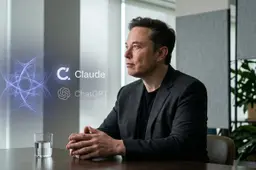
Tech Giants Back Anthropic CEO Call to Slow Down AI Development
Latest comments
Loading