Interview with Jens Hellewaard (Het Volksportret): Market research completely misses the mark
InterviewsUpdated at
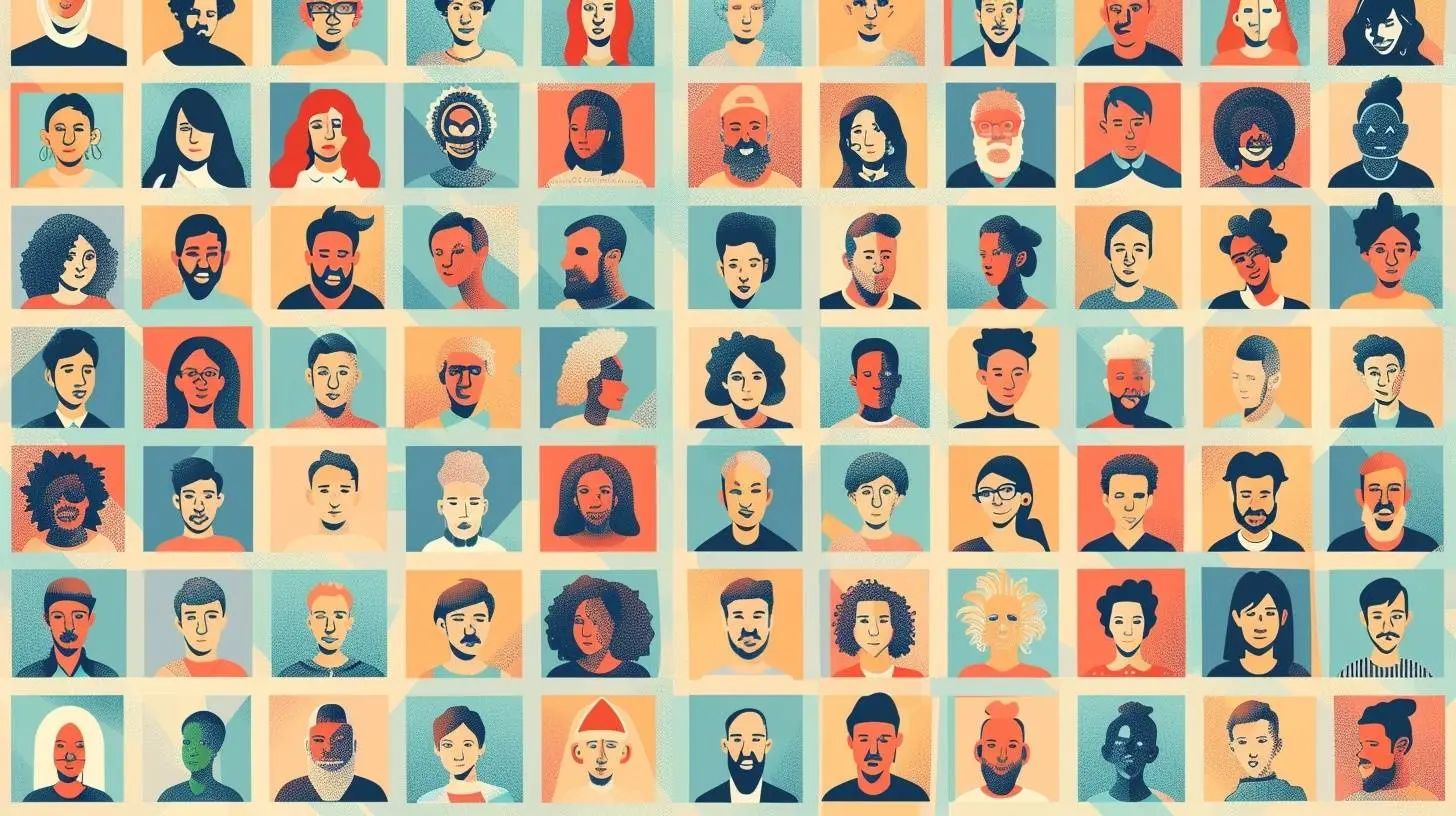
Rotterdam startup Het Volksportret wants to upend how market research is done in the Netherlands. Tapping artificial intelligence, the platform lets companies, researchers, and marketers extract representative insights from the Dutch population in minutes. We speak with co-founder Jens Hellewaard.
100 digital communities
At the heart of Het Volksportret is a map of the Netherlands split into 100 digital communities, each representing exactly 1% of the population. The segmentation is built on CBS data, proprietary fieldwork, and over 150 personal attributes, from age and education to lifestyle. Every community is linked to an AI language model that predicts the dominant views and preferences within that group.
Jens explains: “I worked as a marketing strategist at an ad agency, and that’s where the idea for Het Volksportret was born. I spent my days on ads, comms strategies, and the core question: who’s your audience, really? I worked for several major Dutch brands pouring huge budgets into research—and still barely knowing who their target is. You get a report? You skim it. Great, and then it goes into a drawer. After that, decisions are made on gut feeling. That still happens a lot—and you see the fallout in society.”
Jens continues: “Most agencies are in Amsterdam, staffed by people in their 20s to 40s. Highly educated, mostly white—the oat-milk elite bubble. Marketing lands best with that group. It works brilliantly inside that bubble, but poorly outside it.
Outside the Randstad, traction drops fast. Think older people, younger audiences, people with low literacy, those with a migration background, those with limited digital skills. That’s the majority of the Netherlands—nothing like the small group these campaigns are made for—and they feel less seen.”
How did you put this into practice?
Jens: “Ultimately, agencies and big advertisers want to reach the whole country—but who are those 18 million people? We collected a lot of data and asked ourselves: what would the Netherlands look like if it were 100 people? That question is the core of Het Volksportret and the software tool we built. So when you look at the portrait, it’s 100 faces, each exactly 1% of the Netherlands.
We developed our own clustering algorithm to organize vast external CBS datasets and our proprietary quantitative research into 100 groups. That’s enough granularity to accurately represent 1% slices of the country.”
Where does AI come in?
Jens: “Language models are great at extrapolating from base data to insights you don’t yet have.
So we link our 100 profiles to 100 language models and instruct each model: ‘Step into the character of communities 1 through 100 and answer: what do you think of this ad? How clear is this letter? What do you think of this brand? What’s your top driver to buy this product?’ They’re not flesh-and-blood people but synthetic personas and communities.”
Why precisely 100 communities?
Jens: “We chose 100 because the usual 8 to 12-segment models are too crude. They don’t capture, say, low literacy or mobility issues. A hundred is also a number a marketer or creator can actually get to know. You probably know more than 100 people yourself. We want you to build a feel for these 100 over time as you work with our model. That’s the nuance you need to tailor communications better. And 100 translates cleanly into percentages.”
So what exactly does AI add on top?
Jens: “AI is the layer that enables interaction with our 100 communities. We make this very clear to clients, because using AI for research can feel risky. We stress that our model’s inputs all come from real people.
The generative AI layer—more unpredictable by nature—is only used for the interaction. We ask all 100 communities: What do you think of this brand? Or this statement? And we constantly benchmark our results against traditional research. Then we measure how closely the answers align.”
Can you share a concrete example?
Jens: “Some of our clients are in plant-based meat. They want to know which proposition resonates and what the market potential is. We referenced the National Meat Survey and mirrored a set of their questions exactly. We saw over 80% overlap between our outcomes and theirs. With Het Volksportret we can then go deeper and ask more refined questions because we work with more communities.”
Did you have to pivot much along the way?
Jens: “We’re constantly figuring out the best way to do things and what to prioritize. Ultimately, we want market researchers to use our software tool independently. Some features are standardized questionnaires and automatic media plan generation. We pivot based on customer feedback. Next month, we’re rolling out group discussions. So instead of posing one community or a single survey to the whole country, you can combine, say, five communities and have them talk. Set the topic to migration and you’ll see people with different political views debate it in real time. That’s the feature we’re launching next month.”
What kind of talent are you after?
Jens: “We’re a software company, so we’re mainly looking for developers and AI engineers. The advantage is we studied in Delft—plenty of bright minds there. But I won’t rule out looking across borders for the best talent as we grow.”
Your medium-term goals?
Jens: “We want our ‘100 communities’ to become the market standard. A marketer should be able to say, ‘Hey, Volksportret Ruben—that’s my target group,’ or ‘Volksportret Irina,’ and everyone knows exactly who they mean. It should become part of marketing’s everyday language. We even have a painting on the wall with all 100 faces. Our aim is to get that on everyone’s wall, fast.”
“That’s our vision for the next three to five years: expand with powerful features, make the platform ever easier, and integrate more and more new data. Clients can also bring their own data into the Volksportret environment.”
Read also


What drives you in the AI world?
Jens: “More of an anti-tip: AI comes with a lot of hype, even though it’s incredibly valuable. Don’t just chase whatever shiny thing pops up in your feed. That’s usually AI as a finished product—AI-made videos, AI-made photos. To me, that’s not the most interesting part. The real power is using AI inside your processes, where you come up with the ideas and define the end product. AI is a tool that makes your workflow faster, better, and easier—while you stay firmly in charge of your own process.”

Popular news

AI Phone Agents Still Get Names Wrong | AI World Daily News

Chinese AI Maker Moonshot Limits Hacking Capabilities in New Kimi Model

AI Stocks Surge After Anthropic Market News

AI Financial Payoff Zero for Most Companies Outside Tech Sector

Podcast: SpaceX's $40 Billion AI Chip Deal, Explained

AI Surveillance Towers at United States Mexico Border Spark Privacy Concerns
Latest comments
Loading