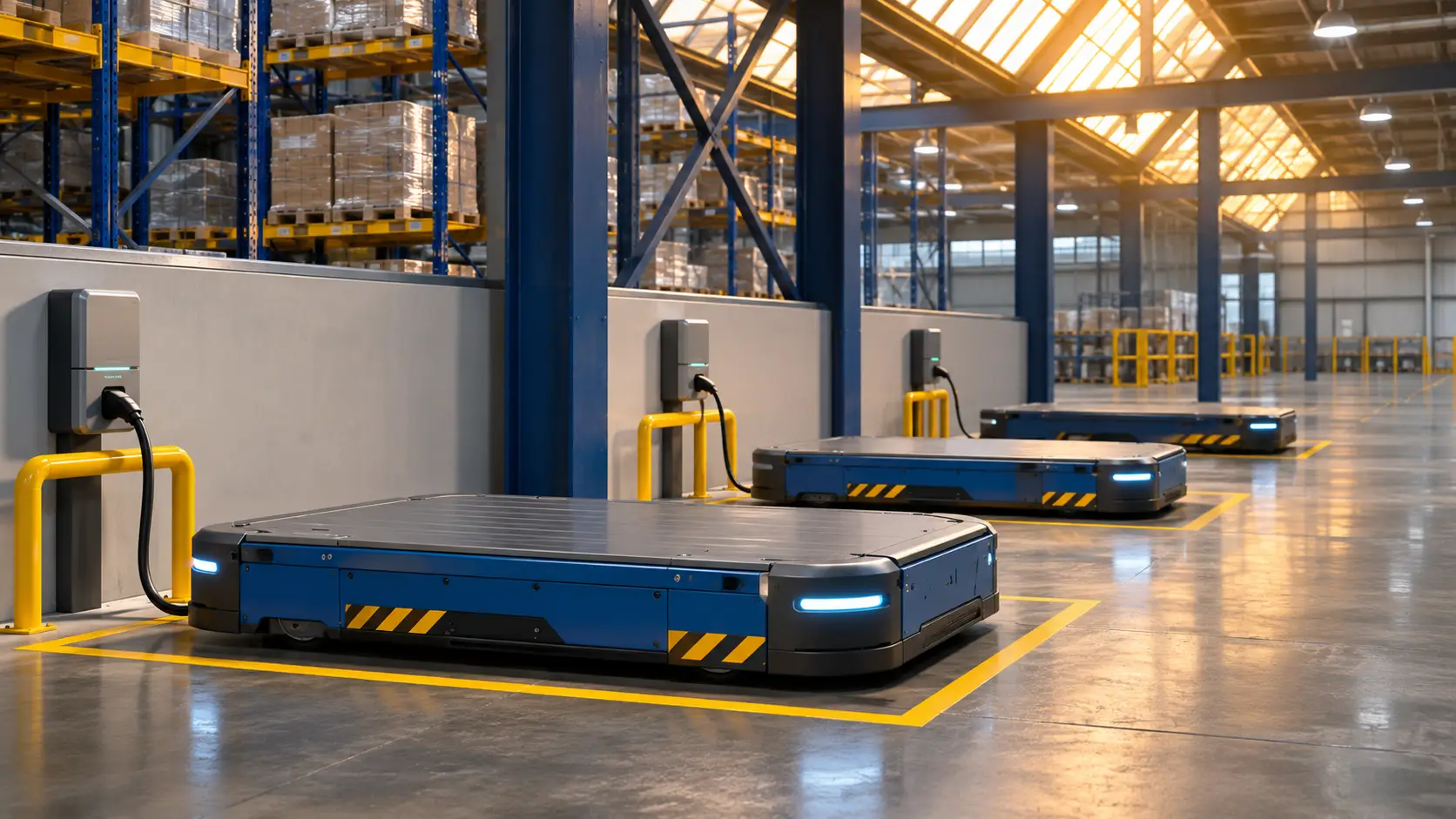
Editorial illustration of a fleet that can grow or shrink with warehouse demand.
Robotics as a service gives a warehouse access to robots under a contract. The bill may cover the fleet, software and some support. Check what you still owe if the slow season starts early or a robot goes out of service.
Find the unit you pay for
A quote may charge for a site, a robot, a unit of work or a mix. Ask for the amount due in a quiet month and the amount due at peak. Two quotes with the same monthly headline rate can differ in base fleet size, extra capacity and fees for getting the system online.
In its 2025 account of its warehouse subscription model, Locus Robotics describes annual subscriptions, paid in advance, with a minimum three-year commitment. It says it licenses robots by site and charges an implementation fee that covers work such as layout design, training and support for the link to warehouse software. Ask each bidder to show the terms that apply to your site.
A subscription can shift some spending from purchase to service fees. That changes the timing of the bill. Compare what the customer pays for the full term, including work that still falls to staff.
Write peak capacity and repair duties into the deal
Locus markets the option to add robots for a peak and scale back afterward. Ask how far ahead you need to book extra units and what a missed delivery date means for either side. If the busy period ends early, check when you can return the units and when the charges end.
Separate an uptime figure from a promise about the work you need done. A robot can be online while the fleet waits on a stalled order feed. Ask which parts of the system the service level covers and when downtime starts counting. Locus lists remote monitoring and escalation for onsite work among its services. Its contract overview also gives examples of tasks for the customer, such as keeping floors smooth and providing trained staff to fit some replacements.
Capture the wording before it goes to review
Use one row per question. Paste the actual clause and any section or page number into the last column. If the provider will add an answer later, record who owns that follow-up and when it is due.
| Topic | Ask the supplier | Contract wording |
| Minimum fleet | What is the smallest paid fleet and term at each site? | __________ |
| Lead times | When must we reserve peak units, and when can we return them? | __________ |
| Uptime | What does it cover and when do credits apply? | __________ |
| Support | Who fits parts, who fixes the software feed and how fast? | __________ |
| Exit | Who removes the hardware and how do we get our records back? | __________ |
Ask which parts of the setup belong to the supplier at the end, down to chargers and mounts. Get a date and format for any export of work logs and inventory records. Check whether staff can use those files if the fleet goes offline.
Then model a slow month: suppose you planned for 30 robots through December and need just 20 from midmonth. Ask what notice ends the rental on the ten units and what you still pay after they leave. That answer puts a number on flexibility, which is easy to miss in the wider debate about the cost of robot hardware and services.
To compare a subscription with a purchase, put the two quotes on the same term and output. The warehouse robot cost worksheet gives you the fields to do that.

Popular news

Anthropic closes below its $83 IPO price as Nvidia and chip stocks fall

Purdue’s AI Conference Puts the Focus on What Students Do Themselves

Google DeepMind’s new AI exam asks if models can get the easy stuff right

Maxon Plus brings editable AI models into Cinema 4D

UK patent office sets out where staff can use AI