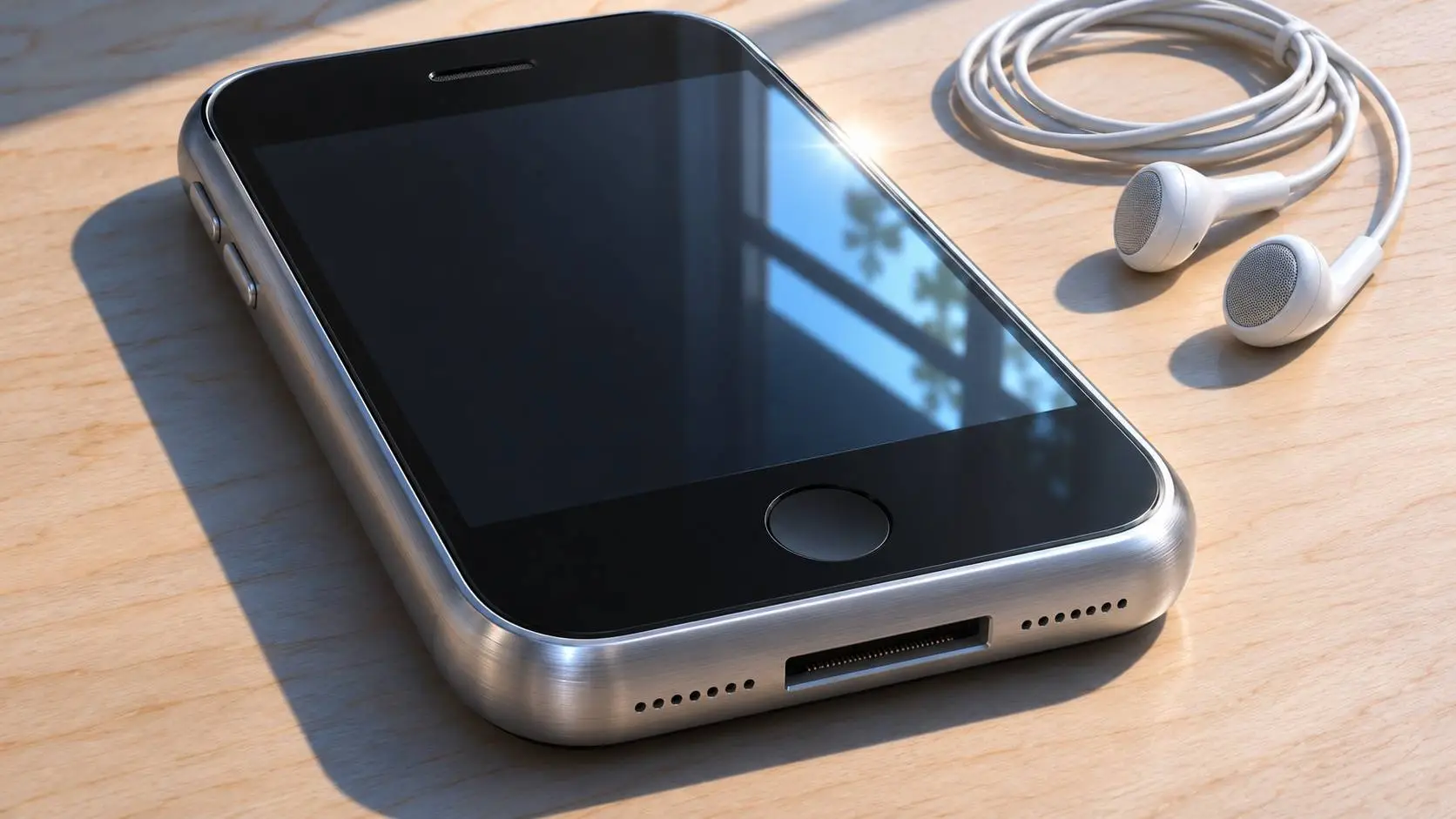
Early touchscreen phone with a silver rim beside white earbuds on a light wooden desk. AI-generated editorial illustration by AI World Today.
When the first iPhone went on sale in June 2007, it had no Siri. AI in 2007 was already at work, though. It helped people read pages in other languages, pick films and keep spam out of their inboxes. In the desert, cars had even learned to drive a set course on their own.
Two dates help set the scene. Apple showed the iPhone in January and put it on sale in the United States on June 29, 2007. June is the cutoff here. Some tools were ready to use on that day. Others still needed a test track and a team to run them.
The first iPhone put the user in touch
In its launch note, Apple showed a phone that could play songs and browse the web. You could tap a name to make a call. You could zoom in on a photo or move a map with a finger. For a lot of people, that was a new way to use a small screen.
The phone gave you new ways to make a choice. It did not take a request such as “Remind me to call my sister after work.” That came with Siri on the iPhone 4S in 2011. Keep the four-year gap in mind. A feature can feel so tied to a device that it is hard to recall the device without it.
Apple offered versions with 4 GB or 8 GB of storage at the US launch. That number told you how much music and how many photos you could carry. The phone could also reach a web service. A search or a page translation could run on the company’s machines and come back to a screen in your pocket.
You could read a page in another language
On May 23, 2007, Google announced a new way to search across languages. You could type a query in a language you knew. Google could find pages in another tongue and let you read them in a form you could grasp. Even a rough version opened up far more of the web.
Think of a trip where you need to catch a ferry. The tool could help you find the right page and tell a list of times from a page about a hotel. You still had to check the time of the last boat. A mistake in a single word could put you on the wrong side of the bay for the night.
That is one test of how much a tool helps. Ask what you can now find and what you still need to check. The guide to Google’s wider business shows where tools such as search and Translate fit.
Netflix put a price on a better guess
Netflix ran a mail-order DVD service. It had lists of films and ratings from viewers. The firm wanted a better way to guess what a person would rate a film they had yet to see. Its team launched a $1 million contest in 2006. To win, a team had to cut the rating error by at least ten percent.
Think of two fans who tend to like the same films. If only one of them has seen a new one, their vote is a clue to what the other might think. That kind of guess does not always work. They may both like thrillers, yet only one might like a slow film with no clear end. This is an example of the problem the teams set out to solve.
The goal made the contest fair to score. Each team could test its guesses against the same set of unseen scores. In a real service, the firm would also ask if its picks saved people time and kept them watching. Both kinds of question matter. You can have a good guess and still have work to do before you can use it as part of a service.
Cars had made it across the desert
In 2005, five vehicles finished a 132-mile DARPA course. Stanford’s car, Stanley, came first. The year before, no team had reached the end. By the time the first iPhone went on sale, those runs had shown that a car could handle a tough route on its own.
Each team knew the test rules. The course had a start and an end. The car still had to cope with turns and bumps on the way. City roads would pose a whole new set of tests. A car has to stop for a child, read a sign and share space with drivers who may break the rules.
The next big test came after the phone launch. At the Urban Challenge later in 2007, teams had to deal with traffic in a staged town. It helps to track the dates of these tests. They show which skills teams had seen at work by June and which ones they went on to test that fall.
AI could do a quiet job in your inbox
For a much smaller example, look at email. In a March 2007 post, Gmail engineer Brad Taylor wrote about the fight against spam. When people marked a message as spam, those reports helped the team find more bad mail. Most users never saw the work behind a clean inbox.
The job comes with a cost on both sides. A weak filter leaves you to sort out junk. A filter that gets too strict can hide a note you need. Now and then you have to look in the spam folder to find it. Part of the work is to spot each kind of mistake and change what the filter does next.
That kind of help fits a phone with no smart voice at all. Open your inbox and the work is already done. The look of the screen tells you little about how the service made its choice.
What the date tells us about AI in 2007
The first iPhone gives us a firm date for a look back. Search, film picks, spam and self-driving cars all had their own tests. A public tool let people use it that day. A result on a course let people see what the car did there. Keep the job and the test in view when you read each claim.
Move the clock six years ahead to see what AI could do when GTA 5 came out in 2013. Many of the pieces had changed, though people still used them one job at a time. Find more such turning points in our AI history collection.

Popular news
Google brings Gemini to Android Go phones with 2GB RAM
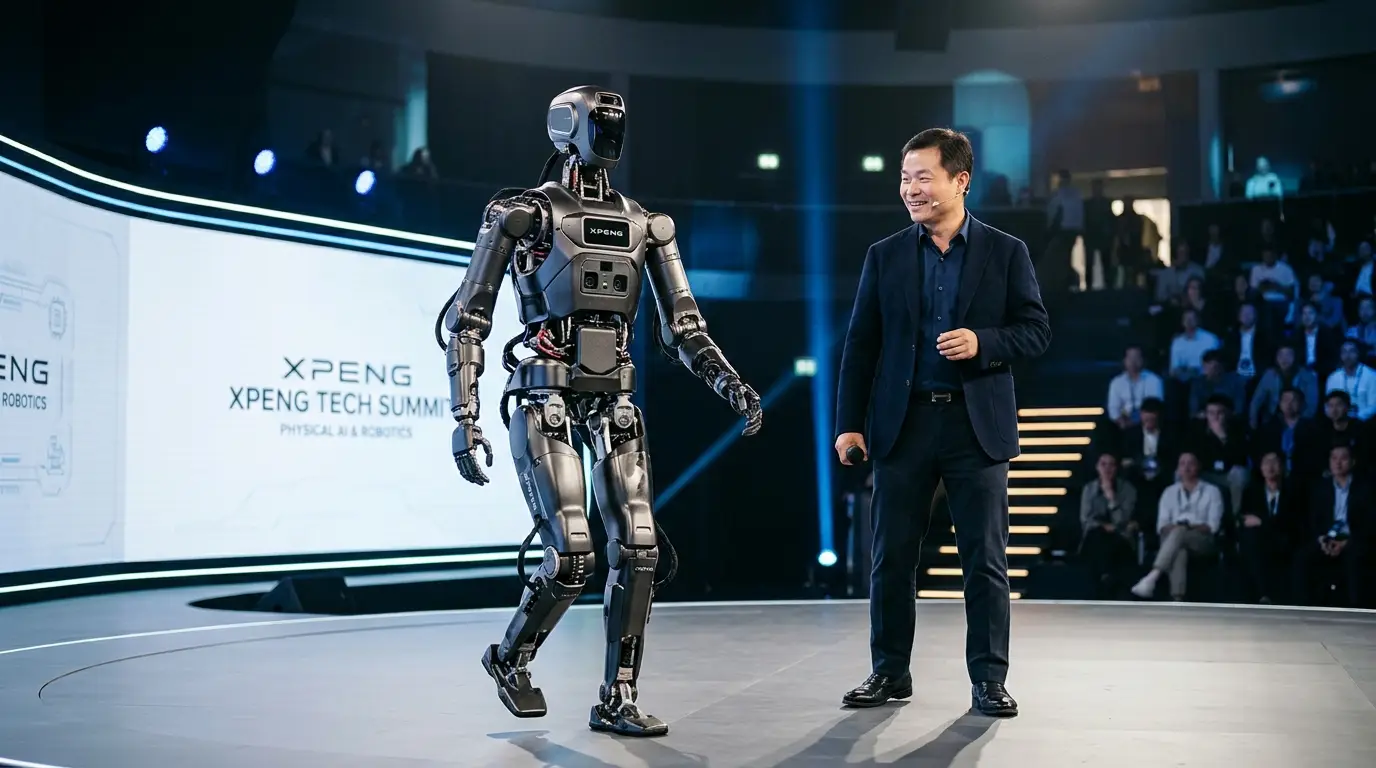
XPeng Bets Everything on Physical AI and Robotics at Upcoming Tech Summit

AI Boom Will Push Data Center Carbon Emissions Up 70 Percent by 2030
Google adds HelpBench to Gemini 4 Carbon safety tests
Microsoft recruits more than 40 groups to make AI agents auditable