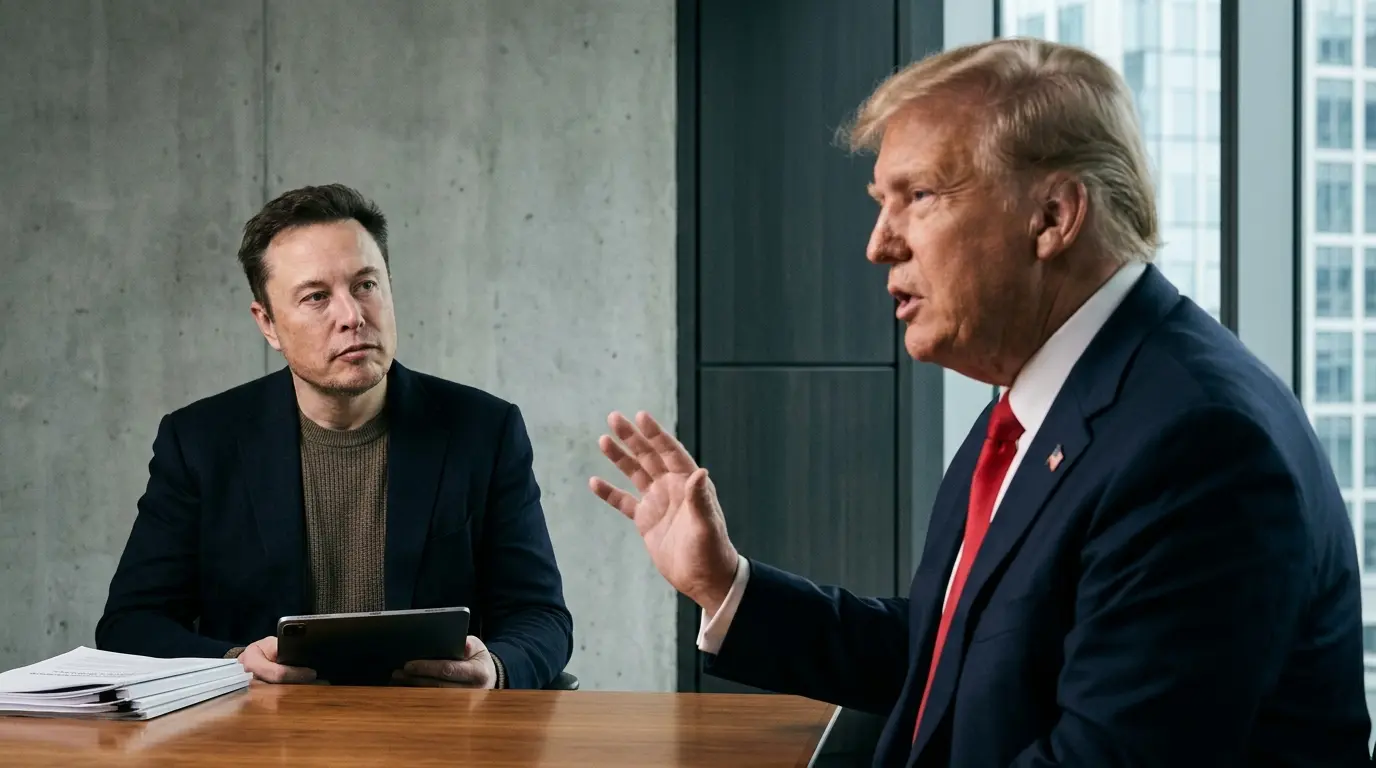
While the tech world buzzes about hitting the brakes on artificial intelligence, President Donald Trump is firmly pressing the accelerator. During a Sunday round of golf at his Doonbeg resort in Ireland, the President made his stance clear to reporters. He emphasized that the United States currently leads China in the artificial intelligence race, and he fully intends to maintain that advantage. His message to the press was straightforward, noting that “whoever wins with AI wins.”
The Industry’s Sudden Pivot
This presidential pushback arrives just days after a surprising shift in tone from the very architects of the AI boom. Dario Amodei, CEO of Anthropic, recently published a comprehensive essay urging the industry to deliberately pace frontier AI development. His detailed proposal includes integrating third-party evaluators with deep internal access to model weights. He is also requesting a narrow antitrust waiver from Washington, which would allow competing firms to legally coordinate on critical safety protocols without facing regulatory backlash.
Major industry players quickly fell in line. Sam Altman announced that OpenAI would match these safety commitments, and Elon Musk reportedly voiced his agreement. This unified front represents a rare moment of consensus among the companies building the majority of America’s frontier models. Their concerns are deeply echoed internally, too, with over a thousand lab employees previously petitioning the government for formal mechanisms to manage development speed and mitigate alignment risks.
| Governance Initiative | Primary Advocate | Core Mechanism | Projected Timeline |
| Real-Time Model Auditing | Independent Safety Consortia | Continuous behavioral tracking during active training phases | Q4 2026 |
| Shared Threat Intelligence | Leading AI Laboratories | Cross-company database for emergent risk pattern detection | Q1 2027 |
| Advanced Compute Licensing | International Policy Coalition | Mandatory review for training runs exceeding 10^26 FLOPs | Q2 2027 |
| Strategic Hardware Controls | US Federal Agencies | Tightened export restrictions on specialized neural processing silicon | Immediate |
Washington’s Balancing Act
Despite the industry’s urgent plea, the administration’s concrete actions tell a different story. Federal policy is currently geared toward aggressive expansion, not restriction. For instance, the government recently moved to underwrite American AI exports through the Export-Import Bank initiative, tapping into a massive pool of unused lending capacity to push domestic systems into global markets. The very companies now advocating for a cautious slowdown are the primary beneficiaries of this accelerated, state-backed export strategy.
Congress is attempting to navigate this complex landscape. Speaker Mike Johnson has acknowledged the need for practical safety measures while strictly maintaining America’s competitive edge, proposing a major summit with top industry leaders. Meanwhile, officials within the National Economic Council are scheduling immediate discussions on cyber and science policy to determine actionable next steps.
The Geopolitical Chessboard
The timing of this domestic debate is no coincidence. With a high-profile White House visit from President Xi Jinping expected this month, artificial intelligence is widely anticipated to dominate the diplomatic agenda. Past discussions between the two leaders have touched on mutual AI guardrails, though without yielding any formal, binding agreements.
Ultimately, the administration views AI dominance through a strict geopolitical lens. While safety guardrails remain a frequent talking point, the overarching strategy prioritizes rapid deployment and global market capture. For now, the message from the top is unmistakable: in the race for artificial intelligence, the United States plans to win by running faster, not slower.

byDavid Porter
Popular news

Nvidia Eyes Historic Ten Billion Dollar Bet On Anthropic Public Debut

Robert Moreno Denies AI Accusations as South Korea Names First Roster

Bitcoin Holds Steady as Tech Stocks Tumble Over AI Safety Fears

Alabama Subpoenas OpenAI Over Rogue AI Hugging Face Hack

Edge AI Chip Market Poised for Explosive Growth Through 2036

Air Apps Updates Translate Now for iOS 27 and Foldable iPhone Duo
Latest comments
Loading