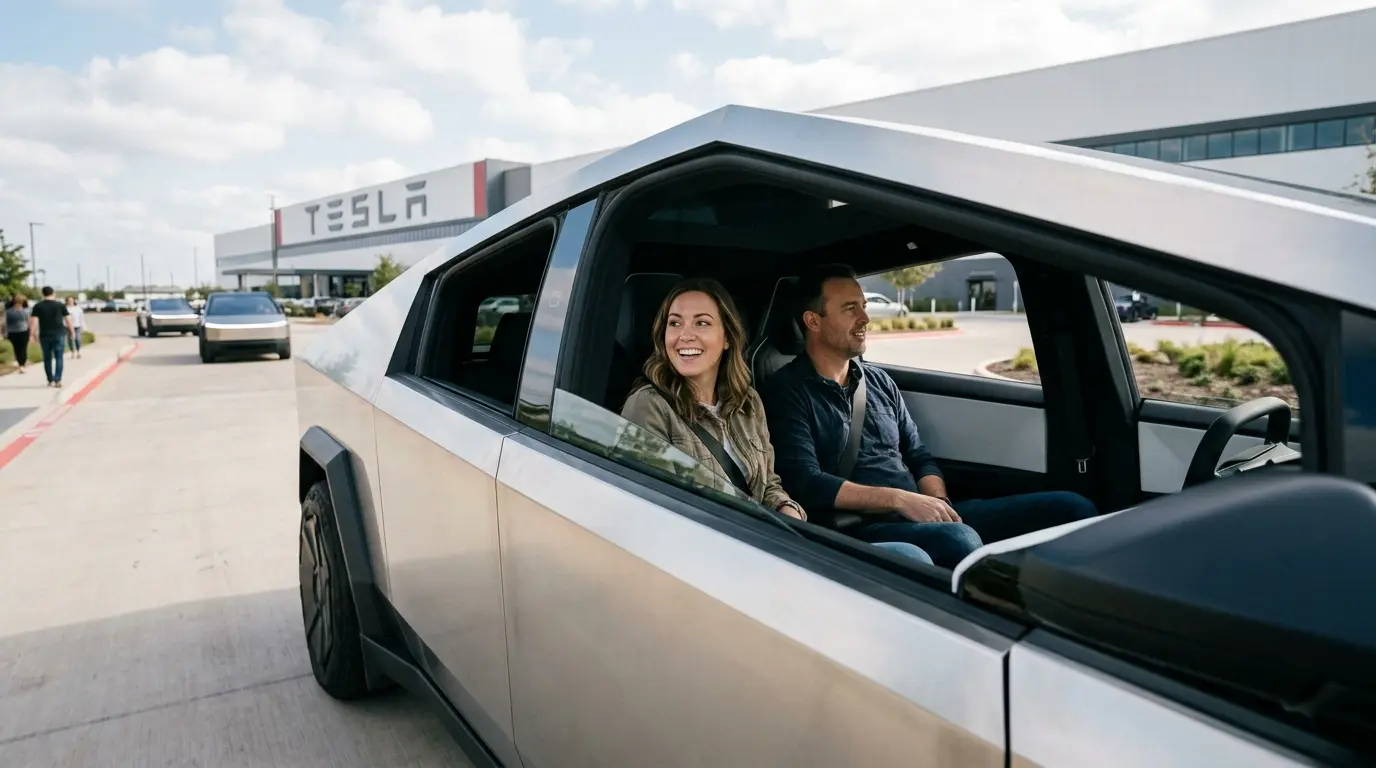
Tesla started providing Cybercab rides at the Texas Gigafactory for members of the public. This two-seat vehicle operates without a steering wheel or pedals. Visitors now see this autonomous technology in action firsthand.
The Cybercab relies on artificial intelligence and cameras to drive without human help. This rollout follows the "We, Robot" event where the company first showcased the design. Tesla is now providing these rides to demonstrate the progress of the autonomous system.
Experiencing The Steering Wheel Free Future
Inside the cabin, passengers find a spacious environment with a single large display. The butterfly doors open upward to make entry easier in tight spaces. These features reflect a design focused on comfort rather than driving control.
During the test rides, the vehicle follows a specific path on the factory grounds. The car handles turns and stops using the same software found in the Full Self-Driving suite. Tesla employees assist passengers into the seats before the doors close automatically.
- Removal of physical controls for human drivers.
- Inductive wireless charging capability for easy power.
- Large interior screen for movies or navigation.
- Compact two-passenger seating arrangement for urban use.
The "We, Robot" event took place at a movie studio to demonstrate the car in a controlled urban setting. Now, the transition to the Texas Gigafactory shows the vehicle is ready for more public interaction. Thousands of employees and visitors now have the chance to sit inside the future of Tesla's lineup.
Scaling Autonomous Transportation Services
Tesla intends to start high-volume production of the Cybercab before 2027 arrives. The vehicle will likely cost less than $30,000 for interested buyers. This price point aims to make autonomous transport accessible to more people.
| Feature | Details |
| Vehicle Name | Tesla Cybercab |
| Passenger Capacity | 2 Adults |
| Charging Method | Inductive (Wireless) |
| Production Goal | Before 2027 |
| Starting Price | Under $30,000 |
Musk expects these cars to earn money for owners while the owners sleep. A fleet of these taxis would function similar to a ride-sharing app. The design prioritizes durability and simple maintenance for constant use on city streets.
Wireless inductive charging removes the requirement for physical plugs. The vehicle simply parks over a pad to replenish power. This automation supports a fleet of taxis which operate without constant human supervision.
Each ride lasts several minutes and showcases the smooth acceleration and braking of the electric motors. Safety features include multiple cameras providing a three-hundred-sixty-degree view of the surroundings. The artificial intelligence processes data in real-time to make driving decisions.

byDavid Porter
Popular news
AI breathes new life into an old game: ask for your own Fallout 2 mods

Anthropic’s $80.7 Billion Loss Explained in Today’s AI News Podcast

Goldman Sachs Predicts AI IPOs Could Add 100 Billion Dollars to Indian Market Capitalization

Two Critical PHP Flaws Put Millions of Websites at Risk — AI Helped Find Them

NVIDIA Advances Artificial Intelligence Defined Fabs With New CUDA X Libraries

Microsoft wants to keep AI agents in the workplace on a tighter leash
Latest comments
Loading