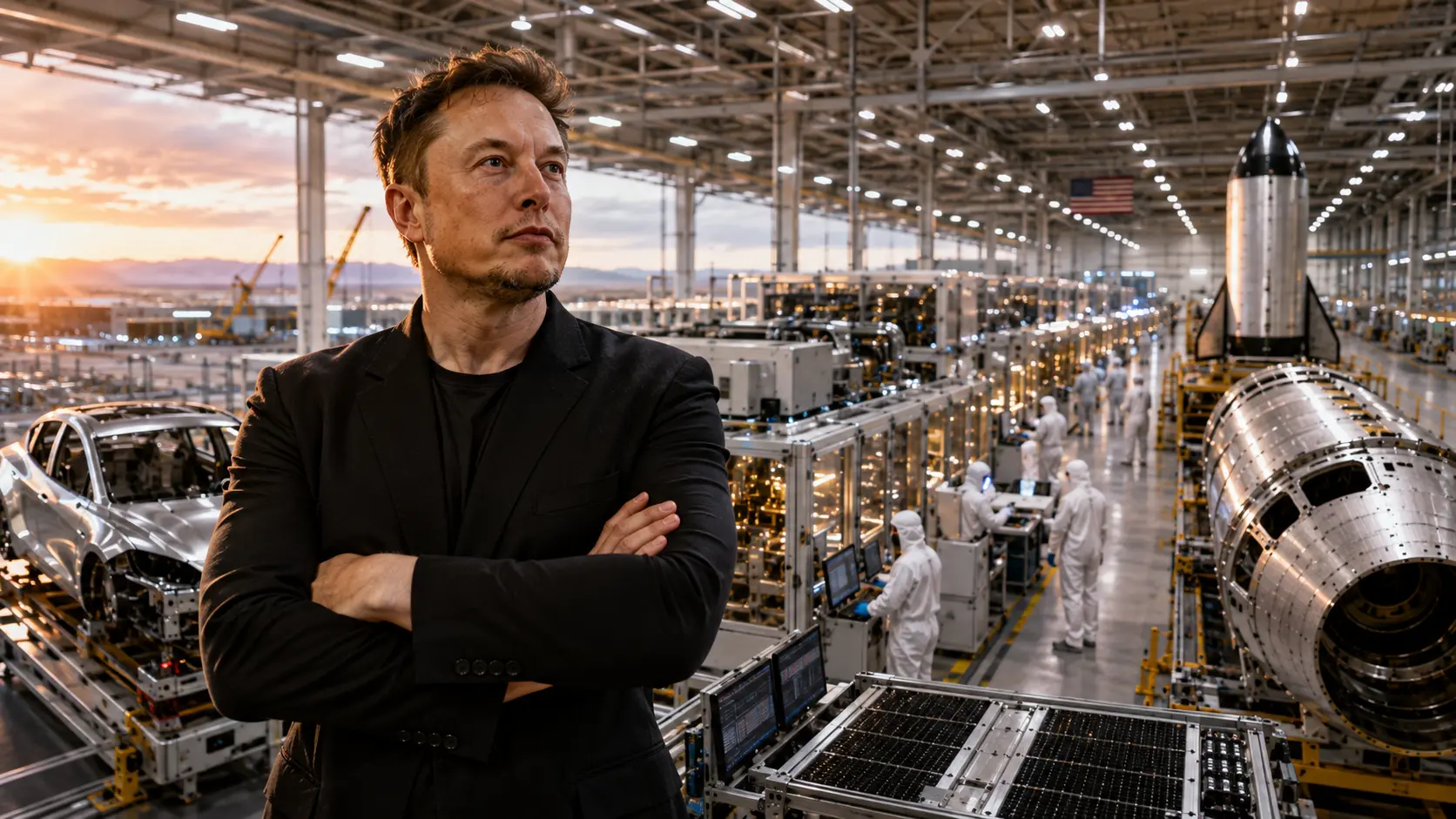
SpaceX and Tesla are jointly putting up $16.8 billion for the first phase of Terafab, a massive advanced semiconductor complex in Texas. The plant will supply chips for Tesla’s humanoid Optimus robots, self-driving Cybercabs, and SpaceX’s planned in-space data centers—Musk’s bid to lock down a critical link in his AI supply chain.
What just happened?
According to Reuters, Terafab will rise in Grimes County near the Gibbons Creek Reservoir. SpaceX and Tesla are committing an initial $16.8 billion and at least 3,000 jobs. The site is ultimately planned as a vertically integrated, 100-million–square-foot complex where cutting-edge logic and memory chips are manufactured, packaged, and tested.
That combination matters. For many semiconductors, manufacturing, advanced packaging, and final testing happen at different sites—often in different countries. Terafab aims to put multiple steps under one roof. Musk doesn’t just want more chips; he wants tighter control over lead times, capacity, and the alignment between hardware and his AI systems.
The chips will serve several Musk-linked ventures. Tesla needs compute for autonomous vehicles and its self-driving AI plans in the Netherlands and Belgium, and to advance Optimus. SpaceX wants heavy-duty processors for space-based data centers. For more context on the tightening weave between space and AI, see our deep dive on SpaceX, Starlink, xAI, and Grok.
Why do the dollar figures vary so much?
Different numbers are floating around Terafab. An earlier filing cited $55 billion for an initial build and up to $119 billion if all potential expansions roll out. The newly announced $16.8 billion is the concrete starting investment to launch the project. The top-line figure isn’t a fixed spend—it’s a scenario for a much larger future buildout.
The targeted capacity is also unusually bold. SpaceX and Tesla say they’ll need more than one terawatt of compute in the coming years. That’s not the power draw of a single building—it’s a signal of the scale at which Musk plans to deploy chips and systems.
Intel is onboard as a manufacturing partner, aligning with the chipmaker’s push to grow its foundry business. Recent interest from Google and Nvidia in Intel underscores how strategic extra capacity has become.
Why it matters for the Netherlands
A new American megafab may seem distant, but it directly touches Europe’s semiconductor chain. Advanced fabs depend on lithography systems, metrology, materials, packaging tech, and specialized software—areas where Dutch companies are key players.
It’s not just ASML. Dutch firm Nearfield Instruments benefits from rising demand for precise in-line inspection and recently raised €380 million off the AI chip wave. Axelera AI is building energy-efficient AI hardware in the Netherlands. The bigger the global fab buildout, the larger the potential market for such suppliers—though it’s still unclear which European tools Terafab will use.
At the same time, the project shows AI policy is no longer just about models and chatbots. The new power game is about factories, electricity, water, raw materials, and permits. The complex sits by a reservoir whose water is slated for industrial use rather than local groundwater. Even so, a factory of this size will raise questions about energy use, environmental impact, and public support.
Musk’s endgame: a captive AI supply chain
Terafab fits a clear strategy: reduce dependence on outside suppliers for the tech behind cars, robots, rockets, and AI data centers. The plant would be the physical backbone of an ecosystem where the same group of companies designs and makes chips, builds systems, processes data, and sells AI applications.
Whether every plan lands at full scale is uncertain. Cutting-edge chipmaking is costly, construction takes years, and talent is scarce. But a $16.8 billion first step is big enough to take Terafab seriously.

Latest comments
Loading