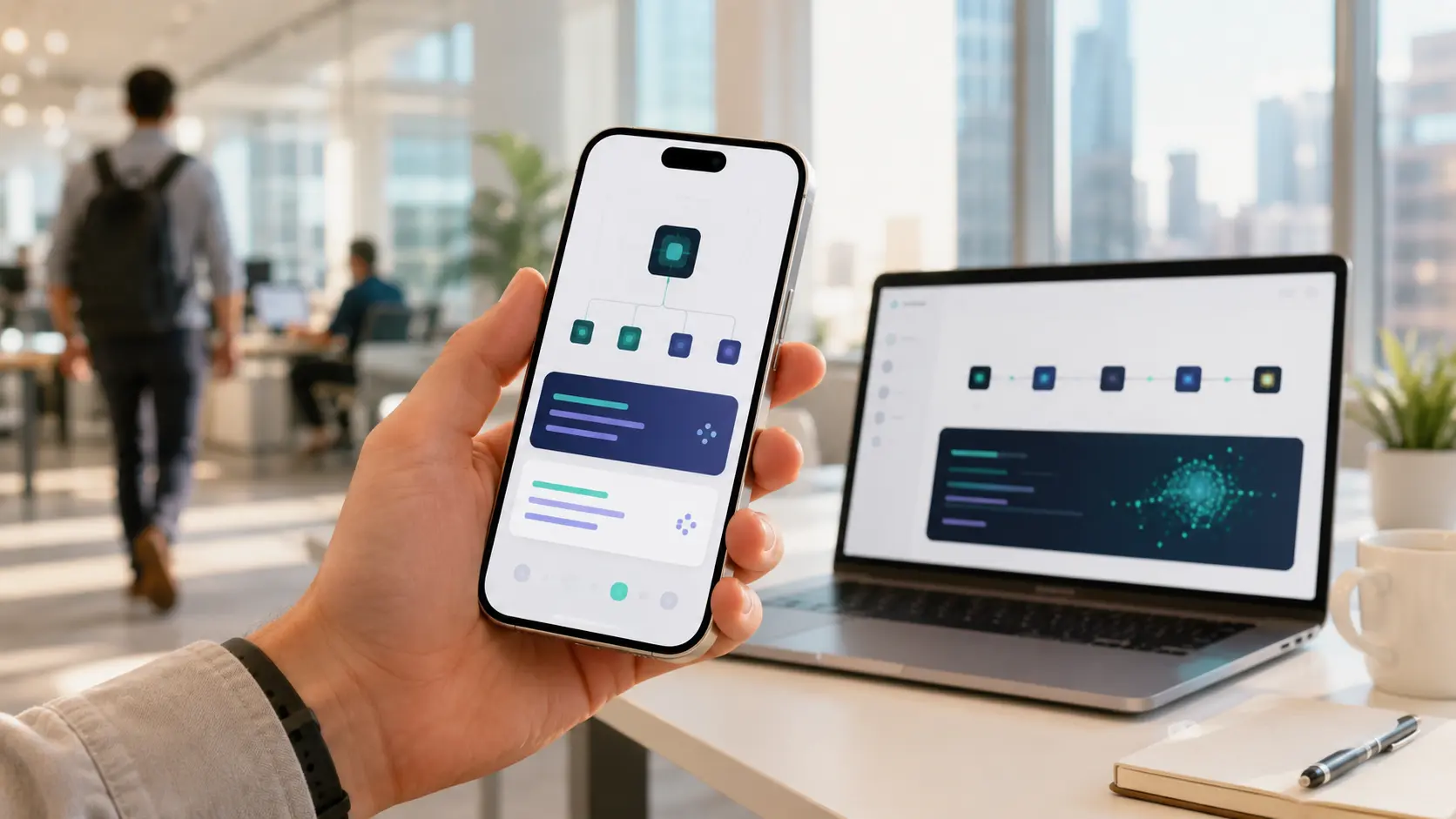
OpenAI is bringing Codex—its AI tool for coding and automation—to the mobile ChatGPT apps on iPhone and Android. From a phone, users can now kick off coding tasks, review results, and approve AI actions, while Codex continues running on a desktop machine. OpenAI says the feature starts rolling out today as a preview across all ChatGPT plans, including the free tier.
The move ups the stakes in the race to win over AI developers and autonomous software agents. Anthropic has ramped up pressure with its fast-growing Claude Code platform, intensifying competition around AI dev tools. Reuters and The Verge report that OpenAI is refocusing internally on Codex and enterprise AI tools to regain ground.
What can Codex do on mobile?
Your phone won’t become a full IDE, but it will act as a remote control for an AI developer. From the ChatGPT app, users can:
- start new programming tasks
- review code output
- approve AI commands
- switch models
- monitor tests and terminal output
- view screenshots and code diffs
All heavy lifting runs on a linked Mac, laptop, or remote dev machine. Files, permissions, and local settings stay on the user’s device, with live updates pushed to the phone.
According to OpenAI, that enables collaboration “from anywhere” with an AI agent that can write software, fix bugs, and analyze code on its own.
Why it matters
AI tools are shifting fast from chatbots to active digital coworkers. Codex is evolving from a code generator into an autonomous software agent capable of running longer, more complex tasks.
That’s strategically key for OpenAI. AI dev tools are among the fastest-growing segments in generative AI. Developers now lean on these systems for coding, debugging, documentation, testing, and even infrastructure operations.
OpenAI is also positioning Codex as a broader “agent platform” for businesses. Earlier reports suggest the company is building an integrated desktop environment that unifies ChatGPT, Codex, and browser features into a single AI workspace.
AI coding competition heats up
The mobile Codex controller lands as AI code assistants surge in popularity. Anthropic’s Claude Code has grown quickly among developers for its strong performance on complex tasks.
OpenAI is moving to close the gap. Earlier this year, it launched a desktop version of Codex for macOS and Windows. The software can run multiple AI agents at once and handle lengthy development jobs in parallel.
Other tech giants are also piling in. Microsoft is deepening Copilot across GitHub and Visual Studio, while Google is pushing its Gemini models further into software development.
The market is expanding fast because AI programmers deliver immediate productivity gains. Software development is becoming one of the first sectors where AI agents show clear, large-scale economic value.
AI agents shift to always-on
Codex on mobile underscores a broader trend: AI systems are turning into continuously active assistants, not just tools that answer one-off prompts.
Business Insider notes some developers leave laptops half-open so Codex can keep working while they’re on the go. With the new mobile link, OpenAI wants to centralize and streamline that workflow.
The result is a new model where users remotely monitor and steer AI systems—much like teams manage cloud servers or automation software today.
Read also



Limitations still apply
For now, the mobile Codex feature only connects to macOS systems. OpenAI says Windows support is coming soon.
Security also remains a priority. Last month, OpenAI issued security updates for several Codex apps after a software certificate issue in the macOS version.
Researchers further note current limits for AI programmers on complex mobile development. Recent SWE-Bench Mobile findings show that even advanced AI agents still struggle with large-scale, industrial-grade projects.

Popular news

Latest comments
Loading