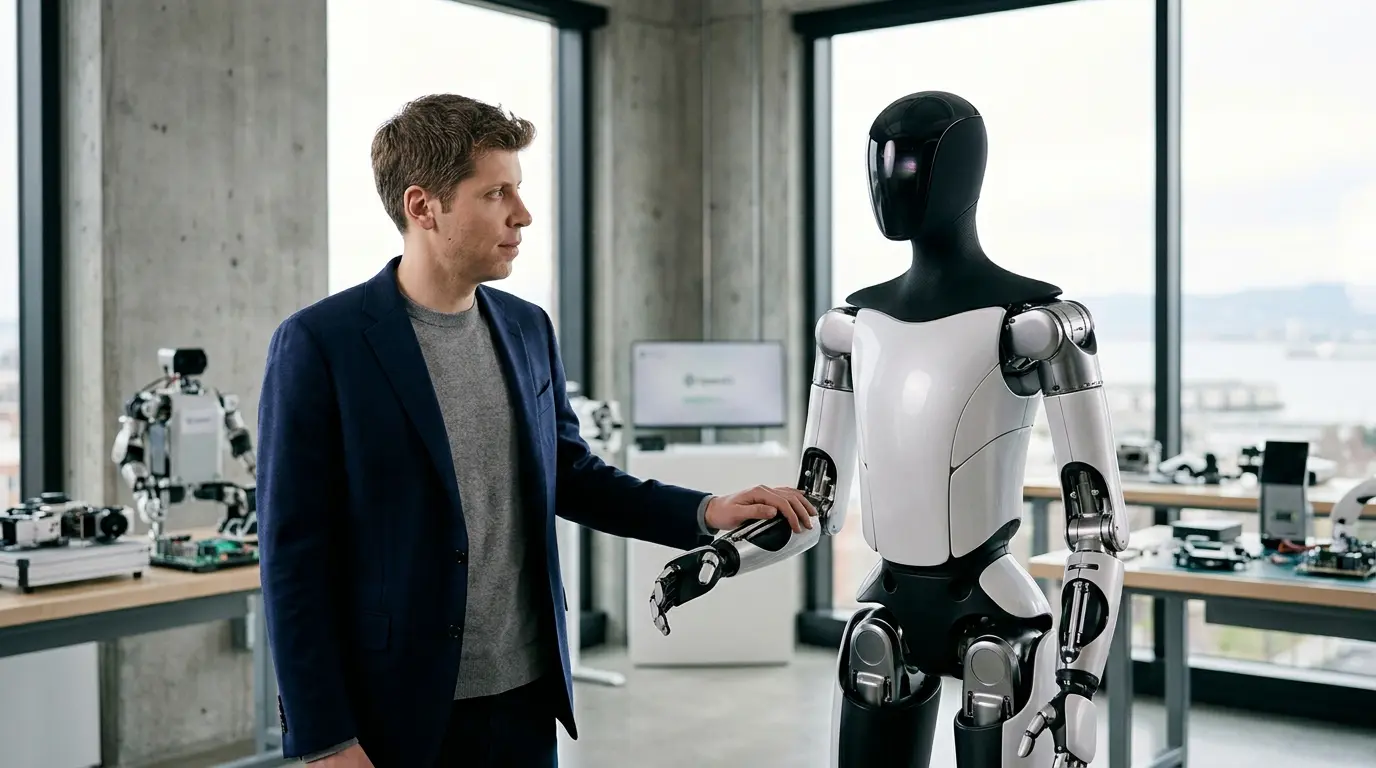
Sam Altman is pushing OpenAI toward a future where AI inhabits physical forms. This move signals a massive shift from software-only models to hardware integration. By building humanoid robots, the company gains access to unique training data from the physical world.
The strategy focuses on bridging the gap between digital reasoning and manual labor. Current models understand language but lack an understanding of gravity or physics. Physical bodies provide the necessary sensory input to solve these problems.
- OpenAI is aggressively pursuing partnerships with robotics companies.
- Humanoid forms provide the best data for human-centric environments.
- Physical interactions generate high-quality training sets for future models.
- Hardware control ensures the software functions perfectly within a mechanical shell.
The Strategy Behind Robotic Integration
Moving into hardware solves the data wall problem. Text-based data sources are drying up for large-scale training. Robots provide a constant stream of new, proprietary information from real-life environments.
Sam Altman believes this step is essential for general intelligence. A machine must interact with objects to truly understand them. This hardware initiative aims to give models a sense of touch and spatial awareness.
According to reports, OpenAI is hiring for a robotics team to lead these efforts. This team focuses on making software compatible with diverse mechanical parts. The goal is to build a brain which drives any physical frame.
| Objective | Impact on AI Development |
| Physical Training Data | Improves spatial reasoning and motor skills |
| Humanoid Design | Allows robots to work in human spaces |
| Custom Hardware | Gives OpenAI control over the user experience |
| Real-world Logic | Teaches the AI about cause and effect in physics |
The new robotics team aims to rebuild a division which existed years ago. Previously, the company disbanded the group to focus on language models. Now, the return to hardware shows a change in direction for the leadership.
Hardware allows for the collection of data which does not exist on the internet. Video and sensor logs from robots performing tasks provide a competitive advantage. This information is proprietary and difficult for competitors to replicate.
Why Humanoid Forms Win
Humans designed every city and factory for the human shape. Humanoid robots fit into these existing spaces without requiring expensive renovations. This design choice makes the technology more practical for immediate use.
OpenAI intends to lead the race by combining advanced logic with capable limbs. This combination will change how industries approach automation. The physical data gathered will refine how these machines move and react.
The project moves beyond simple automation. These robots learn by watching humans and trying tasks themselves. This feedback loop creates a smarter, more capable worker for various sectors.
Success depends on the hardware being as smart as the brain. Sam Altman is focusing on sensors and actuators which mimic human precision. This alignment ensures the software does not outpace the physical capabilities of the machine.
Future models will see, hear, and touch their surroundings. This multi-modal approach creates a deeper level of machine understanding. OpenAI is betting the physical world holds the key to the next leap in intelligence.

byDavid Porter
Popular news

AI breathes new life into an old game: ask for your own Fallout 2 mods

Two Critical PHP Flaws Put Millions of Websites at Risk — AI Helped Find Them

Anthropic’s $80.7 Billion Loss Explained in Today’s AI News Podcast

Goldman Sachs Predicts AI IPOs Could Add 100 Billion Dollars to Indian Market Capitalization

NVIDIA Advances Artificial Intelligence Defined Fabs With New CUDA X Libraries

AI Helps Expose Critical PHP Flaws
Latest comments
Loading