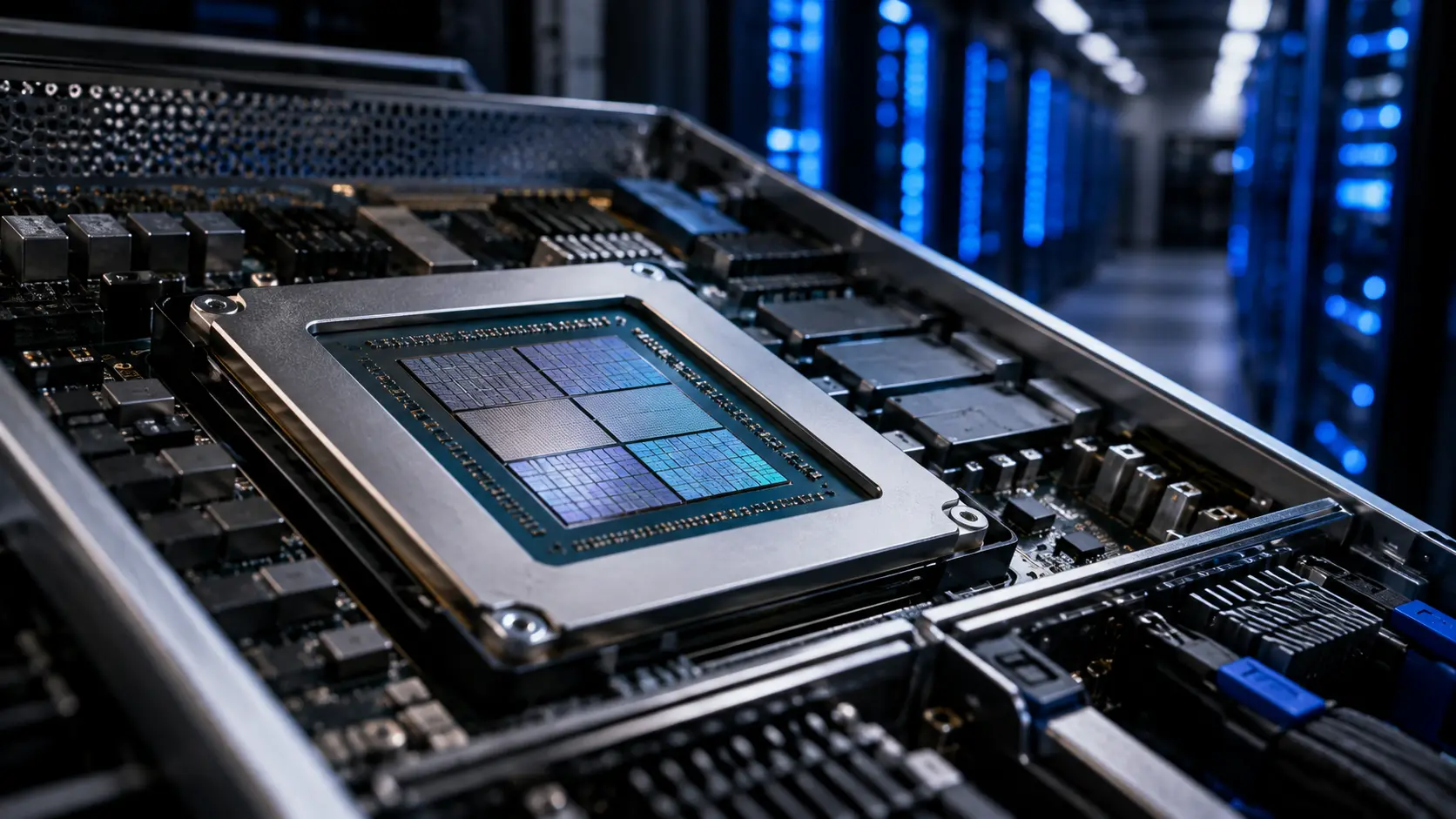
Microsoft plans to unveil the Maia 300 in September, the next generation of its in‑house AI chip. Reuters reports this based on coverage from The Information.
The tech giant is said to be in talks with chipmaker TSMC for production capacity of more than 300,000 units to be delivered in 2027. Longer term, Microsoft reportedly wants to reserve space for over one million chips.
Microsoft has not officially confirmed the launch date or production volumes. The plans could still change.
With Maia, Microsoft aims to reduce its reliance on Nvidia’s costly AI processors. Building its own chip also lets the company tune performance more precisely for Azure, Copilot, and the models running inside its data centers.
What is Maia?
Maia is Microsoft’s in‑house family of AI accelerators. The chips are designed to train and run large AI models within Microsoft’s data centers.
The company introduced the first Maia chip in 2023. In January 2026 it followed with the Maia 200, produced by TSMC on a three‑nanometer process.
The Maia 200 is primarily built for inference—the step where a trained model generates an answer. Every Copilot prompt, summary, or AI‑generated image requires this kind of computation.
Inference is becoming a major driver of AI costs. Training a model is extremely expensive but happens periodically. A popular product then has to process potentially billions of requests every day.
If Microsoft relies solely on third‑party chips for that, it pays not just for manufacturing but also for margins and scarcity around that hardware.
Maia 300: the next jump
Little is officially known about the Maia 300’s technical specs. The name suggests a clear successor to the Maia 200.
Microsoft will likely target higher performance per watt. That matters as power and cooling have become major constraints on data center expansion.
Memory is just as critical. AI chips must rapidly move massive model datasets. A processor can pack powerful compute units yet still stall if data can’t be fed from memory fast enough.
According to Microsoft, the Maia 200 uses large amounts of fast SRAM placed close to the compute blocks. For Maia 300, the company could extend this approach or pair it with new memory technologies.
Without official specs, it’s too early to compare the chip reliably to Nvidia’s latest systems or to Google’s and Amazon’s silicon.
Microsoft in talks with TSMC
Microsoft designs Maia itself but lacks fabs for advanced semiconductor production. For that, it depends on TSMC.
The Taiwanese manufacturer also builds chips for Apple, Nvidia, AMD, and other tech heavyweights. Cutting‑edge capacity is therefore in high demand.
Microsoft is reportedly seeking capacity for more than 300,000 Maia 300 chips for 2027 delivery. Longer term, it’s said to be reserving space for over one million units.
Reserving production capacity doesn’t guarantee all of those chips will be made. Microsoft can adjust orders if the design slips, demand shifts, or key components aren’t available.
The talks do signal Microsoft is betting much bigger on its own AI hardware than in the first generations.
Less dependent on Nvidia
Nvidia dominates AI data centers. Its strength isn’t just GPUs, but also the surrounding networking gear and software.
CUDA, in particular, is a major edge. Developers have used this software platform for years to build applications for Nvidia hardware.
A Microsoft chip therefore has to offer more than strong theoretical performance. The software must make it easy to shard, run, and manage models without developers rewriting every application.
Microsoft won’t replace Nvidia hardware entirely. Azure customers want access to the same systems they use elsewhere. And demand for compute may grow so fast that Microsoft needs both its own chips and large volumes of Nvidia processors.
Maia does give Microsoft more leverage. For the right internal workloads, it can pick the hardware that delivers the best performance per dollar and per watt.
Google and Amazon are ahead
Microsoft isn’t the first cloud provider with custom AI processors.
Google has developed multiple generations of Tensor Processing Units. These TPUs power Google’s own models and are also available through Google Cloud.
Amazon also has dedicated chips for training and inference with Trainium and Inferentia. The company offers these systems to AWS customers and works with AI developers to optimize models for the hardware.
Microsoft started building a similar chip family later—and earlier Maia projects faced delays.
That’s why the Maia 300 matters: it must prove Microsoft can not only design experimental chips, but also produce and deploy them at scale.
Targeting major Azure customers
Reports suggest Microsoft aims to attract large external customers to Maia 300. Anthropic is mentioned as a potential user.
A Microsoft chip could appeal if it’s cheaper or more available than comparable Nvidia hardware. But the real cost isn’t just the chip.
Software support, network performance, and the time needed to port a model to the hardware all matter. A cheaper chip is little help if a team spends months reworking existing systems.
Microsoft can ease that friction by integrating the chip directly into Azure, letting customers rent compute instead of buying servers or standalone processors.
In-house silicon as strategic leverage
Maia’s development reflects a broader cloud shift: major platforms don’t want to rely entirely on the same external supplier.
Owning a chip gives Microsoft control over cost, power usage, roadmaps, and technical features. It can tune hardware to the models and software it runs most.
But building advanced chips is expensive and risky. A single error can delay production for months—and by launch, a rival may already ship a new generation.
If Microsoft shares more in September, expect performance, energy efficiency, and availability to dominate. Reserved chip counts mean little if software isn’t ready or speeds lag.
Maia 300 doesn’t have to beat Nvidia to be a win. If it can handle a slice of Microsoft’s massive internal AI workload at lower cost, that alone could save billions in infrastructure spend.

Popular news

Latest comments
Loading