Microsoft Opens Its Largest Indian Cloud Region, Accelerating the Global AI Race
NewsFriday, 07 August 2026 at 17:00
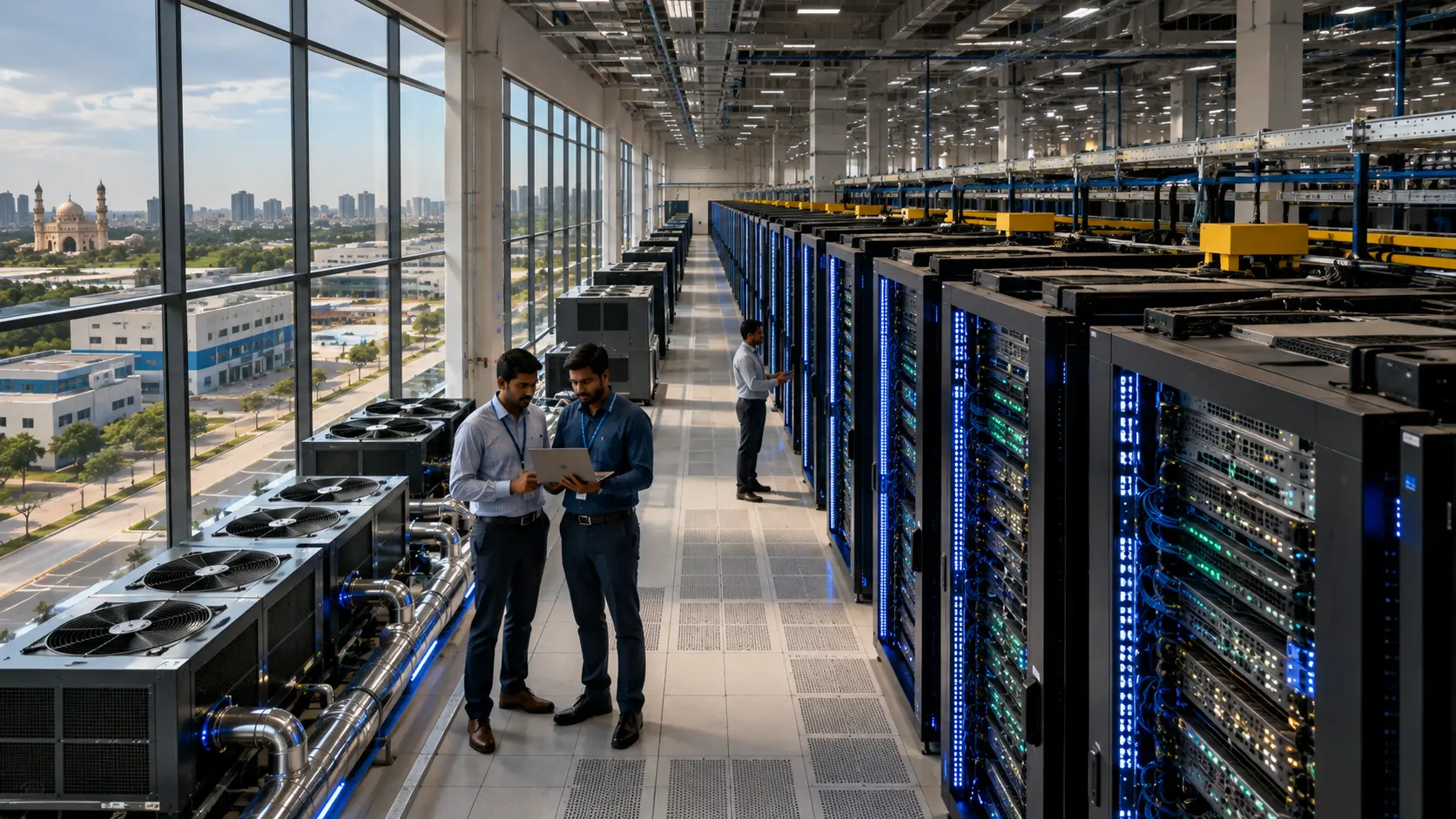
Microsoft has opened its largest cloud region in India, located in Hyderabad. India South Central is the company’s fourth region in the country and is designed to meet surging demand for Azure and AI services. Early users include Adani Group and HDFC Bank. The launch underscores how the global AI race increasingly hinges on data centers positioned close to users and their data.
What exactly launched?
The new region comprises three separate availability zones—distinct locations within the same geographic area—so organizations can spread systems across zones. If one zone goes down, services in another can stay online. Banks, governments, and large enterprises often use this setup to reduce the risk of prolonged outages.
According to Reuters, the opening brings Microsoft’s own cloud regions in India to four, alongside three existing regions. The company also operates two data centers with India’s Jio. Microsoft named Adani Group and HDFC Bank as early customers of the new region but did not disclose exact capacity or power requirements.
India South Central has been in the works for some time. In late 2025, Microsoft said the region would be its largest hyperscale site in India. The three zones together cover an area roughly equal to twice the size of India’s Eden Gardens cricket stadium.
A total investment of $20.5 billion
The new cloud region is part of a much larger investment plan. In early 2025, Microsoft first announced $3 billion for cloud and AI infrastructure in India. In December, it followed with a new $17.5 billion program for 2026 through 2029. In total, the announced commitment comes to roughly $20.5 billion.
Per Microsoft’s official statement, the funds go beyond buildings and servers. The company is also investing in talent, training, locally processed data, and sovereign cloud solutions. Microsoft aims to equip 20 million people in India with AI skills by 2030. It employs over 22,000 people in the country, working on Copilot Studio, Azure AI Search, speech technology, and machine translation.
This blend of infrastructure and skills is strategic. India counts over a billion internet users and a vast technical workforce. It’s simultaneously a market, a development hub, and a data center destination. Alphabet and Amazon are also investing heavily, turning India into one of the key growth markets for commercial AI.
Why local cloud capacity matters
AI doesn’t run “in the air.” Every query to a model is processed in a physical data center, and the distance between users and that data center affects speed and reliability. In regulated sectors, there’s an added layer: where data is processed and which laws apply.
Microsoft is positioning the Indian region as infrastructure close to local data, teams, and decisions. That’s appealing for banks like HDFC, which operate under strict rules on continuity and data governance. It doesn’t mean every Azure or Copilot request will now be handled in Hyderabad; the chosen service, region, and configuration still determine where workloads run.
That nuance matters for European customers too. AI Wereld previously reported that Microsoft Copilot may process data outside the EU unless organizations adjust certain settings. New capacity in India expands Microsoft’s global footprint, but Dutch companies must still verify where their specific workloads and data are processed.
What’s the impact on the Netherlands and Europe?
For the Netherlands, the launch highlights how quickly hyperscalers are expanding geographic coverage. European companies are getting access to more AI capacity, but they’re also becoming more dependent on a small group of U.S. cloud providers.
That’s why the European Commission is examining whether Azure and Amazon Web Services should be treated as new gatekeepers.
There’s also an opening for Dutch tech firms. India isn’t just investing in cloud software; it’s building a broader chips-and-data-center supply chain. For instance, ASML is supplying critical machines to a Tata megafab in India. As demand for local AI infrastructure grows, so will the need for semiconductors, power, cooling, and specialized engineering expertise.
Microsoft’s new region is more than another dot on the map. It marks India’s shift from a major software and services market to one of the physical centers of the AI economy. Anyone tracking the model wars now has to watch where the underlying compute is being built.

Latest comments
Loading