Microsoft Build 2026: MAI-Thinking-1, MAI-Code-1-Flash, Project Solara, Scout, and other AI announcements
News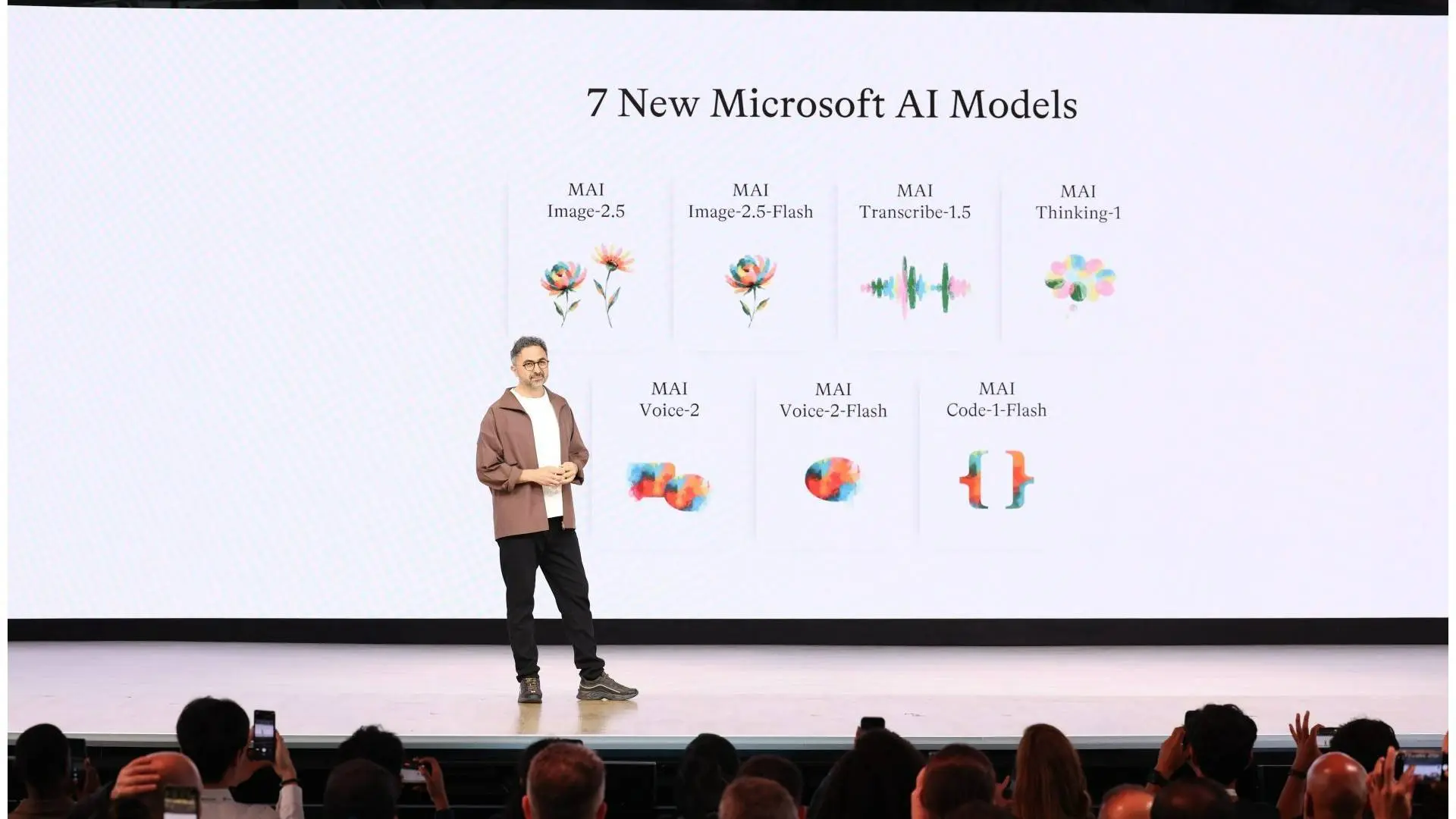
| Image Credit: Microsoft
At Build 2026, Microsoft showcased its vision for its agentic AI and ambition to become the platform powering the next generation of AI agents. From new foundation models and coding systems to personal AI assistants, quantum computing breakthroughs, and specialised hardware for developers, the company presented a vision of an agentic future where AI systems can reason, execute tasks, and collaborate across applications and devices.
The developer conference comes just months after Microsoft and OpenAI altered their partnership and showcased how the Seattle-based software giant plans to build its own AI infrastructure, models, security frameworks, and computing platforms required for AI agents to move beyond chat interfaces and become active participants in software development, scientific discovery, and everyday productivity.
MAI-Thinking-1
The headline announcement at Build 2026 was MAI-Thinking-1, a new reasoning model from Microsoft AI. According to Microsoft, the model is designed to tackle complex problems by breaking them into intermediate reasoning steps before generating an answer.
The company said the model represents an important step toward AI systems capable of deeper analytical thinking rather than simply predicting the next word. Microsoft positioned MAI-Thinking-1 as a foundation for future AI agents that require stronger reasoning abilities across a wide range of domains.

MAI-Code-1-Flash
At the event, Microsoft launched a total of 7 MAI models and joining MAI-Thinking-1 was MAI-Code-1-Flash, a coding-focused model aimed at accelerating software development workflows. The company said the model was built to deliver fast responses while maintaining strong coding performance, making it suitable for interactive developer experiences.
Microsoft described MAI-Code-1-Flash as part of its broader effort to equip AI agents with software engineering capabilities, enabling them to assist developers with code generation, problem-solving, and programming tasks in real time.
Project Solara
Another notable announcement was Project Solara, Microsoft's new initiative for building and deploying AI agents. Project Solara is designed to help developers create agents that can perform tasks, interact with tools, and execute workflows.
Microsoft said the project aims to simplify agent development by providing a framework that supports orchestration, execution, and management of increasingly sophisticated AI systems. The initiative reflects the company's belief that agents will become a core component of future software applications.
Read also


Microsoft Scout
Microsoft expanded its consumer AI ambitions with the launch of Scout, an always-on personal agent integrated into Microsoft 365. Microsoft says Scout is designed to proactively assist users by understanding context, managing information, and helping complete tasks across work and personal environments.
Unlike traditional assistants that wait for prompts, Scout is intended to operate more continuously, surfacing relevant information and recommendations when needed. Microsoft described the service as a step toward more personalised and persistent AI experiences.

| Image Credit: Microsoft
Majorana 2 and Microsoft Discovery
Beyond AI software, Microsoft highlighted progress in advanced computing with Majorana 2 and Microsoft Discovery. The company said the Majorana 2 quantum chip represents a key milestone in its long-term quantum computing strategy.
Combined with Microsoft Discovery, an agentic AI platform for scientific research, the technology is intended to accelerate breakthroughs in areas such as materials science and discovery. Microsoft argued that the combination of AI and quantum computing could eventually transform how researchers approach complex scientific challenges.
Microsoft Execution Containers (MXC)
Security emerged as another major theme at Build 2026. Microsoft introduced Microsoft Execution Containers (MXC), a new security capability designed for AI agents operating on Windows.
According to the company, MXC provides isolated execution environments that allow agents to perform tasks while reducing risks associated with accessing sensitive systems and data. The approach aims to establish stronger trust boundaries between AI agents and user devices, addressing growing concerns around agent autonomy and security.
Windows as a trusted platform for AI development
Microsoft also outlined new efforts to strengthen Windows as a development platform for AI applications and agents. The company announced updates designed to improve the developer experience, streamline AI application deployment, and provide deeper support for agent-based software.
Microsoft said these enhancements are intended to help developers build, test, and deploy AI-powered applications more efficiently while taking advantage of Windows' security and performance capabilities.
Surface RTX Spark Dev Box
On the hardware front, Microsoft unveiled the Surface RTX Spark Dev Box, a new device aimed at AI developers. According to the company, the system is designed to provide local AI development capabilities, enabling developers to build, test, and run AI workloads directly on-device. Microsoft said the hardware combines high-performance computing resources with AI-focused capabilities, giving developers access to a dedicated platform optimised for next-generation AI applications and agent development.
The announcements from Build 2026 reveal a Microsoft that is increasingly focused on every layer of the AI stack. From foundation models such as MAI-Thinking-1 and MAI-Code-1-Flash to agent platforms like Project Solara and Scout, and from security technologies such as MXC to quantum computing advances with Majorana 2, the company is assembling the building blocks for a future where AI agents play a central role in work, software development, and scientific discovery.

Latest comments
Loading