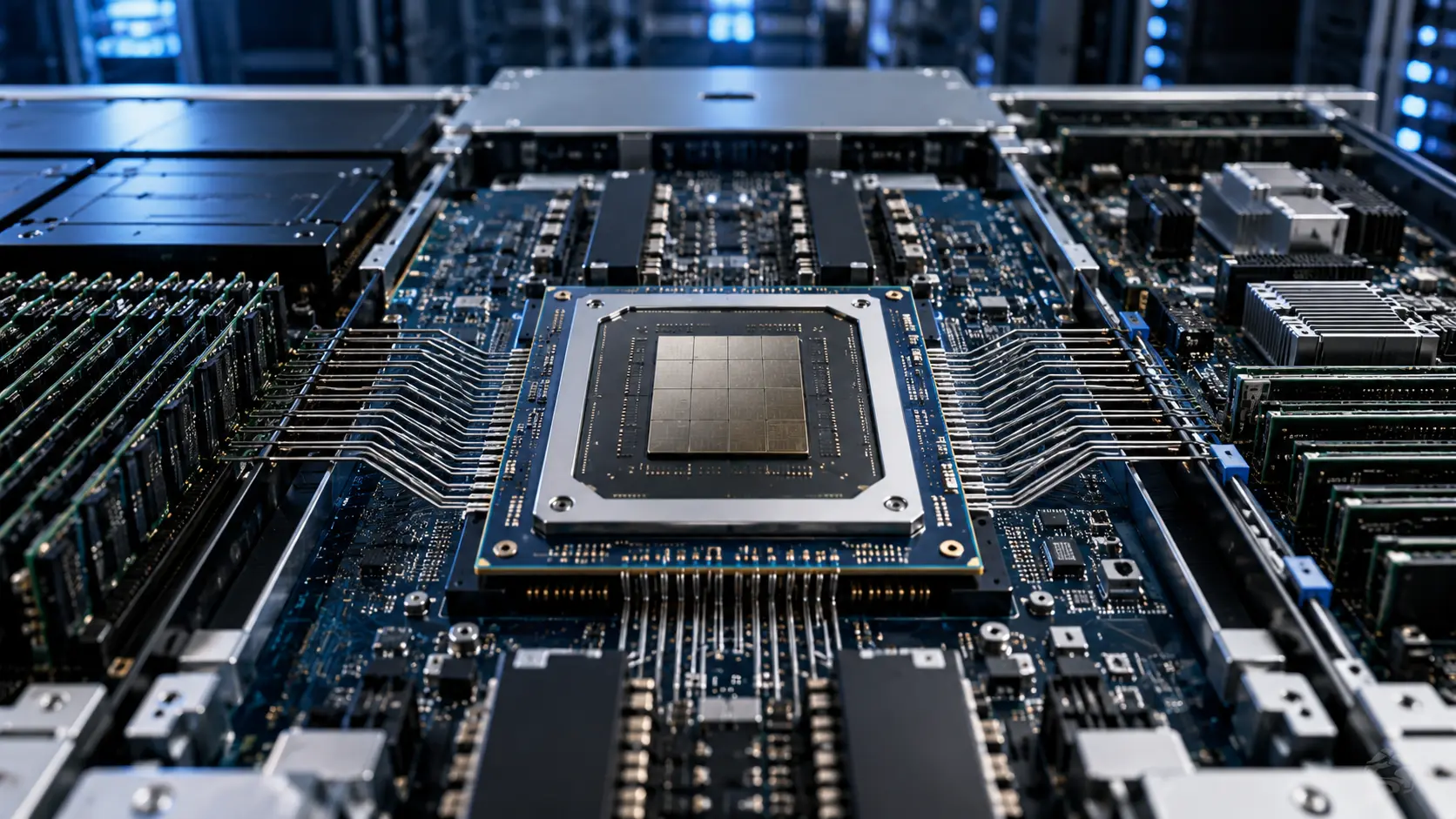
IBM has unveiled the design of a future mainframe processor whose every core understands two instruction sets: Arm and IBM Z. That would let organizations run Arm‑native Linux software alongside z/OS and Linux on IBM Z—without adding separate Arm processors to the system.
According to IBM, this is the first dual‑architecture mainframe processor. It is explicitly not a shipping chip. IBM describes it as a design for future IBM Z and LinuxONE systems, gives no ship date, and cautions that plans for future products may change.
Every core speaks two instruction sets
Per the announced specs, the processor features eleven high‑performance cores on a 2 nm process, clocking above 5.7 GHz. The headline isn’t the core count, but how IBM adds Arm. There are no separate Arm cores next to classic Z cores; each core is meant to execute both instruction sets directly.
IBM told VentureBeat that the KVM hypervisor can switch a core between Arm and Z modes as different virtual machines are scheduled. That flip would happen at nanosecond scale. Arm64 Linux VMs and Linux on IBM Z could thus run on the same physical processor. Traditional z/OS workloads would continue in their own partition.
That’s technically different from a single program mixing Arm and Z code at will. The hypervisor allocates separate environments across available compute cores. IBM claims Arm Linux binaries can run unmodified, but that compatibility—and near‑zero‑cost switching—still needs to be proven on production systems with real enterprise software.
The approach follows the IBM and Arm collaboration announced on April 2. That partnership itself isn’t today’s news. What’s new are the shared‑core design and processor specs. IBM showed a CAD design, not a working production chip.
AI inference moves closer to transaction data
The design also includes AI inference accelerators for use cases like fraud detection during transactions, extending IBM’s on‑processor AI path from Telum and z17. For this new processor, the company hasn’t published performance or latency figures.
The idea builds on the AI capabilities of the IBM z17 mainframe. The next processor also gets its own data processing unit for I/O and a large cache architecture. Full Z and LinuxONE systems should, according to IBM, scale to hundreds of cores and tens of terabytes of memory.
Arm matters here mainly because of its software ecosystem. Many cloud‑native tools, security agents, and AI frameworks now ship first for Arm64. IBM and Arm cite an ecosystem of more than 22 million developers. If such software can run without a dedicated port to the s390x architecture, it becomes easier to bring modern Linux services to where mainframe data already lives.
That doesn’t make the processor a drop‑in replacement for every GPU. The integrated AI unit targets fast inference inside transactions. Training large models and heavy generative workloads may still require specialized accelerators.
Fewer ports, but migrations still required
For software vendors, native Arm support could remove a painful step. An existing Arm64 application, IBM says, wouldn’t need to be recompiled for the Z instruction set. That could appeal to banks, insurers, and governments that keep their transaction systems but want to refresh monitoring, containers, and AI software faster.
Migration won’t be zero‑touch, though. OS support, drivers, licensing, orchestration, and z/OS integrations still need to be set up. Organizations must also test whether an application meets the same performance, availability, and security as in its original Arm environment. Binary compatibility is just one layer of a production system.
IBM is positioning the processor as a bridge between two ecosystems, not the end of the Z architecture. The company says it has hardware roadmaps for multiple future generations. The Power11 server IBM previously pitched as AI‑ready also remains a separate product family; Power, Z, and Arm are not interchangeable names for the same platform.
For European organizations, the combo could be compelling when data must stay close to a transaction system due to latency, security, or governance. For now, that’s a design promise—not a measured outcome at a customer site.
No ship date, fab partner, or benchmarks—yet
IBM won’t say when systems with the processor will go on sale. VentureBeat points to IBM’s typical mainframe cycle and suggests around 2028 as a logical timeframe for a z17 successor. That’s an informed estimate by the publication, not an official IBM date.
The 2 nm manufacturing partner, power consumption, cache sizes, and price also remain undisclosed. There are no independent benchmarks, customer trials, or demo data showing how many Arm and Z workloads can run simultaneously without noticeable performance loss.
It’s equally unclear which Arm Linux distributions, drivers, and management tools will be officially certified on first‑generation systems—or at what migration cost to customers.
AIWereld previously covered IBM chips and servers meant to simplify enterprise AI. The new design goes further by enabling software compatibility in the processor core itself. Architecturally striking, yes—but its value will only be measurable once IBM shows working silicon, supported software, and a shipping system.
The right takeaway is limited but significant: today IBM shared new details on a mainframe processor that aims to unite two major software worlds on the same cores. It has yet to prove that customers can use that promise in production.

Latest comments
Loading