Google and Nvidia eye Intel amid TSMC capacity crunch: AI chip market reaches a new tipping point
News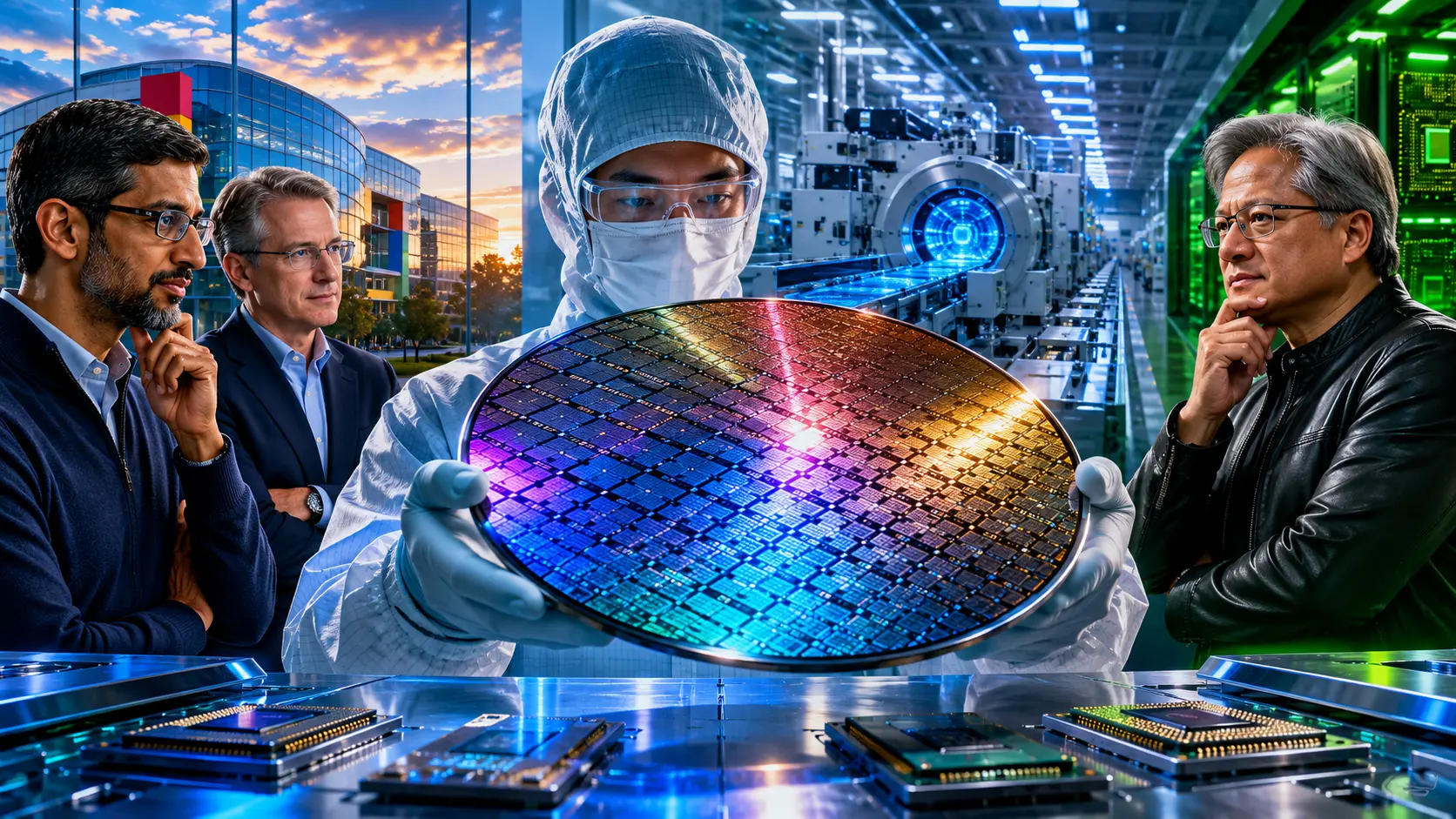
According to a new report from The Information, both Google and Nvidia are exploring a deal with Intel Foundry as TSMC’s production capacity comes under heavy strain. Google has reportedly already placed an order for more than three million Tensor Processing Units (TPUs) for Intel to manufacture in 2028. Nvidia is said to be evaluating Intel’s production tech but hasn’t issued a firm order yet.
The move underscores just how intense demand for AI chips has become. TSMC has long dominated advanced chipmaking for Nvidia, Apple, AMD, and Google. But AI’s explosive growth is outpacing the industry’s ability to bring new fabs online.
Why Google and Nvidia might pivot to Intel
The answer is simple: capacity.
TSMC CEO C.C. Wei warned just last week it will take “a long time” before the company can fully meet customer demand. Even with billions poured into new plants, AI still runs up against production bottlenecks.
For Google, that’s a strategic risk. The company is leaning harder on its in-house TPUs as an alternative to Nvidia GPUs in Google Cloud. If supply tightens, services like Gemini—and cloud infrastructure for enterprise customers—could feel the hit.
Nvidia, meanwhile, is looking to reduce reliance on a single manufacturer. CEO Jensen Huang recently acknowledged that, despite a strong supply chain, Nvidia still faces supply constraints.
A major boost for Intel Foundry
A Google contract would be a significant win for Intel.
The company has spent years trying to challenge TSMC with its Foundry division. Under CEO Lip-Bu Tan, that strategy appears to be gaining traction. Investors reacted immediately: Intel’s stock jumped more than nine percent after the report.
Confidence is also building around Intel’s latest process, Intel 18A. Even TSMC recently acknowledged Intel is becoming a serious contender in advanced chip manufacturing.
What this means for AI
This shift is bigger than manufacturing.
Today, the AI industry leans heavily on a single dominant player: TSMC. If giants like Google and Nvidia diversify production across multiple suppliers, the supply chain becomes more resilient. That could ease future shortages and intensify competition among chipmakers.
A stronger Intel could also reduce geopolitical pressure on the semiconductor sector. Washington and major U.S. tech firms have long pushed to bring some production of strategic chips back to American soil.
What to watch next
While these plans aren’t confirmed, the report shows how dramatically the AI chip market has shifted. A few years ago, Intel looked like it was lagging TSMC. Now, it may be poised to reassert itself in global AI infrastructure.
If Google does tap Intel to build millions of TPUs, it could become one of the most consequential deals in Intel Foundry’s recent history.

Popular news

AI Phone Agents Still Get Names Wrong | AI World Daily News

AI Phone Agents Still Make a Surprising Number of Mistakes with Names and Addresses

Chinese AI Maker Moonshot Limits Hacking Capabilities in New Kimi Model

Elon Musk SpaceX Secures 40 Billion Dollars for AI GPU Infrastructure

AI Financial Payoff Zero for Most Companies Outside Tech Sector
Latest comments
Loading