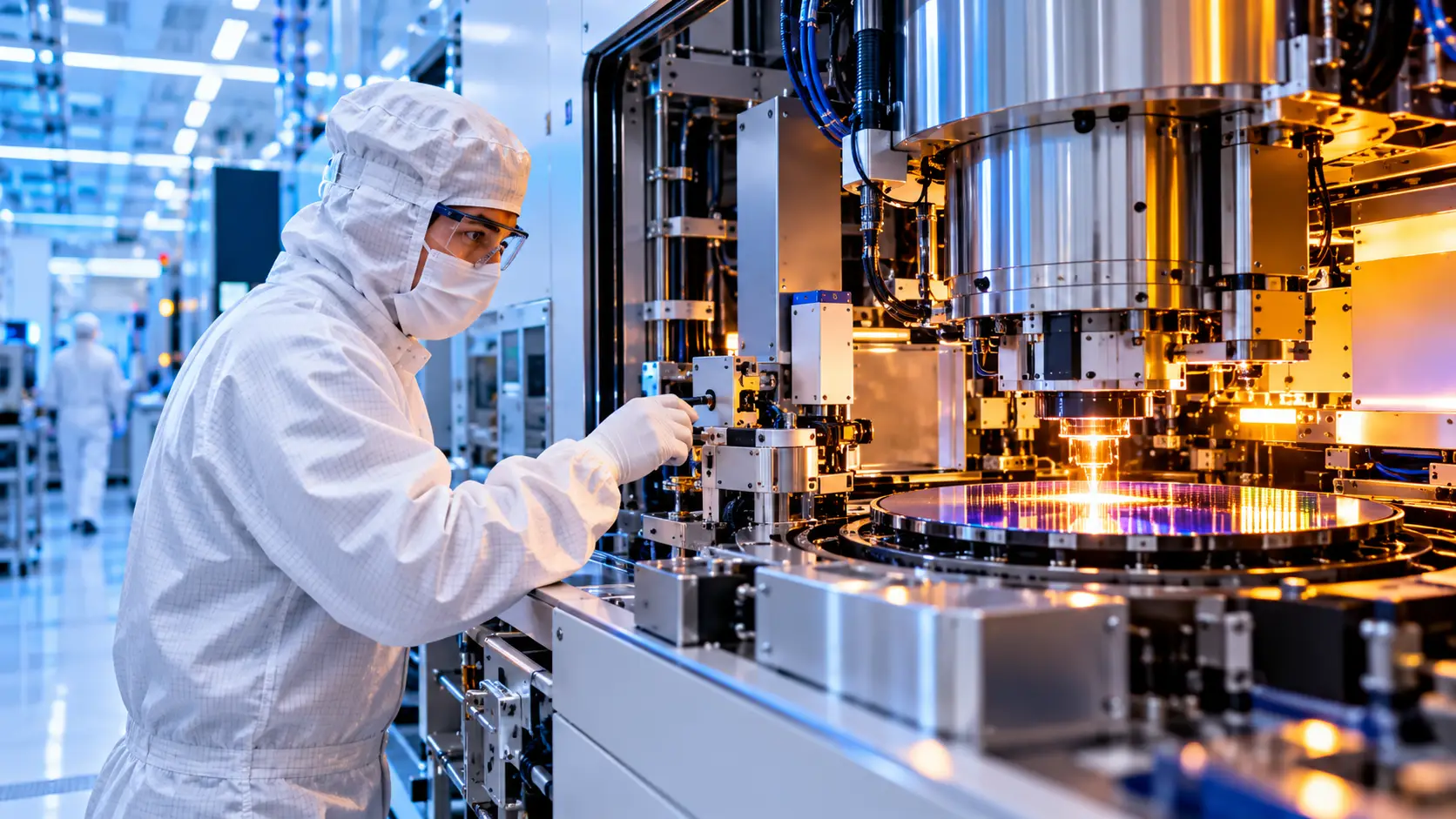
ASML has broken ground on a new campus in Eindhoven. Brainport Industries Campus North is designed to eventually accommodate up to 20,000 workstations. The expansion comes as heavy investment in artificial intelligence boosts demand for advanced chipmaking tools.
According to ASML’s announcement, phase one is slated for completion in 2029 and will house at least 3,000 employees—mostly teams relocating from existing sites. The 20,000 figure reflects potential long-term capacity, not a promise of as many new jobs.
New campus aims to accelerate production
BIC North will unite manufacturing, logistics, and supporting office functions. At its core: a new “flow factory,” an operations model designed to better synchronize parts and processes. The goal is to build and install modules for ASML’s TWINSCAN lithography systems faster, more efficiently, and at greater scale—borrowing best practices from the automotive and aerospace industries. Learn more about ASML.
Why AI’s boom channels back to ASML
ASML supplies the lithography machines that let chipmakers etch ultra-fine patterns onto silicon. Its most advanced systems use extreme ultraviolet (EUV) light—key to producing the minute structures required for powerful, energy-efficient chips. ASML explains the technology in its overview of EUV lithography.
Rising demand for AI compute ripples through the entire supply chain. AI companies run servers packed with high-performance processors and memory. Chipmakers are adding capacity to supply those components—and need production equipment to do it. Reuters cites TSMC, Samsung, SK Hynix, Micron, and Intel among ASML customers expanding to meet AI demand. Reuters outlines that global chain as construction begins.
ASML itself draws the AI link. In its July 15 quarterly results, CEO Christophe Fouquet said AI-driven investments are lifting demand for advanced logic and memory. Customers are accelerating expansion plans, giving ASML greater visibility into future orders.
ASML plans to boost output capacity for its current EUV systems by 30 percent in 2027, up from roughly 65 systems in 2026. Further expansion in 2028 is under review. These are broad capacity plans and shouldn’t be directly attributed to BIC North, whose first phase will come online later.
Power and nitrogen rules set the preconditions
Scaling up takes more than a strong order book. ASML also needed clarity on electricity supply and impacts on protected nature areas.
Per ASML’s project brief, the campus power supply is secured via an expansion of the Best high-voltage substation by TenneT. ASML says it will keep monitoring whether the work stays on schedule. The required infrastructure must actually be delivered on time.
The province of North Brabant also granted a nature permit using the so-called ADC test. Authorities had to show there were no alternatives, that there was an imperative reason of overriding public interest, and that environmental impacts would be offset. The province says those criteria have been met. The permit explanation cites measures including nature restoration in Kempenland-West.
Project Beethoven: bigger than ASML
The campus is part of a broader push to grow the Dutch chip ecosystem. Under Project Beethoven, the national and regional governments agreed in 2024 on a €2.51 billion package to fund technical talent, transport links, and housing. It’s an investment in the business climate and the region—not a construction budget solely for ASML. The breakdown is in the Dutch government announcement.
Around BIC North, these plans are becoming concrete. In July, Eindhoven announced preparatory work for a new road layout, including a wider underpass beneath the A58, improved bus links, and upgraded cycling infrastructure. Those upgrades are meant to improve access for other businesses and destinations nearby as well. The city details the works and timeline.
The expansion also underscores the wider importance of machine building to the Netherlands. AI Wereld previously covered the surge in the Dutch machinery sector and how it differs from other industrial segments.
AI’s growth needs factories—and people
The groundbreaking shows how global AI investments translate locally. More demand for compute triggers new spending on production, talent, and infrastructure. For the region, the challenge is to match that growth with enough housing, connectivity, and environmental protection.
That mirrors the debate over Europe’s position in the AI industry. The Dutch role becomes tangible here: creating room for the machines that let chipmakers expand their own capacity.

Popular news



Latest comments
Loading