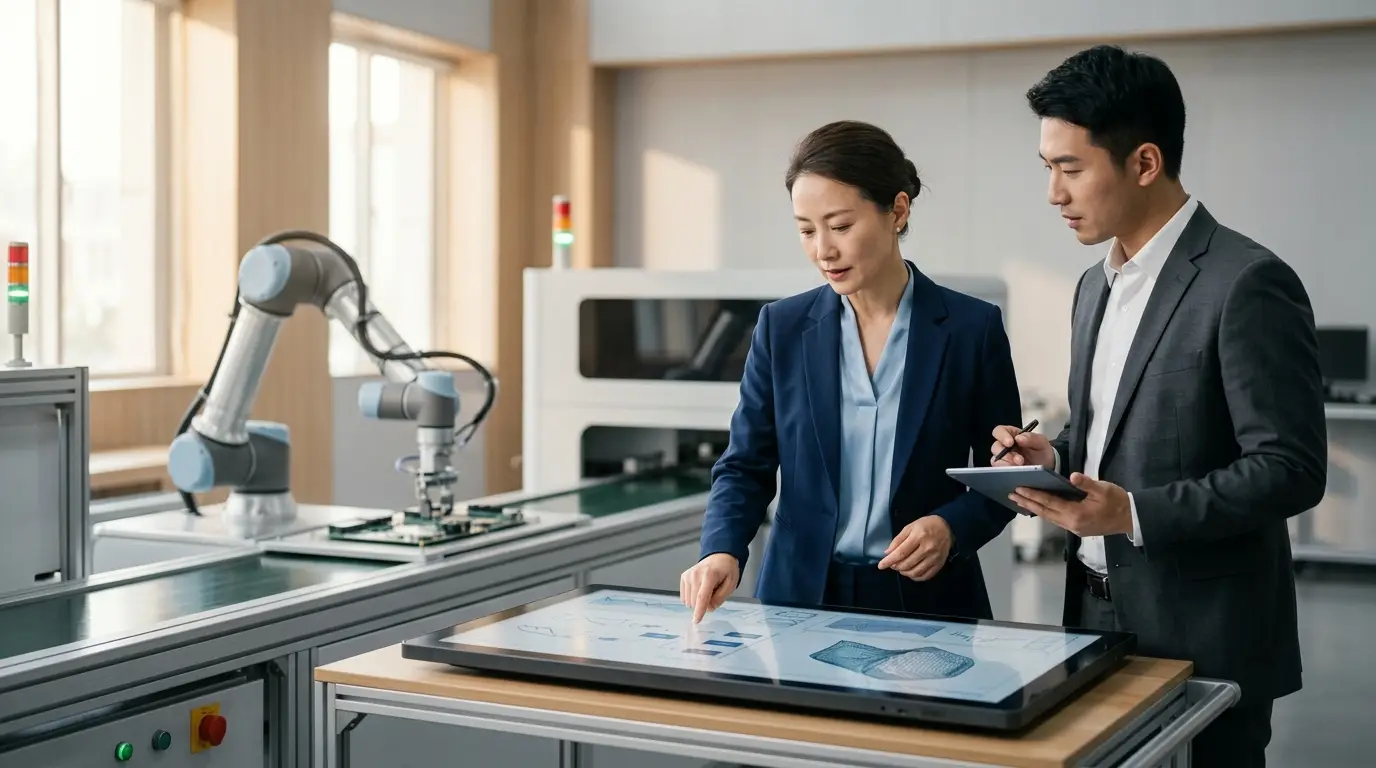
The Ministry of Industry and Information Technology announced plans to draft comprehensive policies for next generation smart manufacturing. This initiative aims to deepen the integration of artificial intelligence across the entire production chain.
Officials stated these measures will help companies reduce operational costs while improving overall efficiency. The strategy focuses on developing innovative manufacturing models that adapt quickly to diverse market demands. You can read the full official announcement on the State Council Information Office website.
Tiered Implementation Strategy
Authorities will apply a tiered approach to upgrade industrial equipment and build smart factories. Basic and advanced facilities will expand their digital systems and artificial intelligence usage. Top tier plants will explore next generation architectures and future manufacturing models. The government will also provide targeted support for smarter machine tools and robotics.
This includes advancing inspection equipment and developing industry specific artificial intelligence agents. International cooperation remains a priority as well. China plans to leverage platforms like BRICS to share technical standards and assist partner nations in building their own smart facilities.
Economic Impact and Infrastructure Growth
These new measures build upon substantial existing progress. The country has already established over 13,000 advanced level smart factories. More than 1,000 application scenarios now operate across 20 major industries including steel and pharmaceuticals. This transformation relies on a robust digital infrastructure. By the end of September total smart computing power reached 2,592 EFLOPS. This represents a 146 percent increase compared to the previous year.
The economic data reflects this technological shift. Gross domestic product grew 4.6 percent in the first three quarters of the year. The manufacturing sector accounted for 25.7 percent of this total output. High tech and digital manufacturing now drive industrial expansion. These sectors made up over 20 percent of industrial value added output but generated more than half of the total industrial growth during this period. Furthermore, the integration of these advanced technologies directly supports national objectives for sustainable industrial development by optimizing resource allocation.
| Computing Unit | Operational Definition | Scale of Measurement | Application Context |
| EFLOPS | Exa Floating Point Operations Per Second | One Quintillion Calculations | Large Scale Neural Network Training |
| Smart Factory Tier 1 | Basic Digital System Integration | Foundational Automation | Initial Workflow Optimization |
| Smart Factory Tier 2 | Advanced Artificial Intelligence Usage | Predictive Maintenance | Complex Supply Chain Management |
| Smart Factory Tier 3 | Next Generation Architecture | Autonomous Decision Making | Future Manufacturing Models |
Future Outlook for Production
The ongoing transition requires sustained investment in both hardware and software capabilities. Companies must align their operational strategies with these emerging national standards to remain competitive in a rapidly evolving global market. The focus on industry specific artificial intelligence models will likely accelerate automation in complex manufacturing environments.
This systematic upgrade ensures long term resilience in global supply chains and protects against external economic shocks. Policymakers will continue monitoring these developments closely to refine support mechanisms for digital transformation. Continuous collaboration between public institutions and private enterprises will be essential to navigate the complexities of this technological transition. The successful deployment of these systems will ultimately define the competitive standing of the national economy in the coming decade.

byDavid Porter
Popular news

AI breathes new life into an old game: ask for your own Fallout 2 mods

Anthropic’s $80.7 Billion Loss Explained in Today’s AI News Podcast

Microsoft wants to keep AI agents in the workplace on a tighter leash

AI Cleans Up Your TV with CleanYourTV

Goldman Sachs Predicts AI IPOs Could Add 100 Billion Dollars to Indian Market Capitalization

Global Memory Shortage Threatens Corporate AI Adoption
Latest comments
Loading