My AI assistant hit the familiar “I’m not a robot” check on a WordPress website. It asked permission to complete the reCAPTCHA, and I approved. A computer passing a test on my behalf to prove it’s human sounds like a contradiction. But there’s more going on behind that checkbox than meets the eye.
First, it asks for permission
The screen said the check was an extra security measure for websites running WordPress or Joomla. Before logging in, visitors had to confirm they were human.
My assistant said it was waiting at the reCAPTCHA and asked me to approve the check or complete it myself in the browser.
My reply: “Yes, complete the reCAPTCHA.”
It’s an unusual extra step when building and managing a website with AI. You delegate computer work to a computer, only for that same computer to run into a check designed to stop automated visitors.
The screenshots show the permission request and the check itself. They don’t show a successful completion or a solved image puzzle, so they don’t reveal whether the assistant had to pass any additional test.
Behind the checkbox: a risk assessment
In its reCAPTCHA v2 documentation, Google explains that clicking “I’m not a robot” can lead to one of two outcomes: the visitor is allowed through immediately, or is asked to complete an extra check.
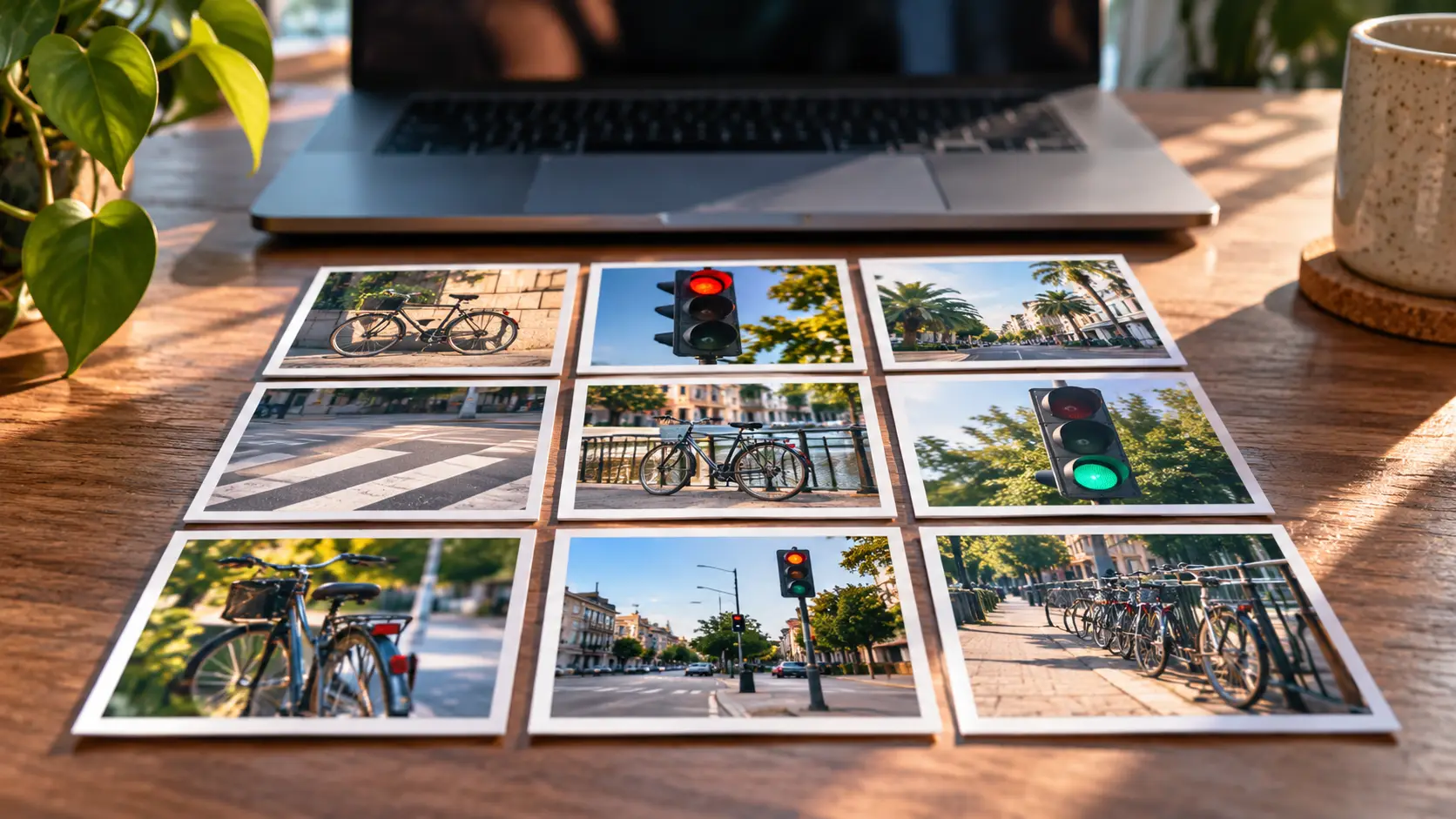
So if you get through with a single click, you haven’t necessarily identified a grid of traffic lights or bicycles. Sometimes the system already has enough convincing signals.
The principle is nothing new. When Google introduced the checkbox in 2014, it described how the underlying risk analysis evaluates interactions before, during and after the check. If the system isn’t confident enough, it presents an additional challenge.
The text beside the checkbox boils down a more complex process. Google doesn’t simply accept the claim “I’m not a robot”; it uses other signals to try to spot automated abuse.
The screenshots don’t reveal which signals tipped the balance in my session.

AI can solve image puzzles, too
Image puzzles ask software to recognise what’s in a picture: which image contains a bicycle, or which squares show a traffic light. AI can tackle these challenges, too.
Researchers Andreas Plesner, Tobias Vontobel and Roger Wattenhofer of ETH Zurich described this in their study of reCAPTCHA v2, published on arXiv in September 2024. They reported that their specially trained system completed every CAPTCHA in the final test setup.
That 100% success rate needs context. The system sometimes had to try multiple challenges before gaining access. The researchers were not claiming it could identify every image perfectly on the first attempt.
The study also focused on a specific setup and reCAPTCHA v2. Its results can’t be applied directly to every chatbot, website or newer security method. But they do show that these image puzzles don’t require a skill unique to humans.
An AI assistant acts on someone’s behalf
In my case, a person was behind the request. I wanted to work on a website and gave the assistant permission to carry out a step. My approval of the AI and reCAPTCHA’s assessment were two separate events.
That distinction matters for websites used by AI assistants. An agent might carry out a legitimate task for a user, such as filling in a form. Other software might visit the same site to spread spam. Simply detecting that software is involved doesn’t tell you enough about the user’s intent or authority.
The same question arises with work tools such as Claude Cowork, which lets you hand entire tasks to AI. Once an assistant starts interacting with websites, it encounters checks originally designed for human visitors.
Google also offers an approach that doesn’t rely on a visible puzzle. reCAPTCHA v3 assigns a risk score based on interactions with the website. The site owner decides what to do next. For example, Google suggests requiring extra authentication for a suspicious login attempt, prompting the visitor to complete another verification step.

Popular news

OpenAI Signs Six-Year Deal for 457 MW of AMD Compute From TensorWave

Liquid AI’s d1.2 Decision Models Add Audio and Structured Answers

Two U.S. Universities Get Nearly $5 Million to Teach AI Literacy
Qualcomm Opens Dragonfly AI200 Inference Trials Through Cirrascale

When GTA 5 launched, ChatGPT was still nine years away