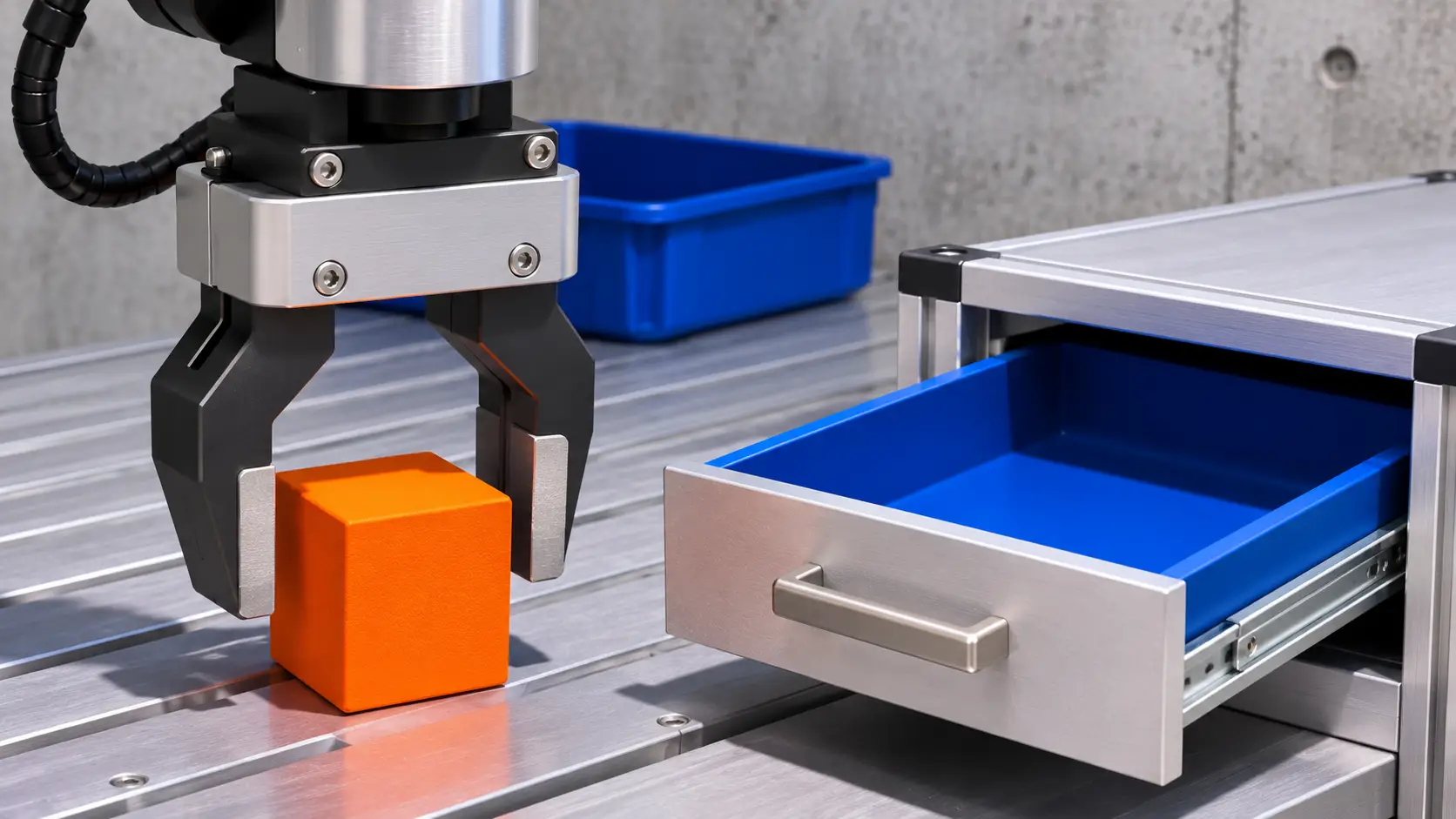
An editorial illustration of the tabletop tasks used to study robot control.
A robot arm can finish a move after its world changes and still be more likely to fail at the next step. In a new test from Forall Labs, all ten robot control systems showed that pattern. The test changed things like the camera view or the position of an object while a simulated arm was at work.
One change, three runs
Sajjad Pakdamansavoji’s CALVIN-MAX preprint, posted November 24, describes 7,828 cases. The arm works through a chain of five tasks. In one run, everything stays as it was. In a second, the change is in place when the affected step starts. In a third, the same change arrives while the arm is moving.
Moving a block can make it harder to grab in either case. Moving it after the arm has started its reach also tests how the system handles the timing. On 1,526 cases held back for testing per system, the mid-move changes cut success on the affected step by 4.4 to 9.9 percentage points across the ten systems.
A change in view can be easier to ride out
Changes to what the arm sees, such as a shift in the camera view, cost 5.4 points less on average when they came mid-move than when they happened before a task. The study found no clear timing effect for changes to the scene itself, such as a moved object. When the researcher rewound the arm and its control system to the start of the step, the benefit of already being in motion disappeared.
Why the next step matters
The change stayed in place. Even when an arm completed the affected step in both the normal run and the run with a change, it was 5.0 to 16.8 points less likely to finish the next step after the disruption. The Forall Labs project page shows sample runs side by side.
The figures come from a simulator. Factory tests can put robots through conditions specific to one site and one job. GlobalFoundries’ planned Atlas trial is one example of how those trials follow the work a robot would actually do.

Popular news
Good Morning AI | Anthropic slips, Claude reviews code and Tidal sets a cutoff
AI stocks slide again as Nvidia falls and Ambarella sinks 20.6%
GTA 6 on PC at 10 FPS? Inside the AI-Assisted Race to Port It

Tencent opens the AI models behind WeChat’s product search
Google’s Humanity’s First Exam Tests AI Reliability