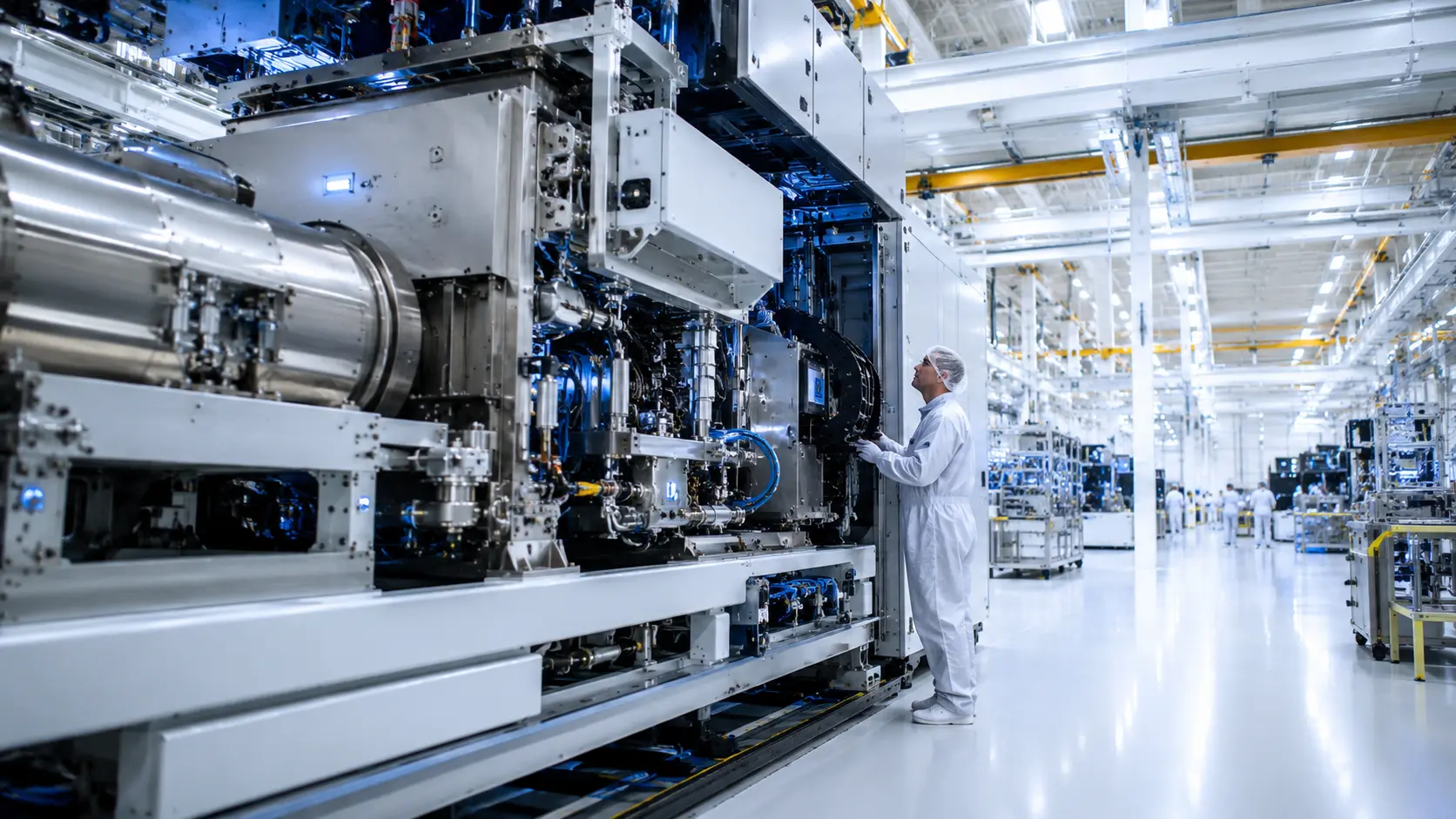
Dutch industry produced 4.6 percent more in June 2026 than a year earlier, with the machinery sector powering most of the growth. Figures from Statistics Netherlands (CBS) show machine production jumped 26.2 percent compared to June 2025. At the same time, total industrial output fell 1.3 percent versus May, tempering the recovery in the month-to-month view.
The 4.6 percent year-on-year rise follows an even stronger May, when Dutch industry produced 6.8 percent more than a year earlier. Output is clearly above 2025 levels, but the gap between sectors is striking.
Which sectors are driving the rebound?
Machinery is the clear growth engine. Output in this segment was up 26.2 percent in June versus a year earlier, according to CBS.
That surge contrasts sharply with trends in other major industrial groups. Nearly half of all CBS-tracked classes produced more than in June 2025, yet several large sectors shrank.
Metal products fell 0.7 percent and transport equipment 2.3 percent. Rubber and plastics were down 3.5 percent, while food production dropped 3.8 percent.
Chemicals struggled as well, with output 4.5 percent lower than a year earlier. Electrical and electronic equipment slipped 5.3 percent.
The steepest decline was in machine repair and installation, which produced 15.9 percent less than in June last year.
Why do the monthly numbers look softer?
Season- and calendar-adjusted, Dutch industry produced 1.3 percent less in June than in May. CBS says this measure better reflects short-term momentum than a year-over-year comparison.
The adjusted production index came in at 108.1 in June, with 2021 set to 100. In May, the index stood at 109.5.
That monthly dip doesn’t erase the broader picture. Despite the setback, CBS still sees signs of an upward trend in 2026. The index was 104.5 in January. After a February drop, March, April and May posted solid gains.
The turnaround is notable after weaker years. From 2023, Dutch industry came under pressure, and in 2024 output was lower every month than a year earlier. Since early 2026, results have been mixed—but the positive months have clearly strengthened.
Producers are regaining confidence
Industrial producers are turning more upbeat. According to CBS, producer confidence rose from 1.3 in June to 2.4 in July—the highest in four years.
A positive score means optimists outweigh pessimists in the indicator. Confidence also sits well above the twenty-year average of -1.4.
In July, producers were notably less negative about their order books. Still, confidence fell in just over half of the individual branches.
The electrical engineering and machinery sectors were key exceptions. With a confidence indicator of 15.6, producers there were the most positive.
What do the numbers say about automation and AI?
The machinery boom makes investment in production tech more relevant, but the CBS data do not show AI as the cause of the surge. Based on these figures, no direct link can be made between the 26.2 percent growth and investments in AI, robotics, or automation.
Still, the trend matters for tech. Machine building, industrial automation, sensors, software and robotics are increasingly intertwined. AI is being applied in quality control, predictive maintenance, production planning and machine data analysis.
A growing machinery sector could become a key market for industrial AI suppliers. However, this CBS release measures output volumes and producer confidence and does not break out AI adoption.
Recovery remains uneven across industry
For now, a narrow set of sectors is carrying the industrial recovery. Total output is well above last year, while six of the eight major branches highlighted by CBS actually show declines.
That split makes machinery’s strength even more pivotal. Without it, the overall picture for Dutch industry would look far weaker.
The mix of higher annual output, a slight monthly pullback and improving producer confidence paints a mixed—but increasingly positive—outlook. The coming months will show whether the wider industry can catch up with machinery’s rapid growth.

Latest comments
Loading