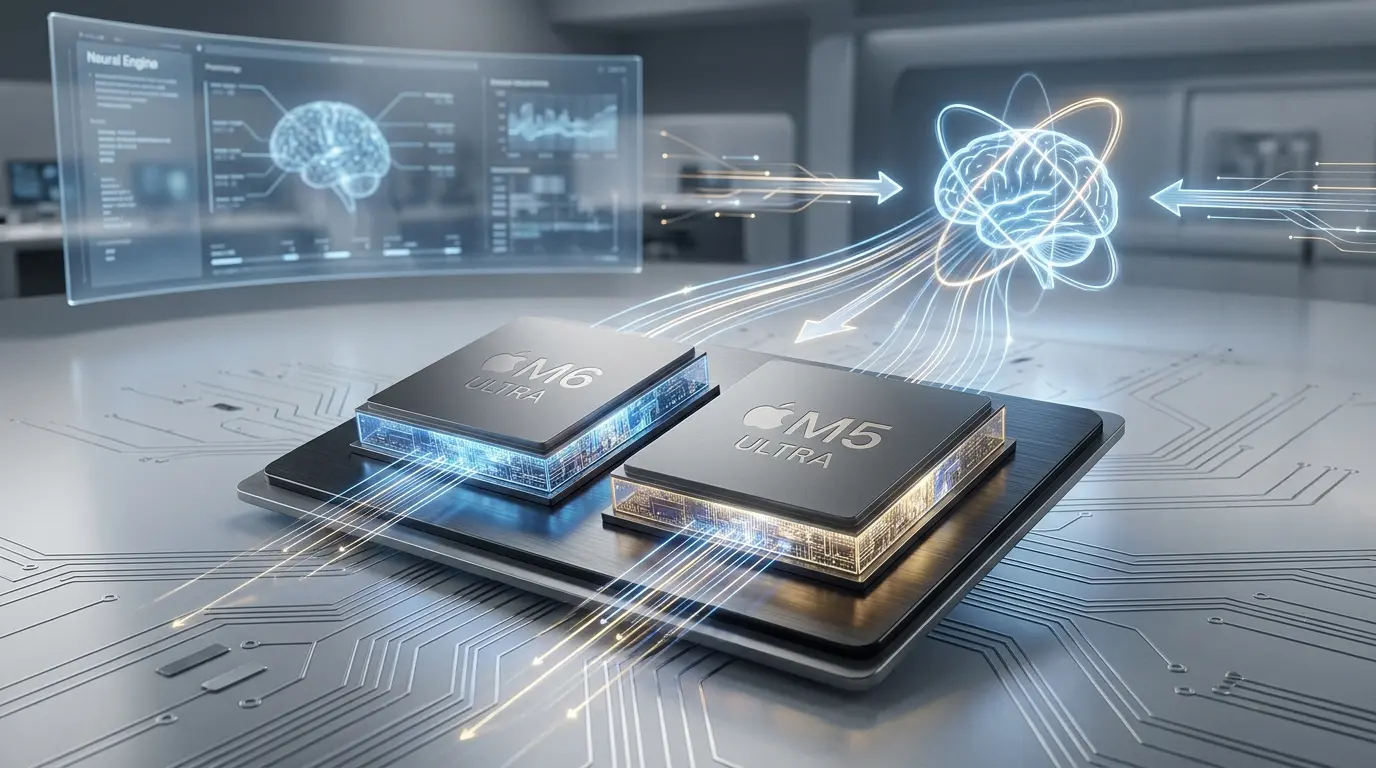
Apple moves fast securing its lead in the artificial intelligence race. Latest reports point toward development of M6 and M5 Ultra chips built specifically for heavy AI tasks. By keeping processing on hardware, Apple protects privacy while boosting speed beyond previous generations.
Apple plans shipping advanced processors meeting growing demands within the Apple Intelligence suite. These new chips focus on high-performance computing without reliance on cloud servers. This shift ensures faster response times plus better security for users wanting private tools.
Hardware Focused Intelligence Boost
The upcoming M5 Ultra and M6 families represent a leap in transistor density. Reports indicate these chips prioritize neural engine performance running large language models directly on hardware. This approach eliminates latency found in cloud-based services.
- Faster processing for AI-driven video editing and image generation.
- Enhanced privacy because data never leaves the local machine.
- Reduced power consumption for long-lasting battery life on portable Macs.
- Superior multi-core performance for professional developers and creators.
According to report data, industry metrics reached record levels regarding neural processing speeds. Engineers are building the silicon to handle billions of parameters without overheating the machine. Users will notice significant improvements in daily workflows as tasks complete instantly.
The design team focuses on specialized cores dedicated to machine learning. These cores work alongside standard processing units to distribute the workload efficiently. This architecture prevents the system from slowing down during intensive background operations.
Future Proofing Silicon Strategy
Production schedules suggest M5 Ultra arrives first followed by the M6 lineup. These chips feature improved architecture built on 2nm or 3nm processes. Apple needs extra horsepower maintaining an edge over competitors pushing local AI solutions.
| Feature | Details |
| Primary Hardware | M5 Ultra and M6 Silicon |
| Manufacturing Process | Advanced 2nm/3nm Nodes |
| Core Focus | On-Device AI Processing |
| Security Model | Local Data Privacy |
Strategic shifts toward internal processing reduce dependency on external data centers. This move saves costs while giving Apple total control over the user experience. Expect future Macs and iPads to leverage this power for advanced voice recognition and predictive text.
The roadmap shows a clear path toward total AI integration across all devices. Software developers will gain access to tools optimized for this specific silicon. The result is an ecosystem where hardware and software work in perfect harmony.

byDavid Porter
Latest comments
Loading