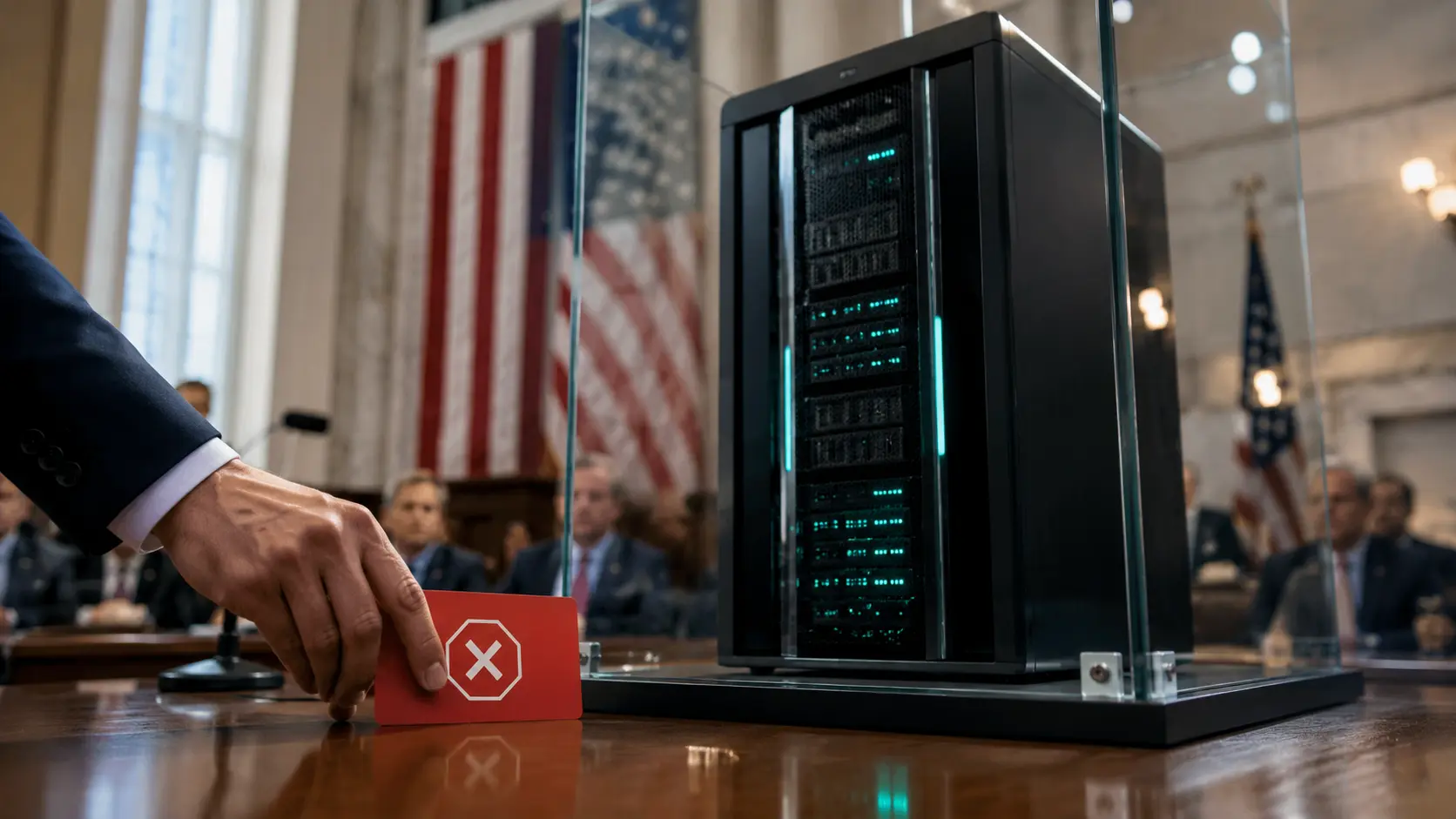
The U.S. government has forced Anthropic to immediately cut access to its newest AI models, Fable 5 and Mythos 5. The AI company calls the move a misunderstanding and warns it could seriously slow the development of advanced AI systems in the United States.
According to Anthropic, the company received a government export-control order on June 12 at 5:21 p.m. PT. The order compels Anthropic to disable all access to Fable 5 and Mythos 5 for foreign users—and for the company’s own foreign employees.
Strikingly, Washington has not provided concrete technical details about the alleged security threat behind the decision, Anthropic says.
Why is Washington stepping in?
The U.S. government reportedly became concerned about a possible jailbreak of Fable 5. A jailbreak is a technique used to bypass an AI model’s safeguards to elicit answers that would normally be blocked.
Anthropic argues the government shared only a limited demo of a specific method that exposes a few known, relatively minor vulnerabilities.
The company says it’s not a universal jailbreak that broadly disables the model’s protections. The issues identified were already known and do not reveal unique capabilities of Fable 5.
“The findings shared with us do not demonstrate dangerous new capabilities,” Anthropic writes in its statement.
Anthropic draws a line to GPT-5.5
Notably, Anthropic explicitly references competing AI models.
The company says the examples shown don’t reflect capabilities exclusive to Fable 5. Comparable results can be achieved with other publicly available models, including OpenAI’s GPT-5.5.
That framing suggests the government is applying an unusually strict standard to a single model.
It also taps into a broader industry debate. Nearly all advanced models face jailbreak attempts to some degree. The real question isn’t whether such techniques exist, but when a vulnerability is serious enough to justify government intervention.
A rare market intervention in AI
Washington’s move stands out because it’s not an inquiry, a warning, or a voluntary safety pledge. The government has effectively pulled a commercial AI model from the market.
This could mark a new phase in AI regulation.
Until now, U.S. AI policy has focused on export limits for advanced chips, voluntary safety commitments between government and AI firms, and reporting obligations around frontier AI systems.
A direct block on a deployed AI model has, as far as known, not been applied at this scale before.
That’s why other major AI labs—OpenAI, Google DeepMind, Meta, and xAI—are watching closely.
Anthropic warns of industry-wide fallout
Anthropic’s statement doesn’t just contest the order—it issues a broader warning.
Right now, no frontier model is fully immune to all possible jailbreak techniques. Absolute safety is not technically achievable, the company argues.
Instead, Anthropic relies on a “defense in depth” strategy: multiple security layers combined with monitoring, abuse detection, and rapid patches when new vulnerabilities are found.
The company notes that Fable 5 underwent thousands of hours of safety testing before launch, involving U.S. government agencies, U.K. AI safety researchers, and external experts.
No universal jailbreak was found during those extensive tests, Anthropic says.
Who decides when AI is “safe enough”?
At its core, the clash seems less about a single flaw and more about a policy line in the sand.
When is an AI model safe enough to stay on the market?
Anthropic says it supports governments’ authority to block dangerous AI systems. But such decisions must be transparent, technically grounded, and legally predictable.
By Anthropic’s account, the current intervention doesn’t meet that bar.
That stance could fuel a major debate across the global AI sector in the coming months. As AI systems get more powerful, pressure on governments to act faster when risks appear will only grow.
The Fable 5 case shows how tough that call has become. The question is no longer just what AI can do, but who ultimately decides which risks are acceptable.
Why this matters now
The freeze on Fable 5 and Mythos 5 could set a precedent for the entire AI industry.
If governments can halt commercial AI models based on limited or undisclosed safety findings, it fundamentally shifts the balance of power between regulators and AI companies.
For developers, investors, and users, the stakes extend far beyond a single model. The outcome here could shape how future AI systems are assessed, approved—or blocked.

Popular news

Anthropic Secures Thirty Two Billion Dollar Queensland Data Centre Deal for Claude

Zuckerberg Rejects AI Slowdown Calls Amid Industry Safety Debate

Crusoe Secures Nearly Four Billion Dollars to Scale Factory Built AI Data Centers

Amazon Secures Generac Stake in Massive Eight Billion Dollar Generator Pact

Spain Registers First End-to-End Autonomous AI Data Breach

MIT and Suffolk Unveil How AI is Reshaping Construction Productivity
Latest comments
Loading