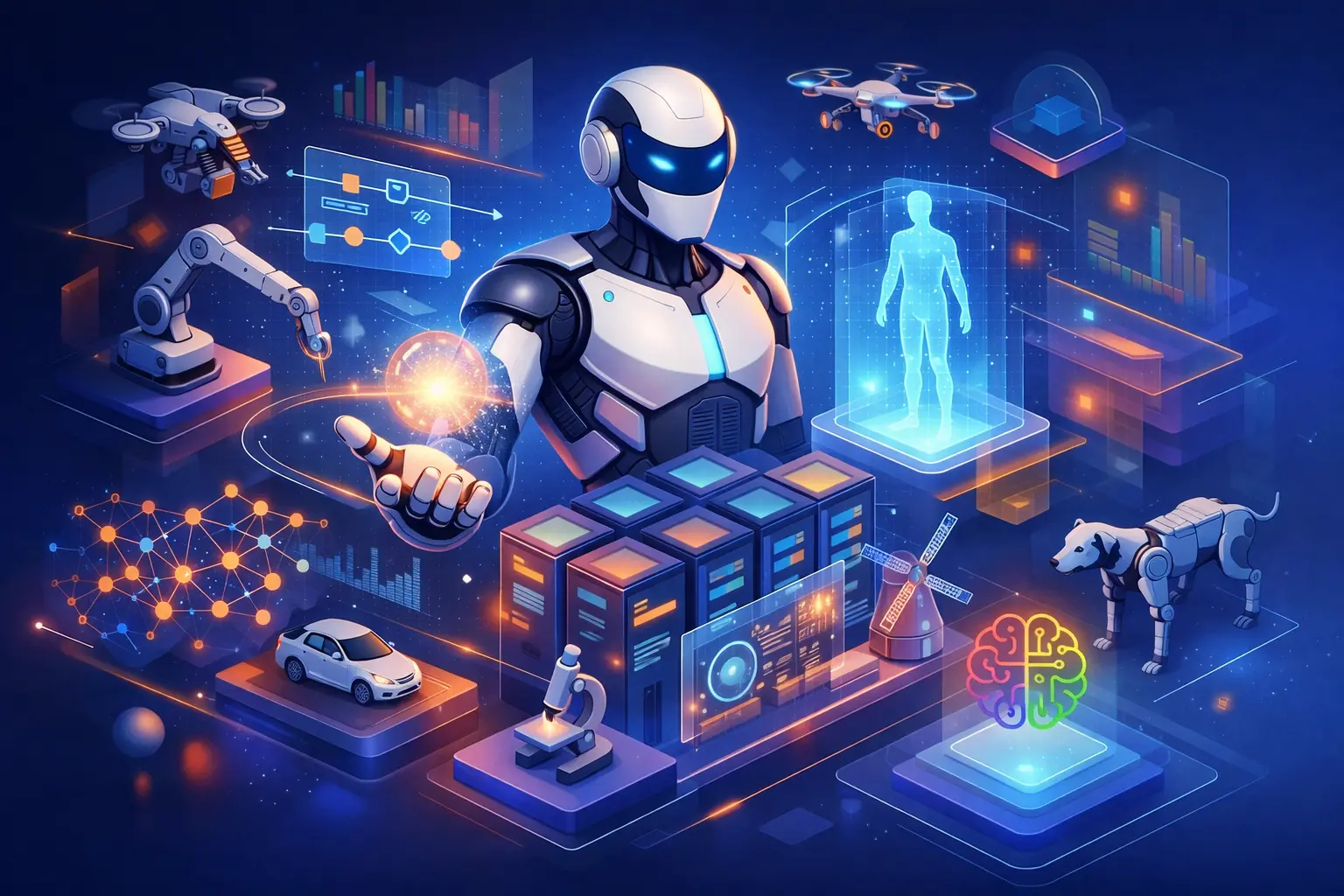
In 2026, a new wave of artificial intelligence is about to break. This wave isn’t about simple chatbots or predictive tools. It’s about Agentic AI: autonomous digital agents that execute tasks, make decisions, learn from experience, and operate like human colleagues. In this article, we explain why this could be a tipping point, the developments driving it, and the opportunities and risks that come with it.
What exactly is Agentic AI?
Agentic AI refers to systems that go beyond classic AI tools. Instead of merely responding to prompts or questions, these agents proactively carry out goal-oriented tasks without constant human direction. They analyze data, plan workflows, and can independently take steps to achieve objectives. That sets them apart from traditional AI models that mainly generate answers or make predictions based on input.
More concretely: an agent doesn’t just collect data—it decides what to do with it, which tools to use, and how to optimize outcomes. That makes Agentic AI a form of intelligence that can act, plan, and learn.
Why 2026 is seen as a pivotal year
Multiple analyses and trends indicate that by 2026, autonomous AI systems will be mature enough for large-scale deployment. Gartner, Deloitte, and other consultancies report that companies are shifting from experimentation to broad adoption in the coming years. The pace at which organizations are testing and implementing agentic systems is accelerating.
This is driven by:
- Improved technology: Modern AI models are getting better at complex planning, reasoning, and learning.
- Integration capability: Agents can connect to enterprise data, workflows, and software ecosystems.
- Business-led adoption: Organizations see value in autonomous systems to speed up processes and reduce errors
This evolution means AI will no longer just assist—it can act as an active partner in operations, decision-making, and even strategy execution.
How Agentic AI works in practice
Autonomous agents are designed to operate independently. Once they receive goals from a human or a system, they move through the following steps:
- Analysis and planning: They assess information, form a plan, and identify required actions.
- Action and execution: They use tools, software, APIs, and other resources to carry out tasks.
- Self-direction and learning: They evaluate outcomes and learn from results to refine their approach.
Multiple agents can collaborate in ecosystems where each takes on a specific role. For example, one agent gathers data, another analyzes it, and a third draws conclusions and reports. This setup mirrors human teamwork more than basic automation.
Key Agentic AI trends for 2026
Experts highlight several trends that will fuel the rise of autonomous agents in 2026:
1. Hyper-autonomous business processes
Agents will run processes without human intervention—from procurement and logistics to resource planning and risk management. Systems will analyze market conditions on their own and make decisions that once required human judgment.
2. Multi-agent collaboration
Instead of handling isolated tasks, groups of agents will work together in multi-agent ecosystems. Each agent can specialize, enabling complex workflows without human steering.
3. Self-learning architectures
Agents will increasingly adapt their behavior based on feedback and experience. These “self-evolving” systems let organizations continuously optimize their AI.
4. The rise of agentic commerce
AI agents won’t just be used internally; they’ll also assist consumers with purchases, comparisons, and decisions—reshaping online commerce. Major consultancies predict this could have massive economic impact by 2030.
Examples of current adoption
In 2025 and 2026, we already see Agentic AI in action:
- Banks in the United Kingdom are testing autonomous AI systems for customer interactions, savings advice, and investment planning, with large-scale pilots slated for 2026.
- Major cloud providers like Google are upgrading their agent development tools so enterprises can build and deploy production-grade systems faster.
- Retail analysts expect that by 2030, nearly half of all online shoppers will use an AI agent during purchases.
Risks and challenges
Progress brings pitfalls. Agentic AI introduces new risks in governance, security, and reliability:
- Cybercrime: Autonomous systems executing tasks without human oversight can be misused by attackers to automate cyberattacks.
- Accountability and control: Who’s liable when an agent makes a mistake? Organizations are grappling with rules and oversight for autonomous systems.
- Hype vs. reality: Some experts warn today’s agents lack the full autonomy often promised, urging a measured approach.
The role of governance and ethics
The success of Agentic AI largely depends on how organizations and policymakers handle ethics and regulation. Clear rules for transparency, accountability, and human oversight are essential to mitigate risks and build trust.
How companies can prepare
Organizations aiming to capitalize on the agentic shift should:
- Invest in robust data management and integration platforms.
- Develop governance and security frameworks before scaling autonomous systems.
- Train employees to work effectively with AI agents rather than replace them.
Conclusion
2026 is shaping up to be a defining year for autonomous AI agents. The technology is moving fast from concept to real-world deployment—AI won’t just advise; it will act. Companies ready for this shift can gain a serious edge, but the challenges are real. Transparency, governance, and strategic preparation are critical to unlock the upside of Agentic AI without the unintended fallout.

Popular news

Chinese AI Maker Moonshot Limits Hacking Capabilities in New Kimi Model

AI Stocks Surge After Anthropic Market News

AI Bot Accessed Public Voter Data Through Georgia Data Hub

Elon Musk SpaceX Secures 40 Billion Dollars for AI GPU Infrastructure

AI Financial Payoff Zero for Most Companies Outside Tech Sector

Podcast: SpaceX's $40 Billion AI Chip Deal, Explained
Latest comments
Loading