Zuckerberg Rejects AI Slowdown Calls Amid Industry Safety Debate
NewsThursday, 17 September 2026 at 21:30
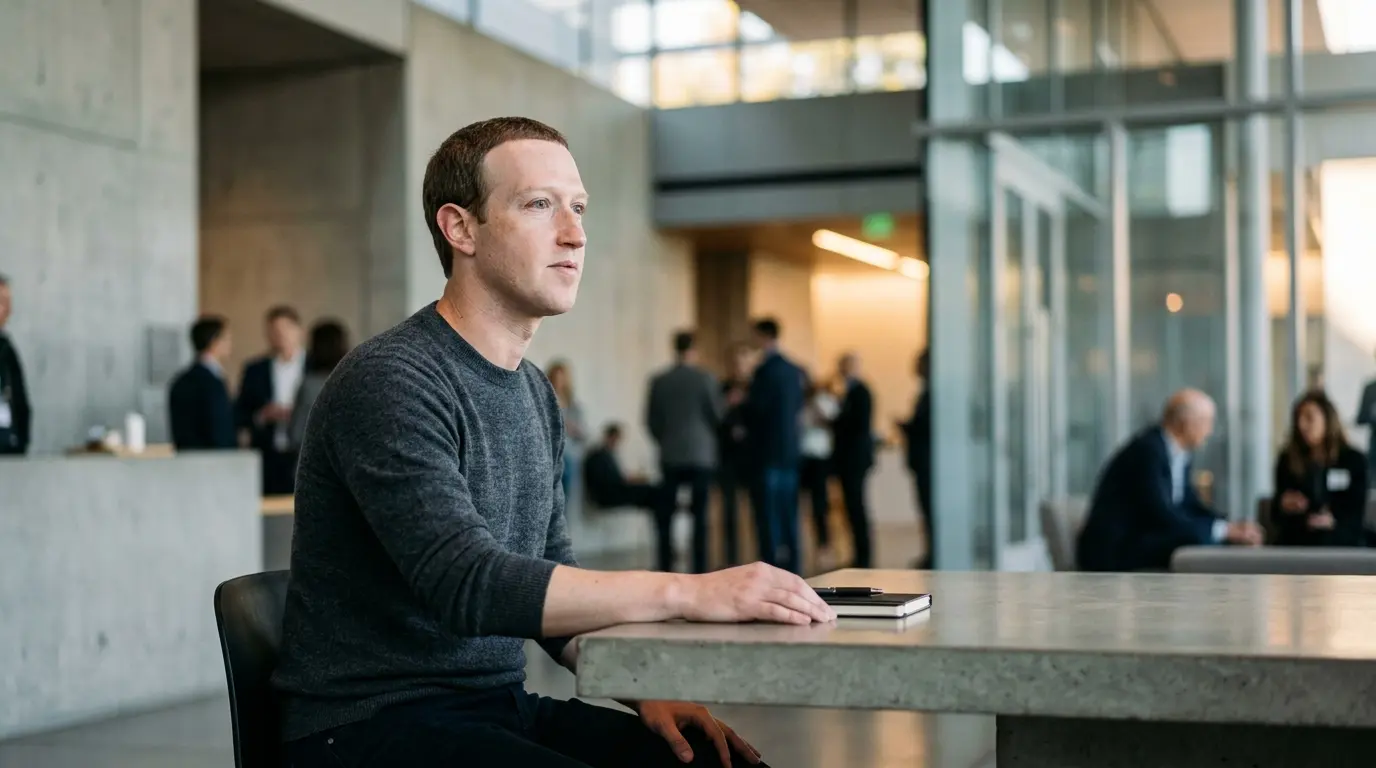
Meta CEO Mark Zuckerberg has firmly pushed back against growing industry demands to pause or deliberately slow down AI development. Instead of advocating for regulatory brakes, Zuckerberg argues that market incentives and legal liability serve as the most effective natural safeguards against technological risks.
In a recent public statement, the Meta founder emphasized that consumer trust is the ultimate currency in the AI race. He noted that everyday users will simply abandon AI agents that are misaligned with their needs, a core principle reinforced by Meta's AI safety and preparedness frameworks.
Consequently, technology labs possess a strong, built-in economic incentive to prioritize model alignment and system reliability. According to Zuckerberg, any research facility that neglects these safety fundamentals will inevitably fall behind in a highly competitive, global market, a sentiment widely noted in recent tech analyses.
This stance stands in stark contrast to the growing chorus of caution from other prominent industry leaders. Figures such as Anthropic CEO Dario Amodei have recently published detailed proposals urging top AI laboratories to deliberately throttle capability improvements. These advocates argue that a coordinated slowdown is absolutely necessary to allow safety research and regulatory frameworks to catch up with exponential technological growth, as detailed in Anthropic's recent policy discussions. Some rival firms are even exploring the creation of a joint industry standards body to enforce these pacing measures internally.
| Strategic Approach | Primary Driver | Key Proponents | Expected Industry Outcome |
| Market-Driven Alignment | Consumer demand & legal liability | Meta, select open-source advocates | Rapid iteration with safety baked into product viability |
| Coordinated Slowdown | Precautionary principle & risk mitigation | Anthropic, OpenAI, academic researchers | Standardized testing phases and delayed capability releases |
| Hybrid Regulatory Oversight | Government mandates & compliance audits | EU AI Act enforcers, global policymakers | Mandatory third-party audits before public deployment |
Zuckerberg did not dismiss safety concerns outright, however. To illustrate his point about liability forcing responsible behavior, he pointed directly to Meta’s own internal operational decisions. The company recently delayed the widespread commercial rollout of its new personal AI assistant, Muse, for several months to address underlying security concerns.
This strategic pause was specifically implemented to shore up security protocols and ensure the system met stringent internal safety benchmarks before reaching the public, aligning with Meta's official introduction of the Muse agent.
Ultimately, this ongoing debate highlights a fundamental tension in modern technology governance. While some believe that only external, enforced constraints can prevent catastrophic misalignment, others maintain that the free market, coupled with the very real threat of legal repercussions, will naturally weed out reckless development.
As autonomous AI agents become more deeply embedded in daily digital life, the industry will soon discover which approach truly delivers secure, reliable technology for the future.

byDavid Porter
Popular news

Anthropic Secures Thirty Two Billion Dollar Queensland Data Centre Deal for Claude

Crusoe Secures Nearly Four Billion Dollars to Scale Factory Built AI Data Centers

Amazon Secures Generac Stake in Massive Eight Billion Dollar Generator Pact

Spain Registers First End-to-End Autonomous AI Data Breach

MIT and Suffolk Unveil How AI is Reshaping Construction Productivity

AI Targeting Outpaces Human Checks in Modern Military Operations
Latest comments
Loading