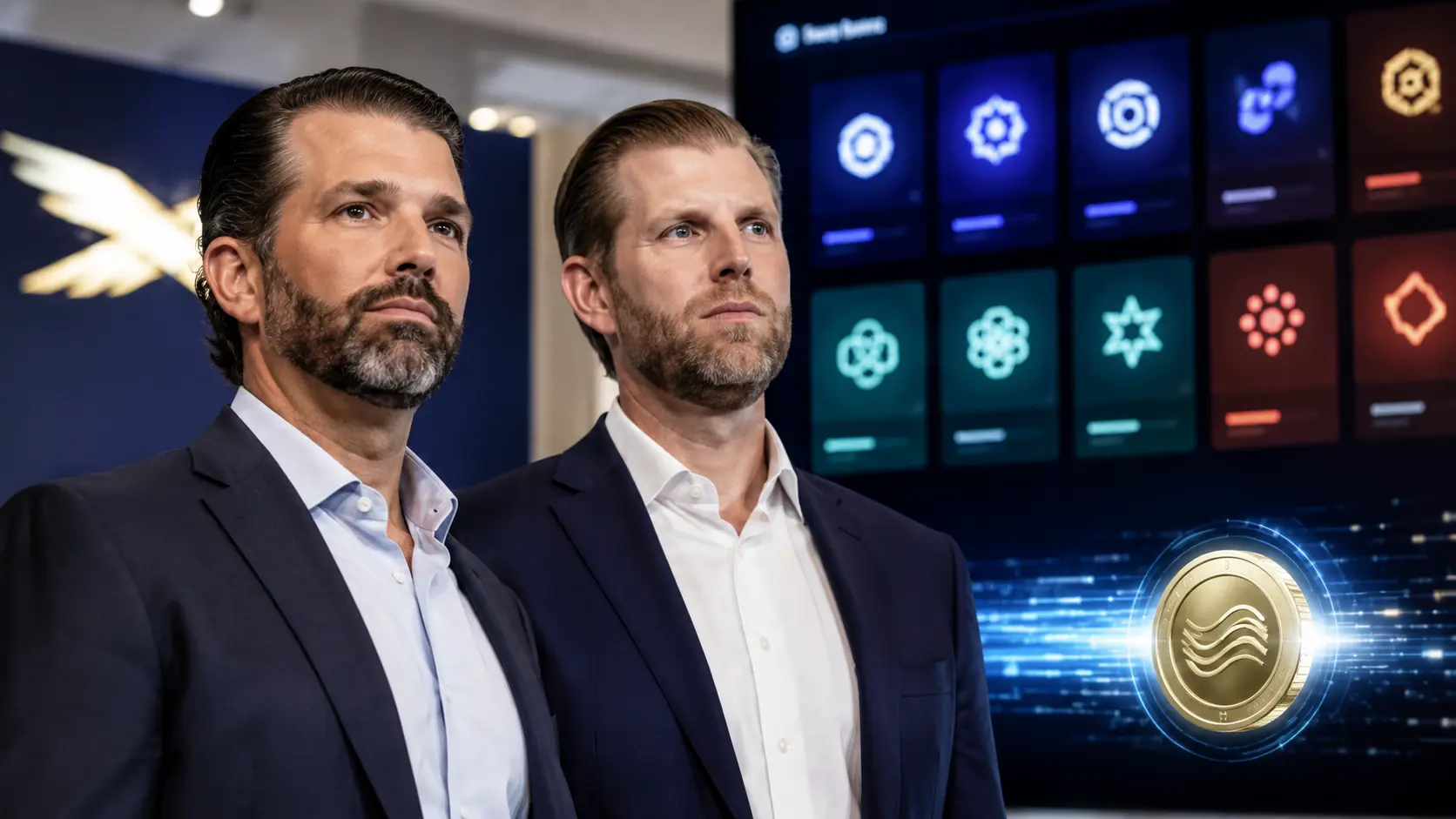
A crypto company in which the family of U.S. President Donald Trump holds a major stake is partnering with an AI platform that offers dozens of Chinese models—including some from firms the U.S. government itself flags as security risks.
The platform is WorldClaw, a Hong Kong–based AI hub where users can access a range of models. Alongside U.S. systems from companies like OpenAI and Anthropic, it features AI from Alibaba, Baidu, Z.ai, DeepSeek, and Moonshot.
In a review of the catalog, Reuters counted 90 available models. Of those, 43 were built by Chinese tech firms designated by the U.S. government over concerns about national security, military ties, or intellectual property.
Offering or integrating these models isn’t illegal. What makes it notable: the Trump administration is warning allies and U.S. companies about relying on Chinese AI—while a company tied to the Trump family helps enable it.
Paying with World Liberty crypto
WorldClaw accepts the USD1 stablecoin and other cryptocurrencies from World Liberty Financial, a crypto firm co-founded by Donald Trump Jr. and Eric Trump.
According to Reuters, the Trump family owns 38 percent of World Liberty. They profit from sales and usage of its tokens and share in interest generated by the assets backing USD1.
When a WorldClaw user pays with USD1, World Liberty can benefit financially. Reuters could not determine the exact terms between the two companies or how much the Trump family has earned specifically from WorldClaw payments.
It’s therefore inaccurate to claim President Trump receives direct payments for every Chinese AI model used. There is, however, an indirect financial interest tied to use of World Liberty’s payment rails.
A World Liberty executive advised WorldClaw on launching USD1 and expanding internationally. Donald Trump Jr. and Eric Trump also promoted the platform on social media.
WorldClaw claims independence
WorldClaw says it operates independently and is not offered, controlled, or managed by World Liberty.
The company adds that hosting a model doesn’t imply endorsement of the developer’s views or activities. World Liberty calls aggregating models from multiple countries standard practice for AI platforms.
The White House denies any conflict of interest and says President Trump acts solely in the interests of the American public.
Not all restrictions are equal
The Chinese companies on the platform face different legal designations in the United States.
Alibaba and Baidu appear on a Department of Defense list of firms linked to China’s military. That label primarily restricts Pentagon dealings; it is not a blanket ban on U.S. consumers using their AI models.
Z.ai, formerly Zhipu AI, is on the Commerce Department’s Entity List. U.S. companies typically need an export license to provide certain technology or services to Z.ai.
The U.S. government has also accused DeepSeek and Moonshot of improperly using U.S. technology and intellectual property—claims disputed by the companies and by Beijing.
For ordinary U.S. users, the models themselves are generally not prohibited. That distinction matters: restrictions on a developer don’t automatically make every use of its model illegal.
Where do your prompts go?
WorldClaw acts as a middleware layer. Users pick a model and send prompts through the platform. Its terms state that inputs may be shared with the companies providing the selected models.
That has implications for sensitive data. Anyone pasting internal documents, source code, or personal data should know which provider ultimately processes the prompt—and in which country.
A security expert consulted by Reuters warned of risks such as censorship, monitoring, and malicious code that could influence an AI agent. Reuters presented no evidence that WorldClaw user data has reached the Chinese government. WorldClaw says it employs privacy and security measures.
Business meets AI politics
The tie-up underscores how entangled technology, politics, and profit have become.
The U.S. is working to curb China’s access to advanced chips and other AI tech. Yet cheaper Chinese models remain attractive to global platforms, developers, and enterprises.
WorldClaw straddles both worlds: it sells access to U.S. and Chinese AI and lets customers pay with crypto from a company in which the Trump family holds a financial stake.
That is, as far as known, legal. It also makes America’s debate over Chinese AI far messier than the political talking points suggest.

Popular news

Latest comments
Loading