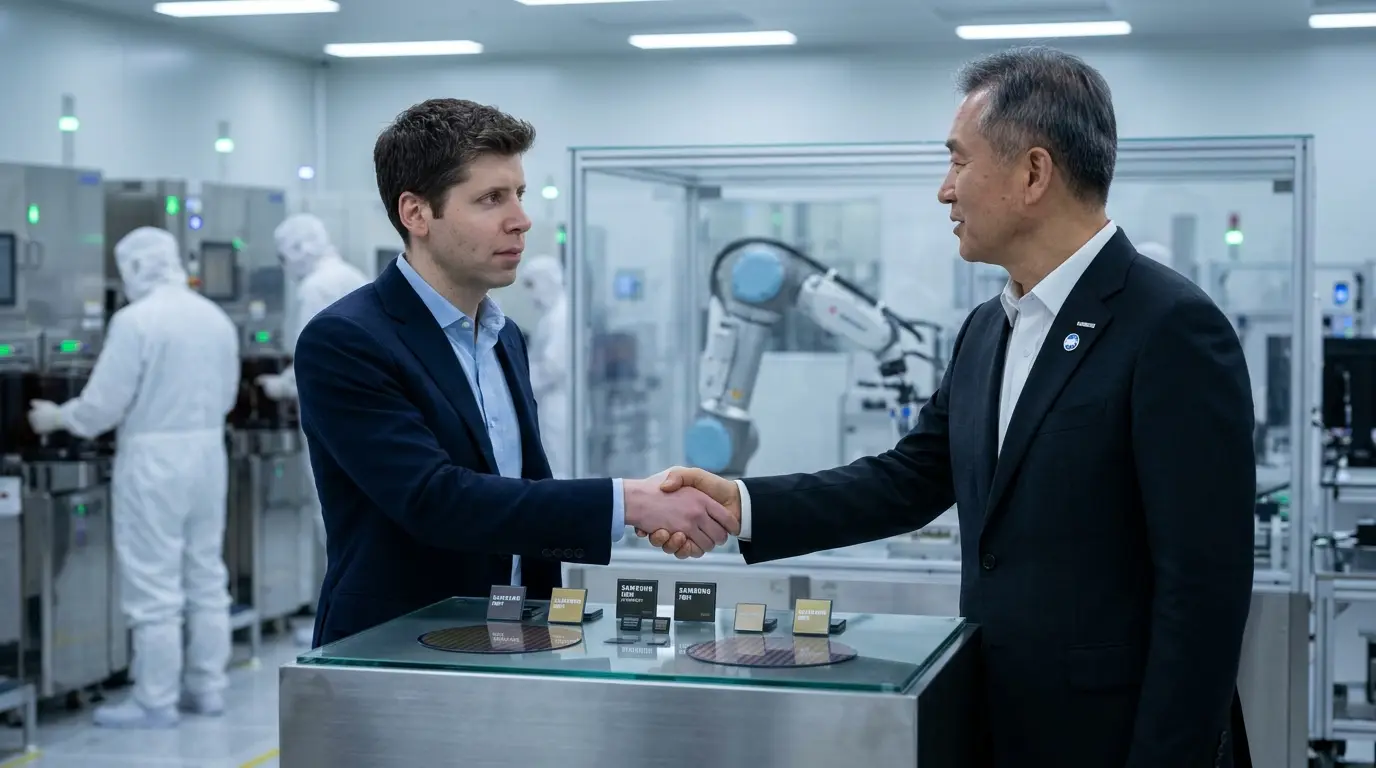
OpenAI Chief Executive Sam Altman recently traveled to South Korea to meet with approximately 50 senior Samsung executives. The primary objective of this high level meeting was to secure additional random access memory supplies for artificial intelligence data centers. The global technology sector is currently facing crushing shortages of these critical components. You can read the full details of this strategic visit in this Tom's Hardware report. Industry analysts warn that this severe supply deficit could persist well into 2028 if production capacities do not expand rapidly.
The Drive for AI Infrastructure Stability
The urgency behind this meeting stems from the exponential growth of large language models. These systems require massive amounts of high bandwidth memory to function efficiently. Samsung has been actively developing next generation 3D memory architectures specifically designed to advance future AI infrastructure. You can explore their official technical roadmap for high bandwidth memory and enterprise storage on the Samsung Semiconductor website. This direct engagement between software pioneers and hardware manufacturers highlights a critical shift in how tech companies manage their supply chains. Relying on open market purchases is no longer sufficient for organizations building massive computational networks.
Market Dynamics and Supply Constraints
The memory market is experiencing unprecedented pressure. Forecasts indicate that dynamic random access memory supply will fall short of global demand as data center construction accelerates. This imbalance drives up costs for all consumers and enterprises relying on standard computing hardware. The table below outlines the current market dynamics affecting memory allocation.
| Market Factor | Current Status | Projected Impact |
| Global DRAM Supply | Falling short of demand | Extended lead times for server hardware |
| AI Data Center Demand | Exponential growth | Priority allocation for enterprise clients |
| Manufacturing Capacity | Operating at maximum yield | Slow rollout of next generation nodes |
| Consumer Hardware Pricing | Upward pressure | Higher retail costs for personal devices |
Strategic Partnerships Over Open Market Purchases
This meeting signifies a broader trend where major artificial intelligence developers are bypassing traditional distribution channels. By negotiating directly with semiconductor giants, companies like OpenAI aim to guarantee long term component availability.
This strategy ensures that their computational expansion is not halted by external supply chain bottlenecks. It also places immense pressure on smaller tech firms that lack the negotiating power to secure dedicated manufacturing slots. As the industry matures, vertical integration and exclusive hardware partnerships will likely become the standard operating procedure for any organization serious about scaling artificial intelligence capabilities. The race for computational dominance is now fundamentally a race for physical materials.

Popular news

EU Leaders Meet in Dublin to Decide Who Pays for Europe’s AI Computing Power

Google DeepMind’s AlphaGenome 2 predicts what DNA variants do in specific cells

Anthropic Says Automated Coding Tools Are Dismantling Nvidia Software Moat
US Data Brokers Supply Half Billion Dollars In AI Training Environments To Chinese Labs

Google DeepMind Ships Next Generation Robotics and Genomic AI Models