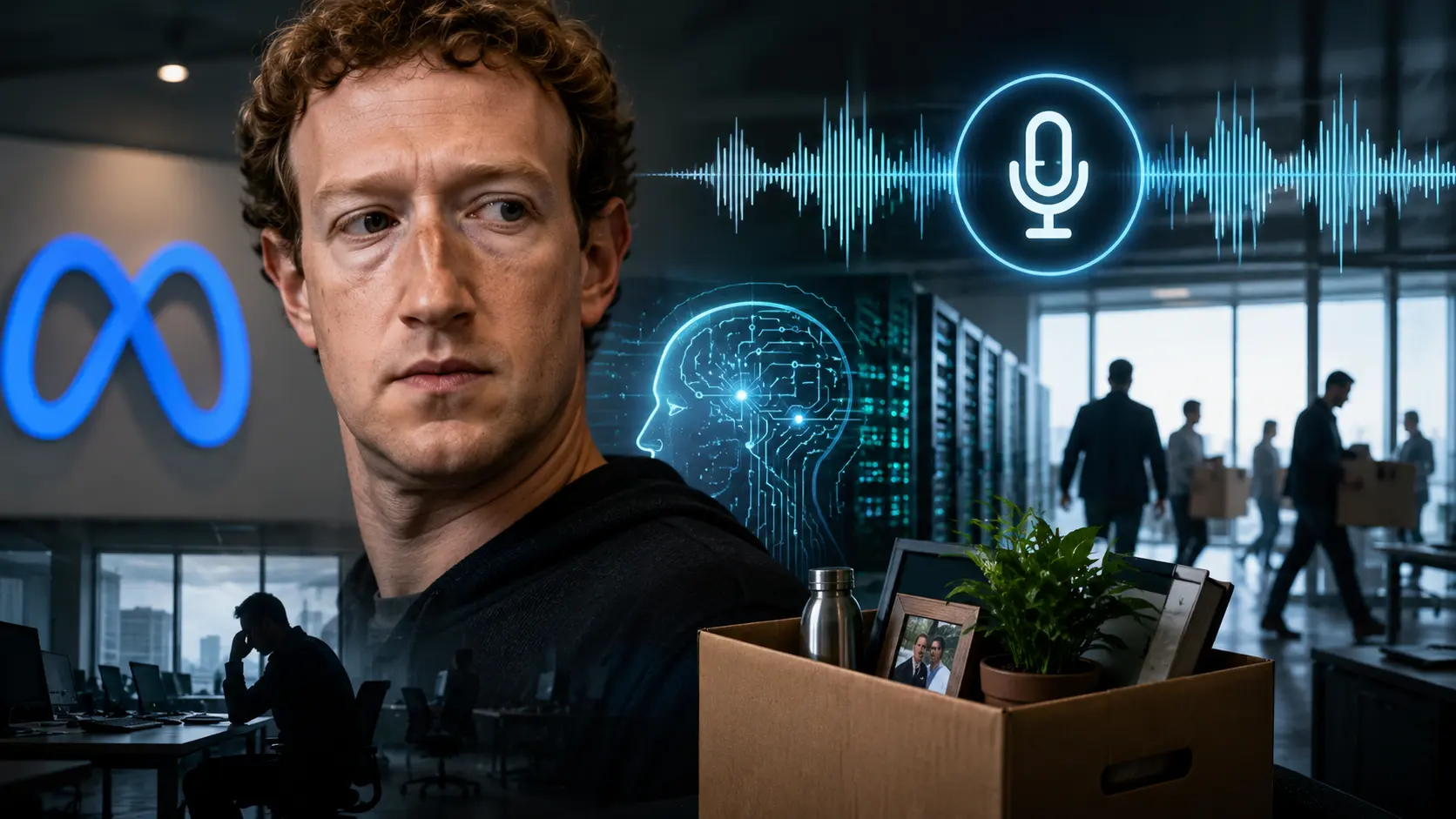
A leaked audio recording from an internal Meta meeting is sparking global backlash. In the clip, CEO Mark Zuckerberg appears to explain that the company trains its AI systems by watching its own employees as they code. The timing adds fuel to the fire: Meta laid off roughly 8,000 workers almost simultaneously as part of a sweeping AI reorganization.
The audio, published by labor and research outlet More Perfect Union, spread rapidly across social media. According to multiple outlets, including Reuters, the internal meeting took place in late April, just before Meta announced its latest round of layoffs.
What exactly does Zuckerberg say in the leak?
In the recording, Zuckerberg describes how Meta lets AI models “learn from smart people.” He says the models observe employees performing programming and engineering tasks. In his view, that produces better training data than hiring external contractors.
Zuckerberg also says the “average intelligence” of Meta engineers is higher than what’s found in outside datasets or among low-cost AI trainers. As a result, he argues, the models learn to code faster and handle more complex work. Several outlets, including Common Dreams and India Today, published transcripts of those remarks.
The controversy isn’t just about training AI on employee activity—it’s the one-two punch of doing so and then cutting staff immediately after.
Meta cuts thousands as AI takes center stage
This week, Meta confirmed that roughly 10 percent of its workforce is affected by reorganizations and layoffs. At the same time, the company is shifting thousands of others to new AI projects and internal automation teams. Reuters reported that about 7,000 employees are being reassigned to AI-related roles.
Internal memos show Meta wants to compete more aggressively in generative AI, AI agents, and automated software development. The company is also pouring tens of billions of dollars into AI infrastructure, data centers, and specialized chips.
The layoffs fit a broader Silicon Valley pattern: cutting operating costs while pouring massive sums into AI models and compute.
Employees fear they’re training their own replacements
Inside Meta, there has been pushback, according to The New York Times and WIRED. Staff reportedly discovered their computer activity, coding behavior, and workflows were being used for AI training. Some fear they are unknowingly training systems that could automate their own roles.
More than a thousand employees have reportedly signed an internal petition against the practice. Reports from the U.S. say posters have even appeared in Meta offices urging a halt to the AI training program.
The situation hits a raw nerve: how much employee data can companies use to build AI systems that may replace parts of human labor?
Why this matters far beyond Meta
The Meta episode shows how fast the relationship between AI and work is changing. What started as AI assisting employees is tilting toward automating knowledge work itself.
Software development is the key battleground. Models like GitHub Copilot, Gemini, and ChatGPT can now write code, fix bugs, and generate documentation on their own. Tech firms are racing to build systems that can partially replace human engineers—or boost their output dramatically.
Meta appears to be going a step further by using live workflows from its own staff as a training source.
According to AI advisor Chen Avnery, quoted by Common Dreams, many more companies are likely doing the same. “Meta just said the quiet part out loud,” Avnery said.
Rising backlash over transparency and surveillance
Beyond the layoffs, criticism is growing over potential employee surveillance. Multiple outlets report that Meta used software capable of analyzing mouse movements, keystrokes, and work patterns. Meta has not publicly confirmed exactly what data was collected.
That raises legal and ethical questions around privacy, consent, and labor rights. In Europe, such systems could face tougher scrutiny under the GDPR and the incoming EU AI Act.
Experts expect the debate to intensify as AI systems automate more office work.
Read also


AI shifts from sidekick to substitute
The Meta revelations underscore a broader industry shift. AI is no longer just about making employees more efficient—it’s increasingly about shrinking teams and running processes autonomously.
Zuckerberg has hinted at this in past internal meetings. According to The Wall Street Journal, Meta expects AI to radically accelerate workflows, reducing headcount needs for some teams.
For the AI industry, this could mark a new inflection point. It’s not just factory work or customer service under pressure anymore—high-paid knowledge roles like software engineering are squarely in the crosshairs.

Latest comments
Loading