Demis Hassabis steps down as CEO of Google DeepMind; four AI heavyweights depart
NewsThursday, 06 August 2026 at 07:07
Updated at Thursday, 06 August 2026 at 07:08
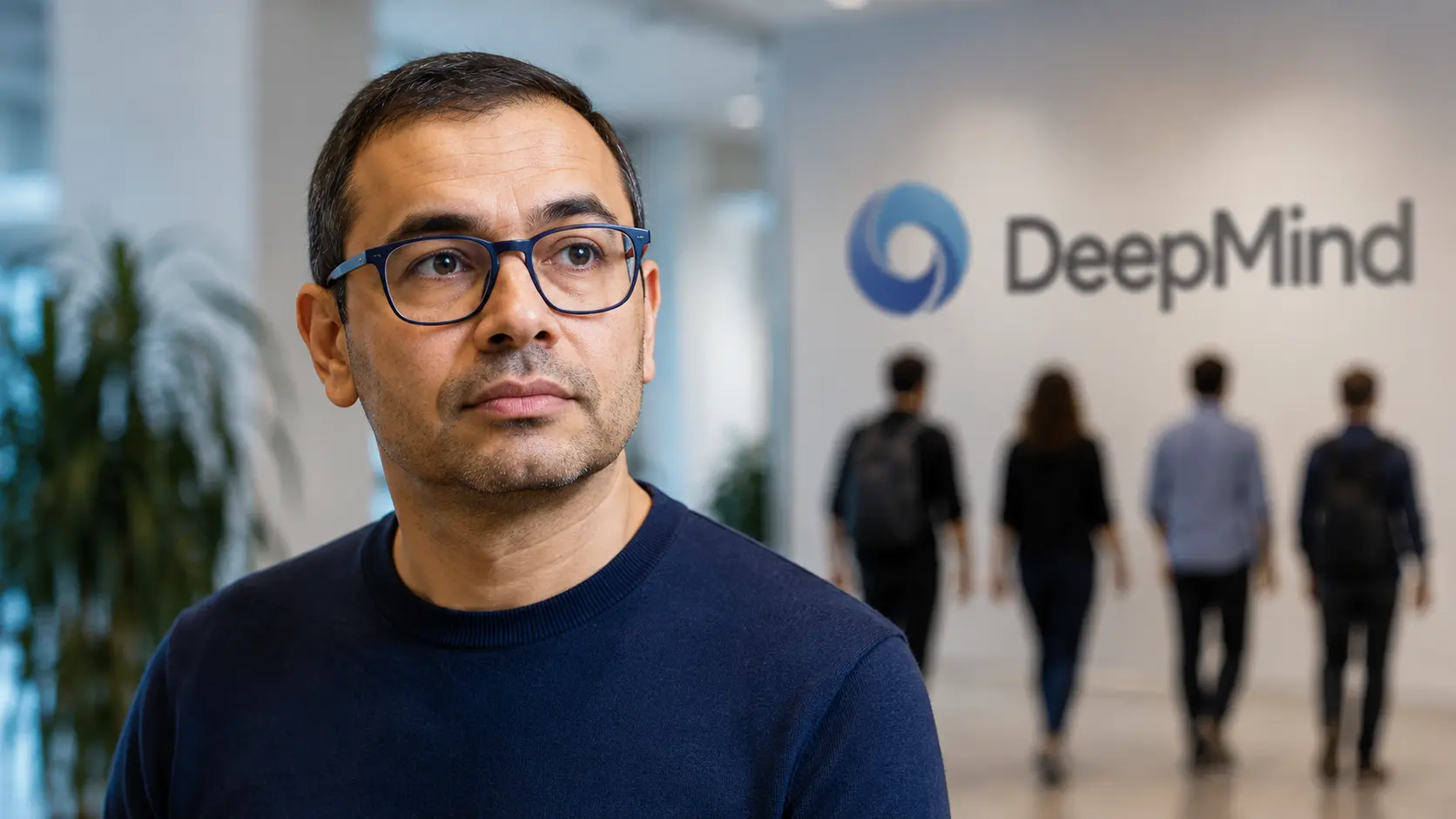
Demis Hassabis is stepping down as CEO of Google DeepMind to become chair of the AI lab and chief scientist at parent company Alphabet. At the same time, Jeff Dean and three other prominent AI researchers are leaving Google to start a new company. It’s one of the biggest shake-ups in Google’s AI leadership since DeepMind and Google Brain merged in 2023.
Google announced the new split of responsibilities. Hassabis is not leaving the company. He’s handing off day-to-day operations to Koray Kavukcuoglu, previously DeepMind’s VP of research and Google’s chief AI architect. Kavukcuoglu becomes senior vice president of Google DeepMind and will report directly to CEO Sundar Pichai. Notably, Google is not appointing a new CEO for the AI lab.
Hassabis shifts focus to AGI and science
According to Google, Hassabis’s new role gives him more scope to drive long-term strategy around artificial general intelligence, or AGI—hypothetical AI that can reason and learn across many domains at a human level. Hassabis has put the odds of AGI before 2030 at 50 percent.
Hassabis writes that AGI is getting closer, prompting him to step back from daily operations. He will continue advising DeepMind on models and research and will work with Pichai on global and strategic AI issues. He also remains head of Isomorphic Labs, the sister company using AI for drug discovery.
Operational control now leans more clearly toward Kavukcuoglu. He will oversee Gemini model development, advanced AI research, and the teams behind the Gemini app and developer products. In effect, Google appears to be drawing a sharper line: Hassabis guards the long horizon of AGI and science, while Kavukcuoglu pushes models into products faster. That’s an interpretation of the new setup, not Google’s own phrasing.
Jeff Dean exits after 27 years
Equally striking is Jeff Dean’s departure. After 27 years at Google, as one of its earliest employees, he played a central role in the search engine’s technical backbone and in founding Google Brain. For years, Dean and Hassabis were seen as two of the most influential AI leaders inside the company.
Dean is leaving with Sanjay Ghemawat, Oriol Vinyals, and Quoc Le. The four are launching Discovery Loop, a public benefit corporation aiming to use AI to accelerate research in machine learning, science, and engineering. The plan is to partially automate entire experimental loops so far more experiments can be designed, run, and improved in parallel.
The split from Google isn’t total. Alphabet is investing in Discovery Loop, and Google Cloud will be its technology partner. So Google remains financially and technically tied to the new venture, even as it loses four highly experienced researchers.
Why is Google changing leadership now?
Google says the changes are needed to speed up both new AI products and long-term research. The company points to Gemini’s rapid growth, claiming more than 950 million monthly users. At the same time, Pichai acknowledges there are areas where DeepMind needs to move faster.
Reuters offers a more sensitive backdrop. The new flagship model, Gemini 4, still hasn’t shipped, and rivals OpenAI and Anthropic have already poached notable Google researchers this year. Hassabis says Gemini 4 is progressing well but gives no release date.
Investors flinched: Alphabet’s stock fell about 4 percent after the news. That move doesn’t prove markets see the reorg as a failure, but it does show how much value investors now place on the makeup of an AI leadership team.
Promotion or pullback for Hassabis?
Formally, Hassabis takes on a broader, more strategic role across Alphabet. He becomes chief scientist for the entire company while remaining chair of DeepMind. At the same time, he gives up direct authority over Gemini’s day-to-day development and commercialization. Both readings are true: it’s a promotion to a group-wide scientific role and a retreat from operational control.
For Google, the combination is the bigger risk. Moving one leader is manageable; losing four veterans at once also hits institutional memory. On the other hand, Google has massively expanded its research engine and headcount, and retains its own chips, cloud infrastructure, and hundreds of millions of Gemini users.
The next model releases will be the real test. If Gemini improves faster under Kavukcuoglu and Hassabis accelerates scientific breakthroughs, the new split could prove smart. If delays persist, this may go down as the day Google’s AI leadership visibly started to fracture.

Latest comments
Loading