ChatGPT's biggest update of the year: GPT-5.6, new voice AI, and a smart work assistant reshape the platform
News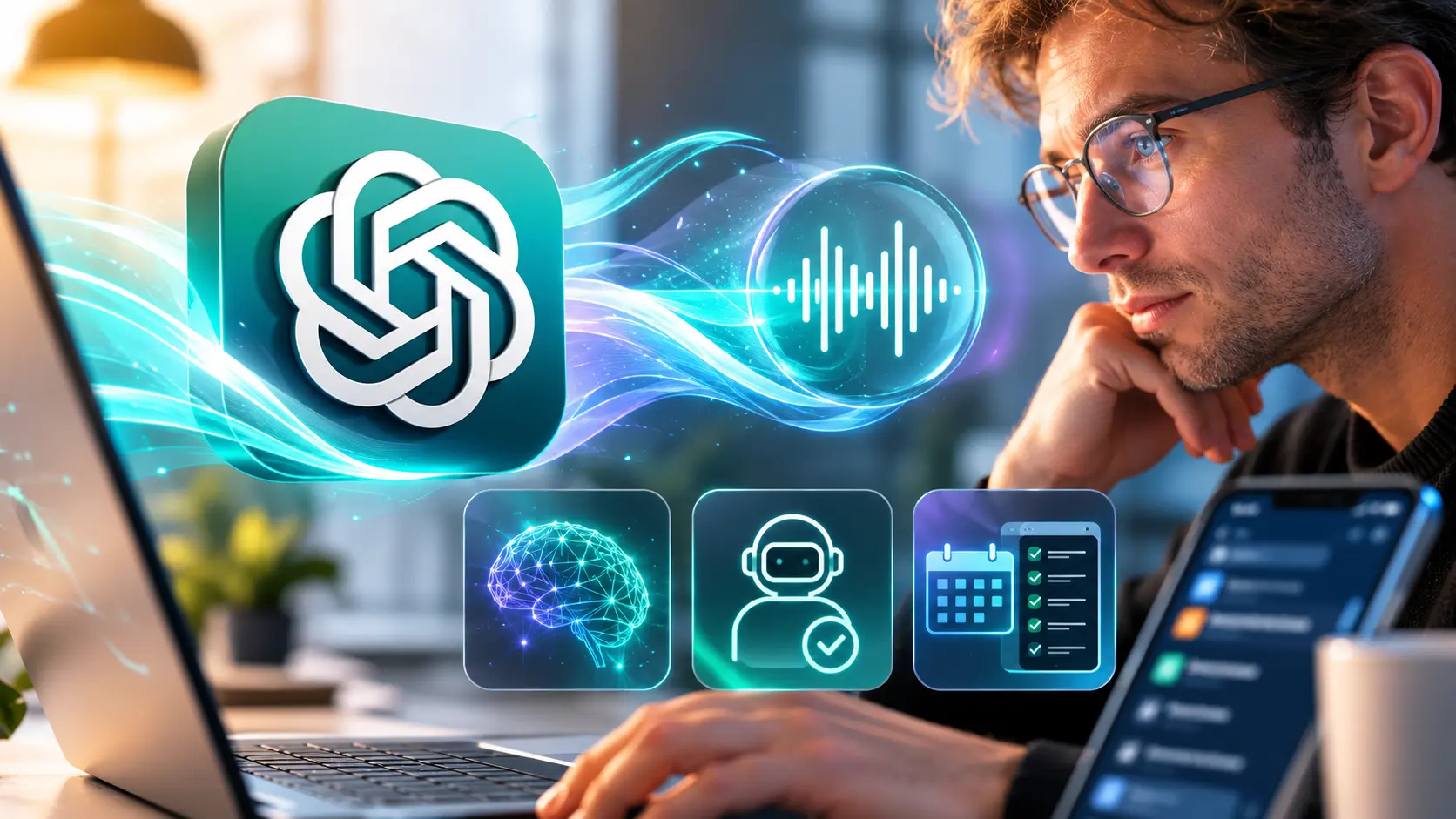
This week, OpenAI rolled out one of ChatGPT’s biggest updates of 2026. Alongside the new GPT-5.6 model, ChatGPT gets a completely revamped voice assistant, a new productivity-focused AI agent, and a range of upgrades to personalization, memory, and reasoning. According to OpenAI’s official release notes, the new features will roll out globally over the coming days across multiple plans.
The update shows ChatGPT evolving from a chatbot into a full AI workspace. Where users once mostly had conversations, the AI can now increasingly handle complex tasks on its own, create documents, conduct research, and collaborate with external apps.
GPT-5.6 aims to be smarter, faster, and more reliable
The headline announcement is GPT-5.6. OpenAI calls it its most advanced model yet and is introducing a new model lineup with three variants: Sol, Terra, and Luna. According to OpenAI, Sol is the most powerful for complex reasoning, software development, and scientific research. Terra balances performance and cost, while Luna is built for maximum speed and efficiency.
Notably, OpenAI is leaning harder into specialized models instead of a single universal system. That allows ChatGPT to automatically pick the best model for each task.
For users, this means:
- better coding performance;
- more precise logical reasoning;
- fewer factual mistakes;
- stronger results on long documents;
- more efficient handling of complex prompts.
OpenAI also says GPT-5.6 follows instructions far more consistently than previous generations. Multi-step, multi-constraint tasks should perform noticeably better.
ChatGPT Voice gets an all-new AI
It’s not just text getting smarter. The voice experience is getting a major overhaul too.
The new voice models, GPT-Live-1 and GPT-Live-1 Mini, replace the existing Voice experience. OpenAI says both can listen and speak at the same time, making conversations feel more natural and reducing interruptions.
It may sound like a small tweak, but it changes how people talk to AI.
Where earlier versions often paused when a user hesitated, GPT-Live-1 better detects when someone is still talking. It can also process information on the fly without constantly cutting in.
The new Voice also supports:
- real-time translations;
- web searches during conversations;
- memory for personal context;
- combined processing of text and images.
With this, ChatGPT moves another step closer to a true personal digital assistant.
New AI agent is built to take real work off your plate
Another standout addition is ChatGPT Work.
This new AI agent combines the strengths of ChatGPT and Codex in a single workspace. Instead of just answering questions, ChatGPT Work can execute entire tasks.
According to OpenAI, the agent can:
- write documents;
- build spreadsheets;
- prepare presentations;
- conduct research;
- build web apps;
- integrate with Slack;
- use Gmail;
- analyze files in Google Drive.
The agent works on tasks for longer and can complete multiple steps on its own before needing user input. It’s a clear shift toward “agentic AI,” where the system doesn’t just advise—it acts.
ChatGPT is getting better at understanding you
Beyond the big headlines, the update brings subtler improvements too.
In recent weeks, OpenAI has shipped multiple tweaks to help ChatGPT better grasp what users actually mean. The AI can track conversations for longer, account for prior context, and adapt answers more precisely when users add extra constraints.
According to the release notes, the biggest gains are in:
- less repetition;
- more natural writing;
- better recommendations;
- stronger local search results;
- more accurate advice for complex decisions.
For everyday users, that means fewer explanations on repeat and smoother follow-ups.
Smarter memory
Memory is also getting a major upgrade.
OpenAI has been working on a system that lets ChatGPT automatically remember key user preferences. In the latest version, that memory becomes more dynamic.
Instead of storing isolated facts, ChatGPT now continuously evaluates what’s still relevant. Old or conflicting memories are updated automatically.
Users stay in control. In settings, memories can be viewed, edited, or deleted entirely. Prefer no memory? You can turn it off or start a temporary chat.
Why this update matters strategically
This release lands as AI competition accelerates at breakneck speed.
Google is pouring resources into Gemini, Anthropic keeps advancing Claude, and xAI is scaling up Grok. Meanwhile, specialized AI agents are emerging that can automate entire workflows.
OpenAI’s strategy is clear: turn ChatGPT into a full AI platform, not just a chatbot.
The combination of:
- more advanced language models;
- natural voice;
- personal context;
- memory;
- AI agents;
- integration with external software;
is steadily making ChatGPT a true digital coworker that supports users throughout their daily work.
That’s especially compelling for businesses, knowledge workers, and developers, as AI can increasingly handle repetitive tasks on its own.
Phased rollout
Not everyone will get access to all new features right away.
GPT-5.6 will roll out gradually across different ChatGPT plans. ChatGPT Work will arrive first for Pro, Enterprise, and Edu users, followed by Plus and Business subscribers. The new Voice models will also become available in phases.
Once again, OpenAI opts for a controlled global rollout to fix any issues before opening the gates to all users.
Bottom line
With GPT-5.6, OpenAI takes another big step in generative AI. The fusion of stronger language models, a more natural voice assistant, smarter memory, and a new AI agent shows ChatGPT evolving into a full-fledged digital work platform.
For consumers, that means better conversations and more personal support. For companies, it unlocks deeper automation in knowledge work, software development, and administrative workflows.
The latest release also makes one thing clear: the AI race is no longer just about the smartest chatbot. The next phase is about AI systems that can collaborate, plan, and complete tasks end to end. With that, ChatGPT inches further from conversation partner to digital colleague.

Latest comments
Loading