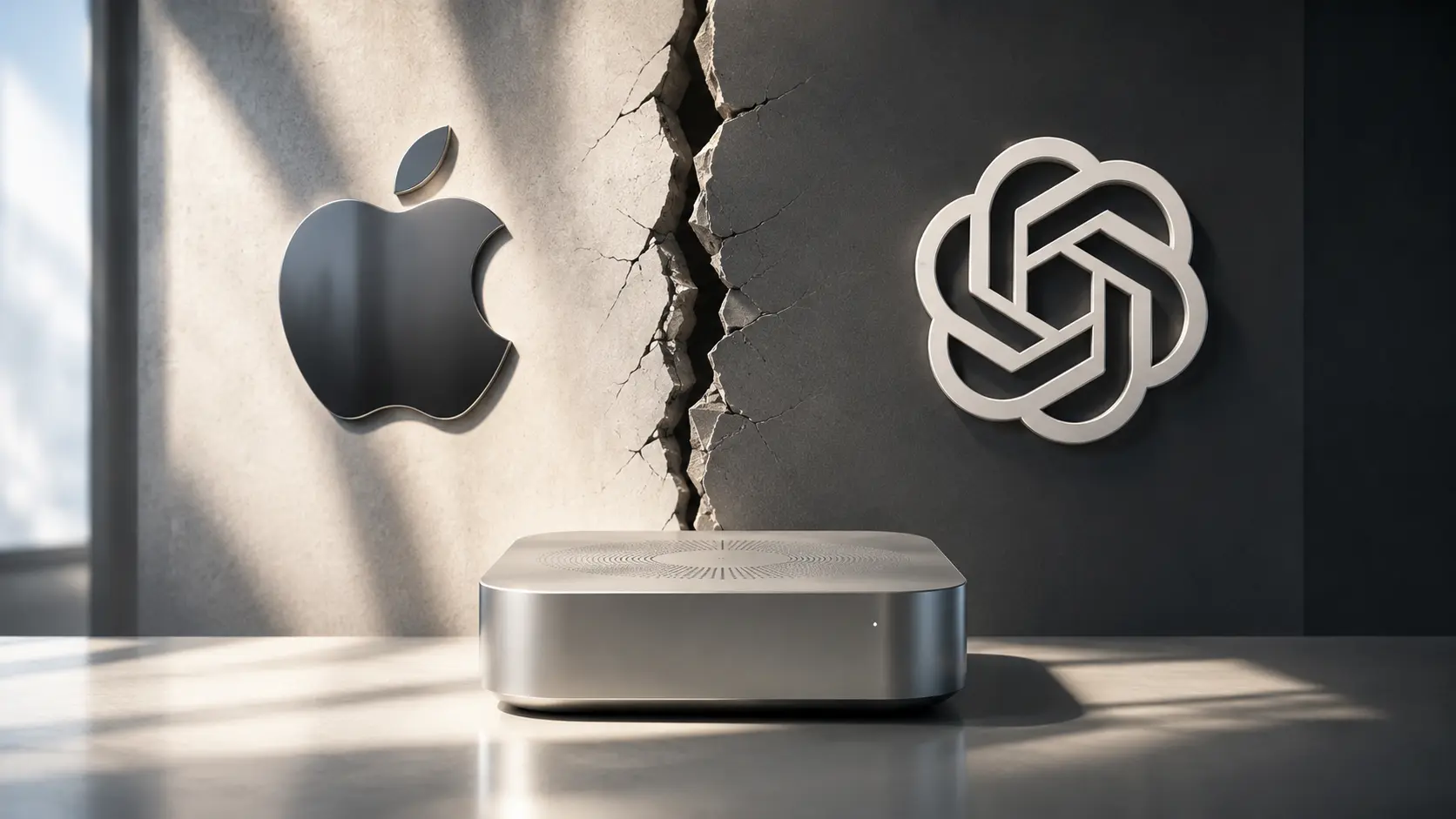
Apple has filed a sweeping lawsuit against OpenAI and several former Apple employees. The iPhone maker accuses the AI company of deliberately harvesting trade secrets for years to build its own hardware division. According to Apple, this wasn’t about a few incidents but a “deliberate and systematic” strategy that relied on confidential documents, internal know-how, and even physical parts from Apple products.
The case, filed in a federal court in California, could have major consequences for OpenAI’s hardware plans. Apple is seeking a jury trial, damages, and measures to halt the use of the allegedly stolen information.
Apple alleges a coordinated operation
According to the court filings, the issue didn’t start with one employee but with a broader campaign that recruited former Apple staff to bring knowledge of future products and technologies to OpenAI.
Apple claims OpenAI has hired more than 400 former Apple employees. While job-hopping is perfectly legal, Apple alleges OpenAI actively encouraged staff to share confidential information that should never have left Apple.
In the complaint, Apple characterizes the approach as “deliberately and systematically.”
Ex-Apple engineer allegedly downloaded confidential files
A key pillar of the lawsuit centers on former Apple engineer Chang Liu.
Apple says Liu did not immediately return his Apple laptop after leaving. During his move to OpenAI, he allegedly discovered a security gap that let him retain access to Apple’s internal cloud storage.
In the complaint, Apple cites an internal message in which Liu wrote:
“LOL, I found out I can access the network storage, so funny.”
Apple alleges that Liu then downloaded confidential files while already employed at OpenAI. These reportedly included documents on product development, hardware designs, and other sensitive business information.
Apple says executive Tang Tan plays a key role
The lawsuit also devotes significant attention to Tang Tan.
Tan spent nearly 24 years at Apple, rising to vice president for iPhone and Apple Watch hardware design. He is now OpenAI’s Chief Hardware Officer and plays a central role in developing the company’s new AI devices.
Apple alleges that during recruiting conversations, Tan used internal Apple codenames to extract targeted information from former colleagues considering a move.
He also allegedly asked candidates to bring physical Apple components—such as batteries, logic boards, and other parts—for “show and tell” sessions. Apple claims these meetings were meant to glean insights into the engineering behind yet-to-be-announced products.
Apple: security procedures were intentionally bypassed
The complaint includes another striking allegation.
Apple says Tang Tan circulated an internal Apple document used when employees leave the company. The document outlines the checks performed during the offboarding process.
According to Apple, this document was shared within OpenAI so new hires would better understand Apple’s security controls—and how to avoid detection of confidential information during their departure.
For Apple, that suggests the alleged violations were part of a broader strategy, not isolated mistakes.
Apple says it never received a response
The filings state Apple warned OpenAI in February about the alleged violations.
The company says it emailed OpenAI at the time, flagging concerns about the collection of confidential corporate information. Apple claims it never received a substantive reply.
In the lawsuit, Apple writes that OpenAI’s hardware efforts are “rotten to its core” and calls the current allegations “just the tip of the iceberg.”
Notably absent: Jony Ive
Strikingly, the name of former Apple design chief Jony Ive is missing from the list of defendants.
That’s notable because Ive has been working closely with OpenAI on new AI hardware since the acquisition of hardware startup io Products. In this case, however, Apple is targeting OpenAI, io Products, and specific former Apple employees.
Potentially serious fallout for OpenAI’s hardware push
The lawsuit lands at a sensitive moment for OpenAI.
The company is pouring billions into a new wave of AI devices designed to give users direct access to artificial intelligence—an effort to build a hardware platform alongside the smartphone.
If Apple proves that confidential information was indeed used in that development, the impact could be significant. Beyond hefty damages, the court could restrict further development or commercialization of certain products.
The case also underscores how fierce the AI race has become. What was once a competition over the best AI models is rapidly shifting toward hardware, custom chips, and the talent with critical technical expertise.
The coming months will reveal whether Apple can substantiate its sweeping claims. If it does, this could become one of the defining legal battles of the still-young AI industry.

Latest comments
Loading