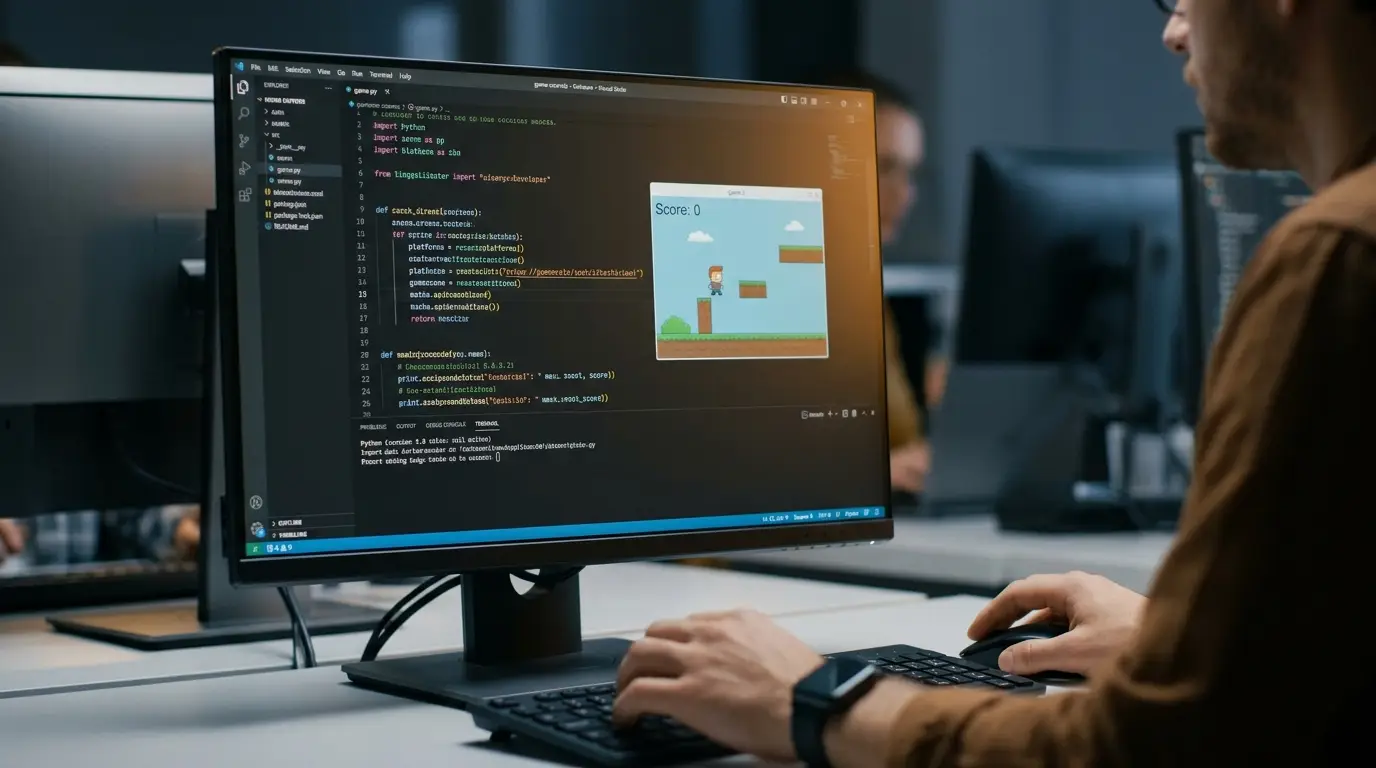
Anthropic recently refined its AI coding assistant guidelines to better support legitimate software development. The company updated Claude Code to prevent overly broad restrictions that previously blocked developers from building original video games. This adjustment ensures the tool remains useful for creators while still respecting intellectual property boundaries.
The initial policy update aimed to stop the AI from cloning existing video games. Anthropic added specific instructions to prevent the model from recreating a specific existing game even if the prompt renamed it or called it original. This measure was designed to curb potential copyright infringement as AI coding tools became more capable of reproducing complex software from simple text prompts.
The broad implementation quickly caused friction within the developer community. Users reported that the AI refused to assist with legitimate commissioned game work or original projects that merely shared mechanical similarities with popular titles. Anthropic engineer Addy Osmani acknowledged that the initial rule was too restrictive and generated false positives for standard development workflows. He explained that the system needed a more nuanced understanding of user intent rather than a blanket ban on certain keywords.
The Version 2.1.317 Update
To resolve this friction Anthropic released Claude Code version 2.1.317 with a narrowed scope for game development requests. Under the revised guidelines users can now name an existing game to describe the mechanics they want to build. Instead of issuing a flat refusal the AI will now offer to construct an original game within that same genre.
This approach allows developers to use familiar titles as a reference point for desired gameplay loops without triggering intellectual property safeguards. The nuanced adjustment prevents the AI from generating direct asset copies or proprietary code while still permitting the creation of new software inspired by established genres. You can read more about this specific adjustment in the recent Tom's Hardware coverage.
For developers looking to leverage these updated capabilities Anthropic provides detailed documentation on proper prompting techniques. You can explore the official features and guidelines on the Claude Code product page.
| Feature | Previous Behavior | Updated Behavior in 2.1.317 |
| Naming Existing Games | Triggered immediate refusal | Accepted as genre reference |
| Cloning Specific Titles | Blocked to prevent IP issues | Still strictly blocked |
| Original Genre Projects | Often flagged as false positives | Fully supported and generated |
| Developer Workflow | Interrupted by broad safety rules | Streamlined with contextual understanding |
Impact on AI Assisted Development
This revision highlights the ongoing challenge of training large language models to distinguish between malicious cloning and legitimate inspiration. By refining the prompt instructions rather than removing the safeguard entirely Anthropic maintains its commitment to intellectual property protection. The company simultaneously restores the practical utility of its coding assistant for independent game developers and software engineers.
The tech industry will likely see more iterative policy adjustments as AI capabilities expand. Continuous feedback loops between engineering teams and end users remain essential for building tools that are both safe and highly functional in real world scenarios. Developers can now confidently use AI to prototype mechanics while relying on the updated guardrails to keep their work compliant with copyright standards.

Popular news

Meta Acquires AI Coding Startup Conductor To Boost Parallel Agent Development

Team Group Predicts Extended Global Memory Shortage Through 2027

Protest at Microsoft Data Center in Amsterdam: Hundreds Arrested
Itch.io Adds Filter for Games With Generative AI Disclosures

Arm Doubles Data Center Royalties. What Role Is Nvidia Playing?